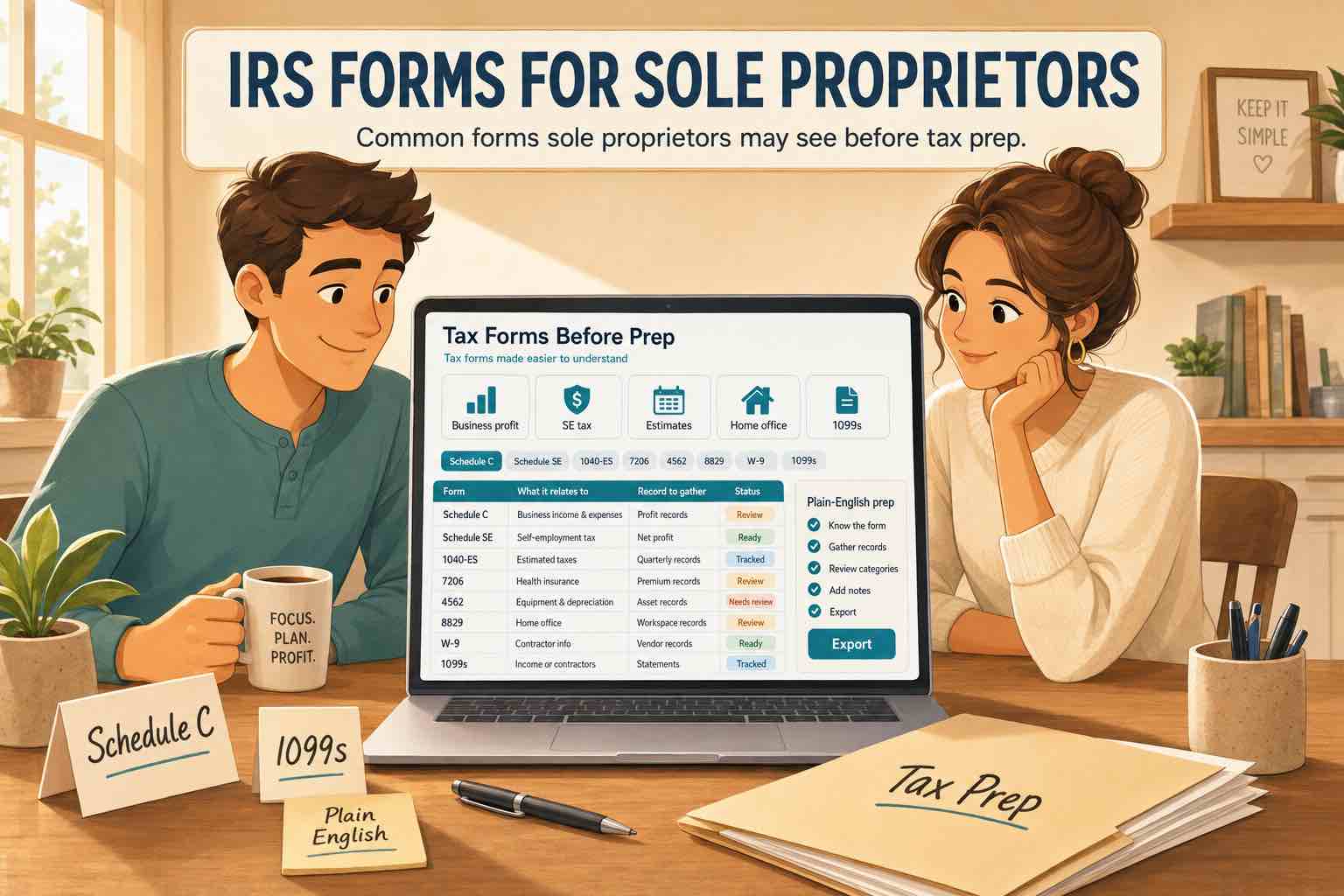
Starting a sole proprietorship can make tax season feel like alphabet soup. Schedule C, Schedule SE, 1040-ES, 1099-K, 1099-NEC, W-9, Form 7206, Form 4562, Form 8829. The names are not very friendly, but each one has a job.
This guide explains the common forms in plain English so a driver, Etsy seller, therapist, doctor, hairdresser, lawyer, creator, cleaner, consultant, or side hustler can understand what records to organize before tax prep.
Important: Koody is a budgeting and record-prep app, not a tax filing service, tax advisor, accountant, tax preparer, payroll provider, or law firm. Use Koody to organize transactions, categories, receipts, files, notes, splits, imports, and exports. A qualified professional should decide which forms apply and how they should be filed.
IRS forms sole proprietors may see
What IRS forms do sole proprietors need?
There is no single form list that fits every sole proprietor. A designer with no employees, a barber with a rented chair, a therapist with a home office, and an Etsy seller with marketplace payouts may have different records.
The common starting point is Schedule C. From there, the rest depends on profit, estimated tax payments, health insurance, equipment, home office use, contractors, marketplace income, and employees.
| Form | Plain-English job | Records to organize |
|---|---|---|
| Form 1040 | Your individual income tax return. | Personal tax records plus business forms attached to the return. |
| Schedule C | Reports profit or loss from your sole proprietor business. | Income, expenses, receipts, categories, inventory, fees, notes, and exports. |
| Schedule SE | Calculates self-employment tax from your business profit. | Schedule C profit, business income, business expenses, and records behind net profit. |
| Form 1040-ES | Helps estimate and pay tax during the year. | Estimated tax payments, confirmations, dates, amounts, and tax set-asides. |
| Form 7206 | Helps determine self-employed health insurance deduction. | Health insurance premiums, policy records, months covered, and notes. |
| Form 4562 | Handles depreciation, amortization, Section 179, and listed property. | Equipment receipts, placed-in-service dates, business-use notes, and asset records. |
| Form 8829 | Helps calculate allowable business-use-of-home expenses. | Home office measurements, rent, utilities, repairs, receipts, and notes. |
| Form 1099-K | Reports payment card, app, and marketplace payments for goods or services. | Platform statements, gross sales, fees, refunds, payouts, and notes. |
| Form 1099-NEC | Reports nonemployee compensation. | Client income received or contractor payments made, invoices, W-9s, and payment records. |
| Form W-9 | Provides taxpayer information to someone who may need it for reporting. | Your W-9 for clients or contractor W-9s when you pay contractors. |
Form 1040 and Schedule C
What is Schedule C?
Form 1040 is the individual income tax return. Schedule C attaches to it when you report profit or loss from a sole proprietor business.
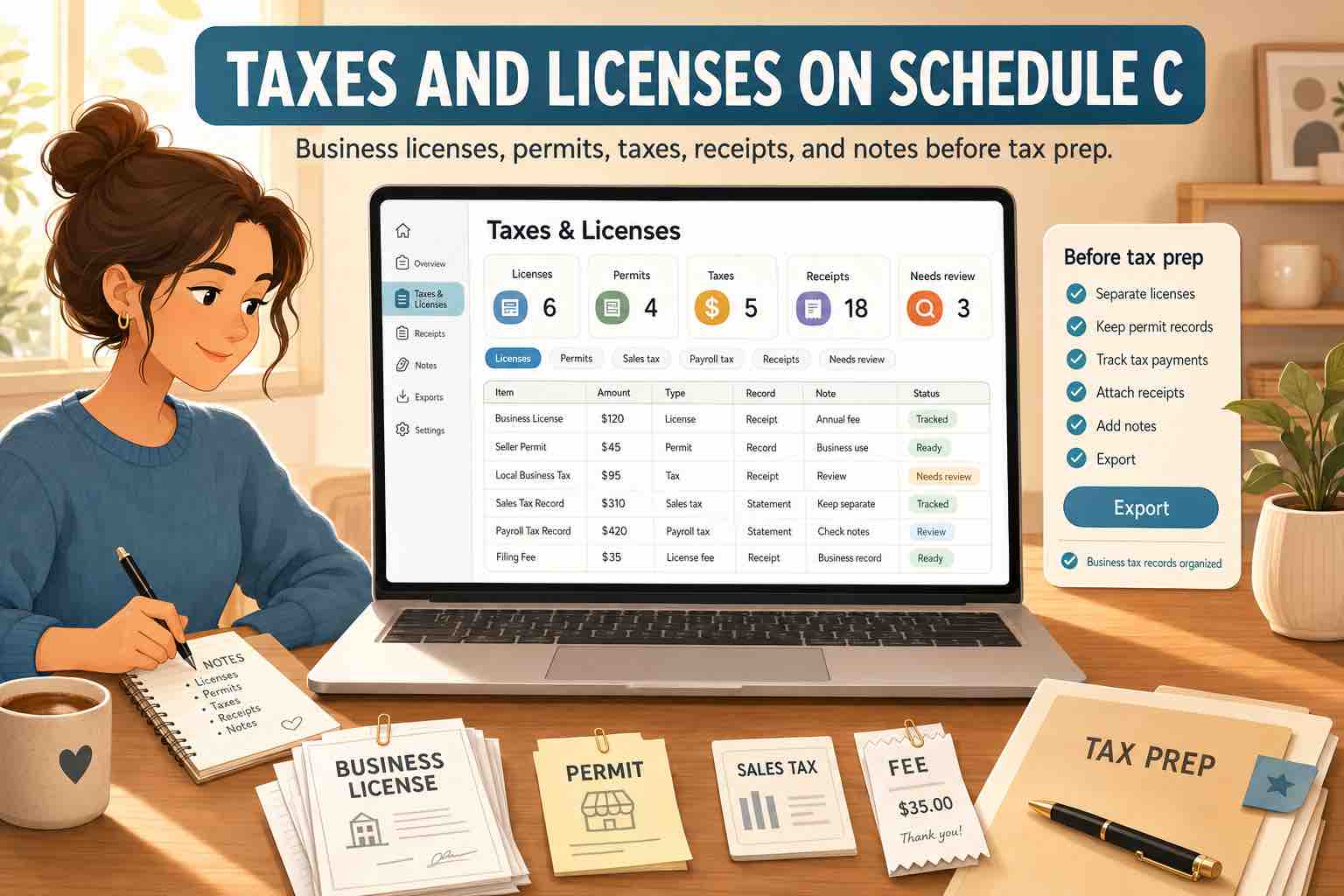
Schedule C is where business income and business expenses come together. That means the records behind it need to be separated before tax prep:
- Client payments.
- Platform payouts.
- Cash sales.
- Refunds and returns.
- Business expenses.
- Transfers and credit card payments.
- Personal spending that should not be treated like business costs.
- Receipts, invoices, notes, and exports.
For a category-by-category guide, read Schedule C expense categories explained for sole proprietors.
Keep the records behind the forms in Koody.
Koody helps you import transactions, auto-categorize rows, attach receipts and files, add notes, split mixed purchases, and export records before tax prep.
Organize tax records in KoodyProfit and tax payments
What is Schedule SE?
Schedule SE helps calculate self-employment tax from your business profit. In plain English, this is the Social Security and Medicare tax side of self-employed work.
Schedule C profit can feed into Schedule SE, which is why clean profit records are important. Income, expenses, refunds, transfers, owner draws, and personal spending need to be separated so the profit number can be reviewed. For a deeper guide, read self-employment tax for sole proprietors.
What is Form 1040-ES?
Form 1040-ES helps you estimate and pay tax during the year. Sole proprietors often make estimated payments because clients, apps, and platforms usually do not withhold tax the way an employer withholds tax from wages.
Keep estimated tax payments separate from business expenses. Save the payment date, amount, agency, confirmation number, and tax year. For a deeper guide, read quarterly estimated taxes for sole proprietors.
Deductions and special records
What is Form 7206?
Form 7206 is used to determine any self-employed health insurance deduction. If you pay health insurance premiums as a sole proprietor, keep policy documents, premium statements, proof of payment, months covered, and notes separate from ordinary business insurance.
For a deeper guide, read business insurance and self-employed health insurance.
What is Form 4562?
Form 4562 is used for depreciation, amortization, Section 179, and certain business-use property. If you buy a laptop, camera, barber chair, printer, medical equipment, cleaning equipment, or other longer-lasting property, keep more than the bank row.
Save the receipt, invoice, date placed in service, business-use notes, serial or model details when helpful, and any sale, disposal, or trade-in records. For a deeper guide, read business equipment, depreciation, and Section 179.
What is Form 8829?
Form 8829 helps calculate allowable expenses for business use of a home on Schedule C. If you work from home, keep direct office costs, shared home bills, personal-only costs, measurements, receipts, and notes separate.
For a deeper guide, read home office expense categories.
Contractors, platforms, and clients
What is Form 1099-K?
Form 1099-K reports payments received for goods or services through payment cards, payment apps, and online marketplaces. The amount on the form can be larger than the cash deposited to your bank because it may show gross payments before fees, refunds, reserves, and other adjustments.
Keep platform statements, payout reports, gross sales, fees, refunds, shipping, credits, order records, and notes. For a deeper guide, read 1099-K and marketplace income.
What is Form 1099-NEC?
Form 1099-NEC reports nonemployee compensation. A sole proprietor may receive one from a client for services. A sole proprietor may also need to issue one to a contractor if reporting rules apply.
Keep contractor names, W-9s, invoices, payment dates, amounts, services performed, proof of payment, and notes. For a deeper guide, read contract labor on Schedule C.
What is Form W-9?
Form W-9 gives a taxpayer identification number and related information to someone who may need to file an information return. A client may ask you for a W-9 before paying you. If you hire a contractor, you may ask the contractor for a W-9 before or soon after work starts.
Keep W-9 files somewhere you can find them. In Koody, you can attach the PDF or screenshot to a contractor payment row or add a note that says where the W-9 is stored.
Payroll forms
Many sole proprietors have no employees. If you do hire employees, payroll brings more forms and more recordkeeping.
- Form W-2: reports wages and tax withholding for employees.
- Form 941: reports federal income tax withheld, Social Security tax, and Medicare tax for employers.
- Form 940: reports annual federal unemployment tax.
Payroll is easy to get wrong. Use a qualified payroll provider or tax professional if you have employees. Koody can help keep payment records, categories, notes, and exports organized, but it does not run payroll or file payroll forms.
How Koody helps before tax prep
Koody helps you organize the records behind the form names.
- Import bank and card transactions.
- Let Koody auto-categorize rows, then review income, expenses, refunds, transfers, owner draws, and tax payments.
- Track Schedule C categories, business equipment, contract labor, marketplace income, health insurance, home office costs, taxes and licenses, and estimated tax payments.
- Attach receipts, invoices, W-9s, platform statements, health insurance records, equipment receipts, payment confirmations, screenshots, and PDFs.
- Add notes that explain the business purpose, period covered, person paid, form received, or form the record may support.
- Split mixed personal and business purchases.
- Export records for accountant or tax-prep review.
Koody does not file IRS forms. It helps you keep the transaction history and supporting records ready for accountant or tax-prep review.
Import, review, attach files, and export before tax prep.
Bring transactions into Koody, review the categories, attach supporting records, add useful notes, and export cleaner files when your accountant or tax preparer asks.
Get tax records ready in KoodyFAQs
1. What IRS forms do sole proprietors need?
Most sole proprietors report business income and expenses on Schedule C, attached to Form 1040. Depending on the business, they may also deal with Schedule SE, Form 1040-ES, Form 7206, Form 4562, Form 8829, Forms 1099, Form W-9, and payroll forms.
2. What is Schedule C?
Schedule C is the form sole proprietors use to report profit or loss from a business or profession. It brings together business income, expenses, cost of goods sold when relevant, and net profit or loss.
3. What is Schedule SE?
Schedule SE helps calculate self-employment tax from your business profit. Schedule C profit can feed into Schedule SE.
4. What is Form 1040-ES?
Form 1040-ES helps you estimate and pay tax during the year when tax is not withheld from income. Sole proprietors often use it for quarterly estimated payments.
5. What is Form 7206?
Form 7206 is used to determine any self-employed health insurance deduction. A sole proprietor may see it when health insurance premiums need review.
6. What is Form 4562?
Form 4562 is used for depreciation, amortization, Section 179, and certain business-use property records. Larger equipment and assets may connect to this form.
7. What is Form 8829?
Form 8829 helps calculate allowable expenses for business use of a home on Schedule C. Home office records may connect to this form.
8. What is Form 1099-K?
Form 1099-K reports payments received for goods or services through payment cards, payment apps, and online marketplaces. The gross amount may not match the cash deposited to your bank.
9. What is Form 1099-NEC?
Form 1099-NEC reports nonemployee compensation. A sole proprietor may receive one from a client or issue one to a contractor when reporting rules apply.
10. What is Form W-9?
Form W-9 gives a taxpayer identification number and related information to someone who may need to file an information return. A client may ask you for one, and you may ask contractors for one.
11. Does Koody file IRS forms?
No. Koody helps organize transactions, categories, receipts, notes, splits, imports, and exports for review. A qualified tax professional should handle filing decisions and final tax treatment.
Sources: IRS references used
Sources accessed July 5, 2026. Koody is not a tax filing service or tax advisor.