A sole proprietor does not have an employer taking Social Security and Medicare tax out of each business payment. If you earn money from self-employed work, those taxes may show up through self-employment tax.
This guide explains the connection between Schedule C profit and Schedule SE in plain English. It is for freelancers, drivers, creators, Etsy sellers, hairdressers, therapists, doctors in private practice, lawyers, cleaners, consultants, and other sole proprietors who want better records before tax prep.
Important: Koody is a budgeting and record-prep app, not a tax filing service, tax advisor, accountant, tax preparer, payroll provider, or law firm. Use Koody to organize transactions, categories, receipts, files, notes, splits, imports, and exports. A qualified tax professional should decide self-employment tax, Schedule SE, deductions, credits, and final tax treatment.
What self-employment tax is
What is self-employment tax?
Self-employment tax is the Social Security and Medicare tax paid by many people who work for themselves. If you are used to W-2 jobs, think of it as the self-employed version of Social Security and Medicare tax that normally comes out of paychecks.
Income tax is still a separate thing. A sole proprietor may owe income tax, self-employment tax, both, or neither depending on the full return.
The important record-prep point is simple: if Schedule C profit is wrong because income or expenses are wrong, the rest of the tax review can also be harder.
Income tax vs self-employment tax
Sole proprietors often hear "taxes" and think of one bill. Tax prep usually has more than one piece.
| Tax idea | Plain-English meaning |
|---|---|
| Income tax | Tax based on taxable income after the full return is considered. |
| Self-employment tax | Social Security and Medicare tax on net earnings from self-employment. |
| Estimated tax | Payments made during the year to cover tax that is not withheld. |
Koody helps with the records behind those reviews: income, expenses, set-asides, payments, receipts, and notes.
Schedule C profit
How does Schedule C profit affect self-employment tax?
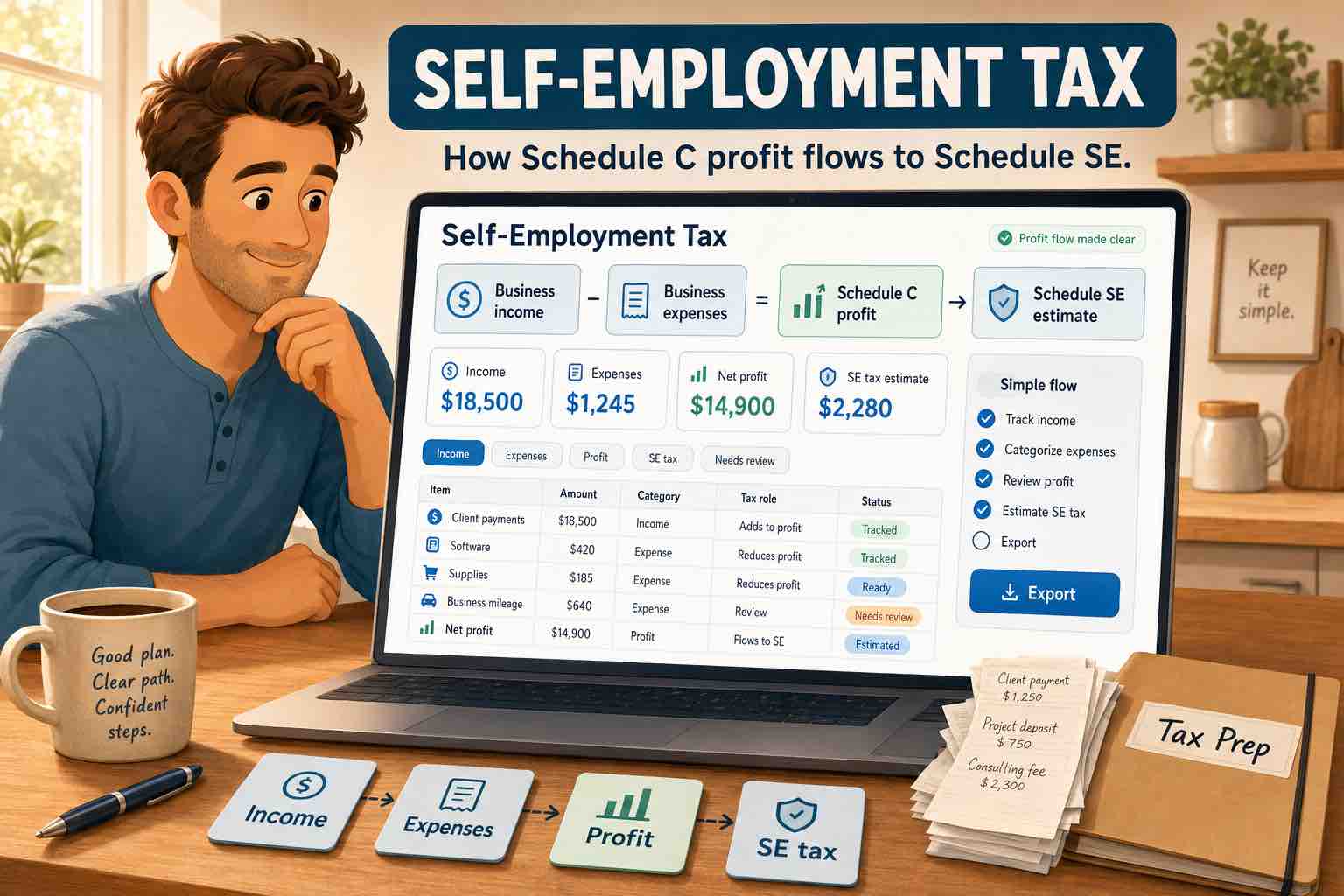
Schedule C is where many sole proprietors report business income and business expenses. The result is net profit or loss.
A simple example:
- A therapist earns $80,000 from clients.
- Business expenses total $18,000.
- Schedule C profit before other tax rules is $62,000.
- That profit helps feed the self-employment tax review on Schedule SE.
This is why each row needs a useful category at tax prep time. Client payments, platform payouts, refunds, transfers, credit card payments, and personal spending need to be separated so profit is not inflated or understated.
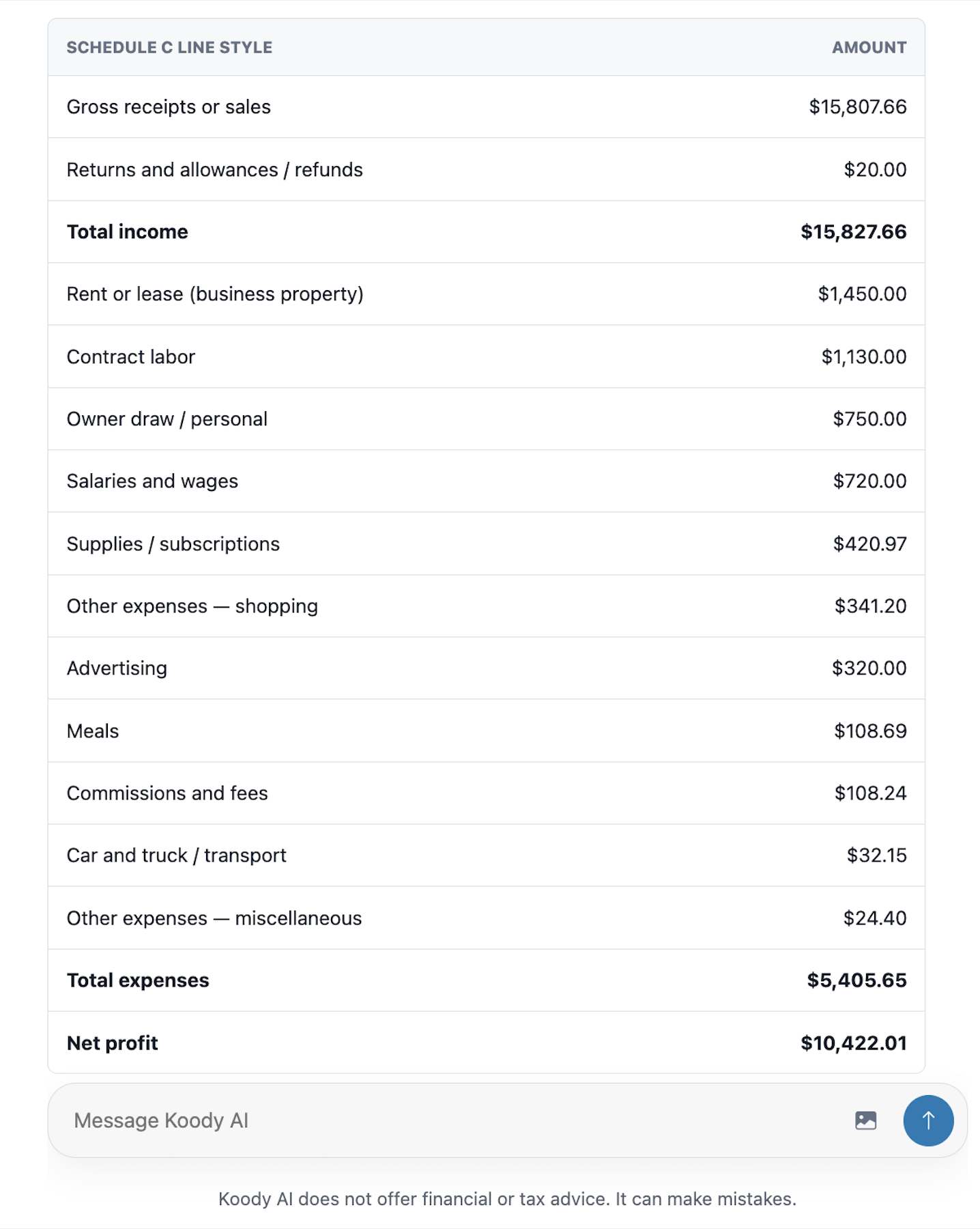
Once the rows are separated, Koody can help turn them into a simple Schedule C P&L-style view. You can see gross receipts, returns and allowances, expense categories, total expenses, and net profit before the numbers move into deeper tax review.
Schedule SE
What is Schedule SE?
Schedule SE is the IRS form used to figure tax due on net earnings from self-employment.
You do not need to memorize the form to keep better records. Focus on the records that feed the calculation:
- Business income that belongs on Schedule C.
- Business expenses that reduce Schedule C profit.
- Personal transfers and owner draws that should not be counted as new income.
- Refunds and reimbursements that need notes.
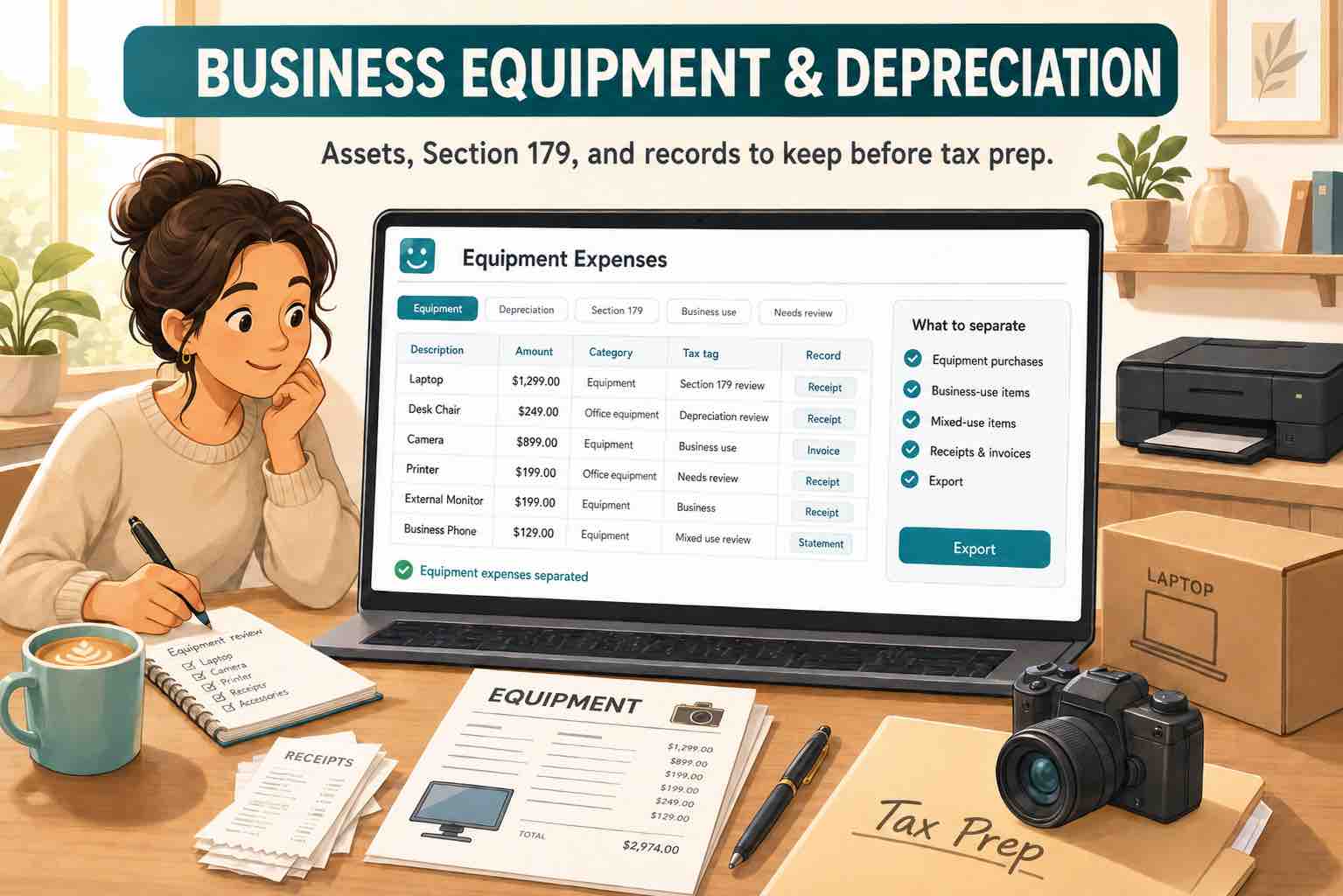
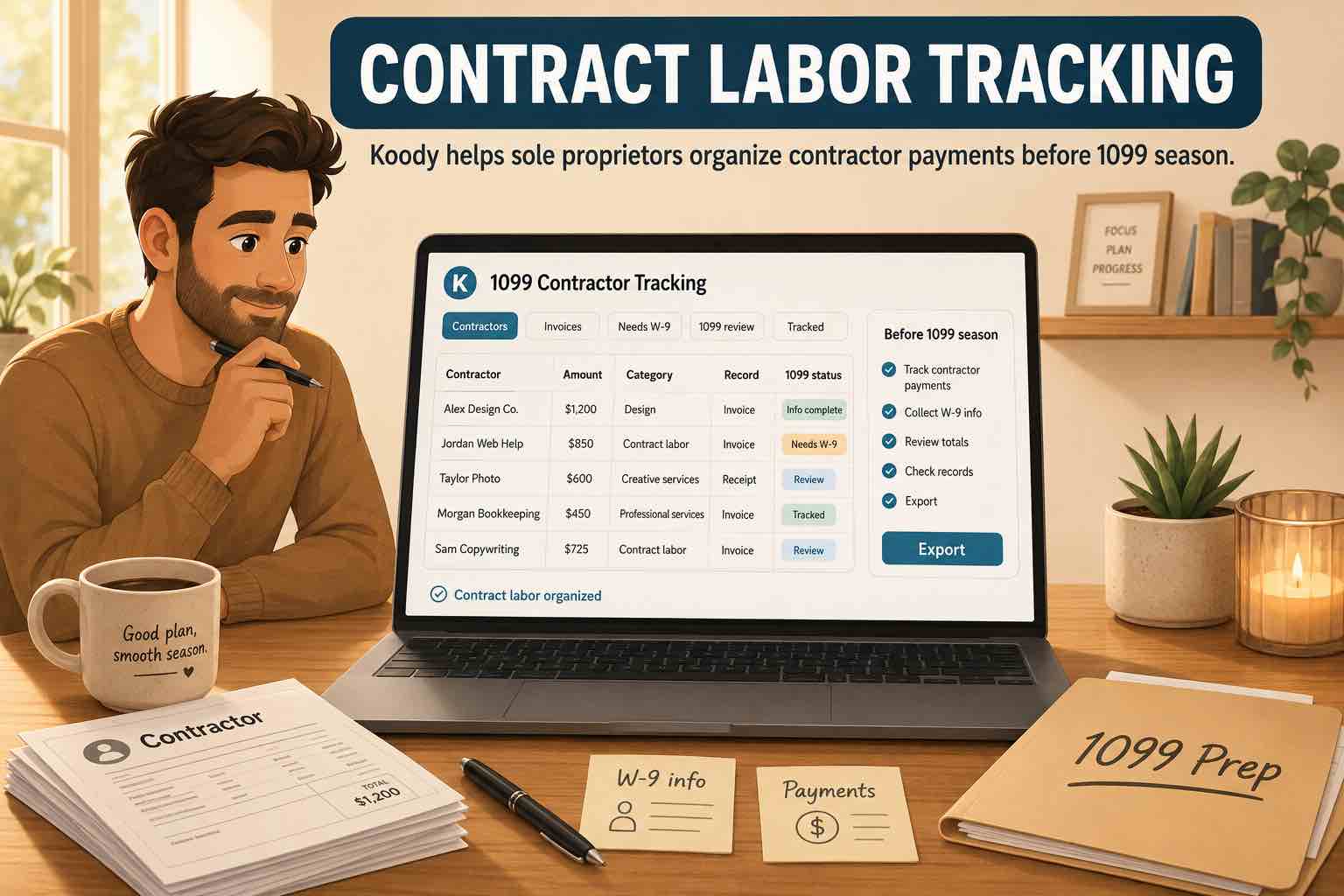
- Large equipment, inventory, contract labor, insurance, interest, and other categories that may need separate review.
Keep income and expense records ready for review.
Koody helps you import transactions, auto-categorize rows, attach receipts, add notes, split mixed purchases, and export records when it is time to review Schedule C profit.
Track self-employment records in KoodyWhat records to keep
For self-employment tax review, keep the records that explain profit.
- Income: client payments, invoices paid, platform payouts, cash sales, tips, bonuses, and 1099 activity.
- Expenses: supplies, software, rent, fees, insurance, contract labor, travel, meals, home office records, utilities, and interest rows.
- Receipts and invoices: especially for broad merchants like Amazon, Costco, Target, Home Depot, Apple, Best Buy, and office suppliers.
- Notes: business purpose, client or project, business-use percentage, refund details, or unusual payment context.
- Transfers: money moved between accounts, credit card payments, owner draws, and tax set-asides.
- Exports: filtered records for accountant or tax-prep review.
Examples for sole proprietors
A few examples show why recordkeeping changes the tax picture:
- Rideshare driver: app income, tolls, parking, car washes, phone use, and mileage records need separate review.
- Hairdresser: chair rent, supplies, product sales, tips, booking fees, towels, and equipment purchases should not all sit in one pile.
- Therapist: client payments, office rent, software, professional insurance, continuing education, and home office records may all affect profit.
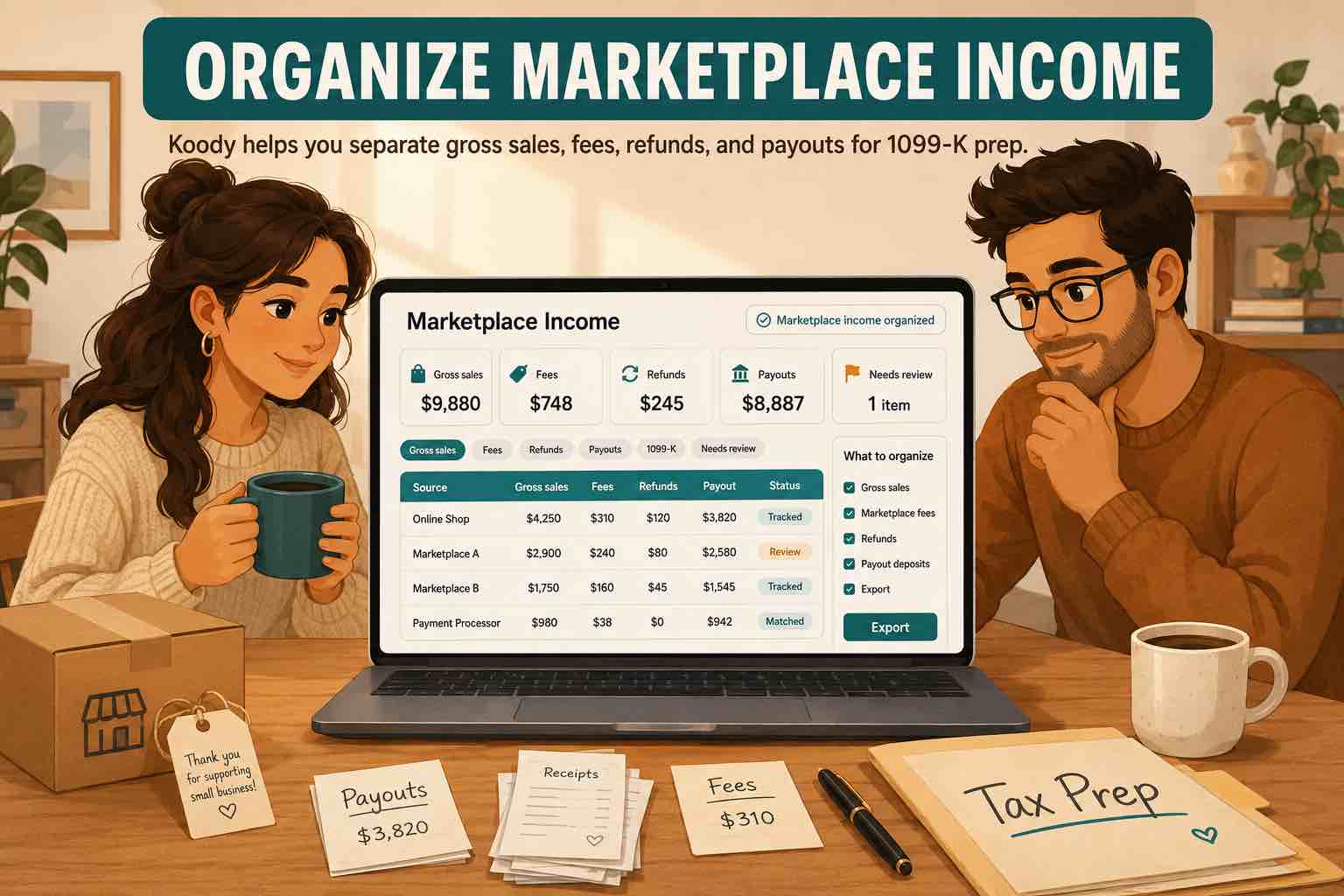
- Etsy seller: gross sales, refunds, marketplace fees, shipping, supplies, inventory, and payouts need separation.
- Lawyer: client payments, court filing fees, subscriptions, contract help, insurance, printer/scanner purchases, and reimbursements need notes.
The goal is to make Schedule C profit easier to review. A cleaner profit number gives the Schedule SE review a better starting point.
How Koody helps before tax prep
Koody helps sole proprietors keep personal money and business records in one app while still separating the rows that need tax review.
- Import bank and card transactions.
- Let Koody auto-categorize transactions, then you can review business income and expenses.
- Attach receipts, invoices, PDFs, screenshots, 1099 forms, and notes.
- Split mixed personal and business purchases by category.
- Keep transfers, owner draws, credit card payments, tax set-asides, and reimbursements away from ordinary income.
- Export records when your accountant or tax preparer needs them.
Import, review, attach notes, and export before tax prep.
Bring transactions into Koody, review the business rows, keep receipts and notes next to the charge, and export cleaner records for Schedule C and Schedule SE review.
Get self-employment records ready in KoodyFAQs
1. What is self-employment tax?
Self-employment tax is the Social Security and Medicare tax paid by many people who work for themselves. It is separate from regular income tax.
2. Do sole proprietors pay self-employment tax?
Many sole proprietors pay self-employment tax when they have net earnings from self-employment. Schedule C profit is one of the records used to work toward that calculation.
3. Is self-employment tax the same as income tax?
No. Income tax and self-employment tax are separate tax ideas. Self-employment tax covers Social Security and Medicare for self-employed earnings.
4. How does Schedule C profit affect Schedule SE?
Schedule C reports business income and expenses. The net profit or loss from Schedule C is used with Schedule SE to figure self-employment tax on net earnings from self-employment.
5. What records should I keep for self-employment tax?
Keep business income, business expenses, receipts, notes, transfers, owner draws, reimbursements, refunds, and exportable records that help explain Schedule C profit.
6. Does Koody calculate self-employment tax?
Koody helps organize income, expenses, categories, receipts, notes, splits, and exports for review. Koody does not calculate self-employment tax, file Schedule SE, or decide final tax treatment.
Sources: IRS references used
Sources accessed July 1, 2026. Koody is not a tax filing service or tax advisor.