Where do I import transactions in Koody?
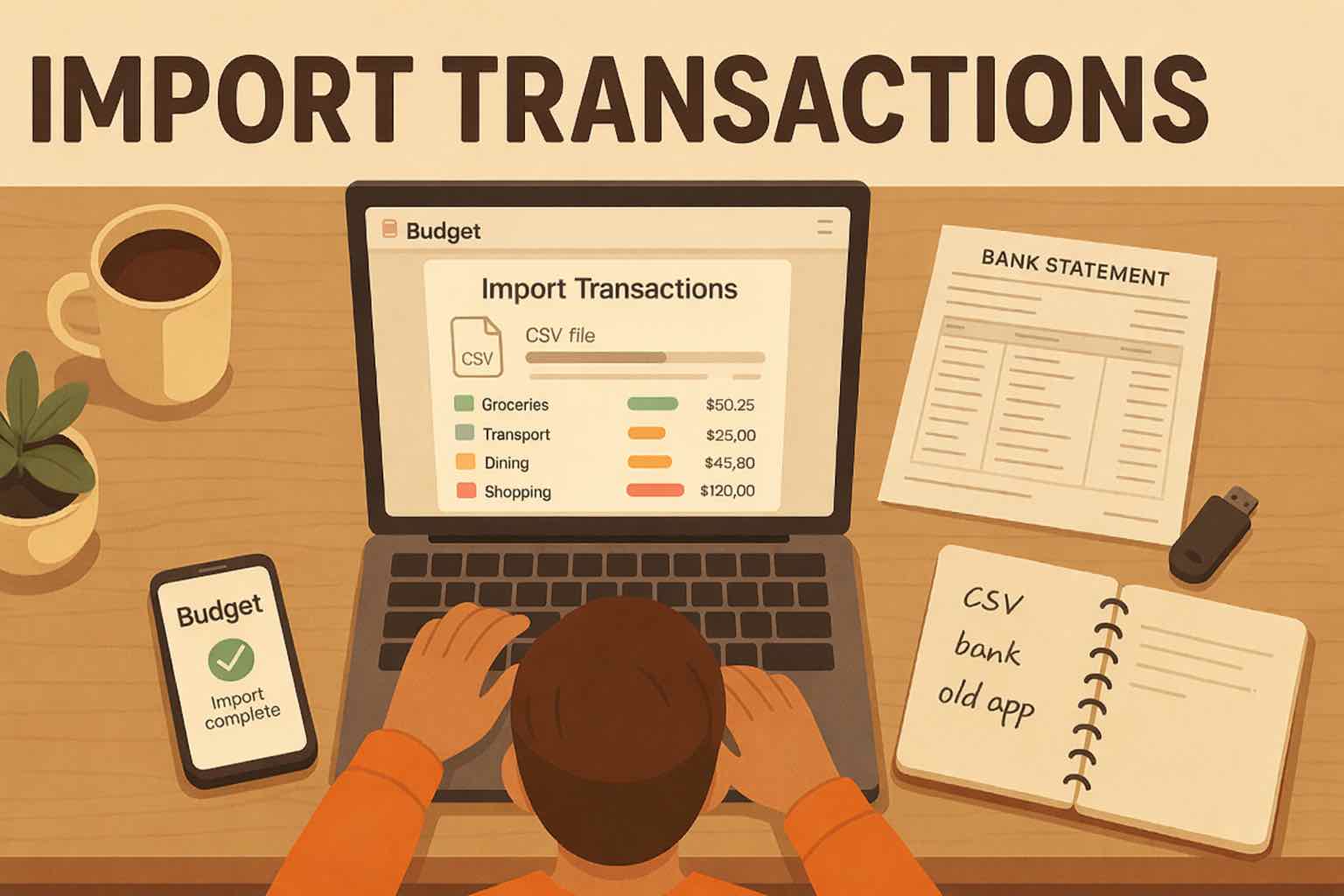
To import transactions into Koody, go to Overview > New > Import Bank Transactions.
How do I export my transactions?
Go to the Transactions tab and click Export. Choose your date range and one or more formats (CSV, Excel (.xlsx), or JSON), then download. If you choose multiple formats, Koody downloads one ZIP bundle.
Can I email a transaction export to my accountant?
Yes. In the Export window on the Transactions tab, choose your date range and formats, enter your accountant's email address, and click Send to Accountant. You can also keep Send a copy to yourself checked to send a copy to your own email address.
Can I make bulk edits and deletes?
Yes. On tablets, laptops, and desktops, navigate to the Transactions tab to use checkboxes and bulk actions. On phones, edit or delete items one at a time.
Can I add my own category column to my CSV file before importing my transactions?
Yes. If you'd like, you can add a Category column to your CSV and fill in your categories before you import. But you don't have to — your imported transactions are automatically categorized, and if anything looks off, you can quickly fix it with bulk edits, which is usually easier than editing the CSV itself.
Will Koody remember the description and category changes I make after importing?
Yes. When you edit an imported transaction and accept the apply-to-similar prompt, Koody updates matching transactions from the same import and remembers that change for future imports. If you decline, only the one you edited changes.
How do I use column mapping during a CSV import?
Column mapping appears only when Koody cannot confidently read your CSV headers or structure. On the Column Mapping screen, select the Date, Description, and Amount columns, optionally choose a Category column, and set the sign convention if needed. Then click Import Using These Columns, and the import will run as usual. If you do not see this column mapping step, your file was mapped automatically.
Why did my CSV import fail or show "No description"?
This usually comes down to bank-specific CSV formats. Email us at hello@koody.com, and we'll sort it out immediately.
I imported my CSV successfully in Koody, but I can't find the transactions. Where did they go?
Most of the time, this happens because you're viewing the wrong date range. Go to the Transactions tab and find the date range button (top right on desktop, middle on mobile). Select a range that matches the dates in your CSV, then your imported transactions should appear.
Can I track recurring transactions?
Yes, Koody allows you to set up recurring transactions for both income and expenses. These transactions are automatically generated on the specified dates, helping you stay on top of regular financial commitments.
Can I use Koody outside the United States?
Koody is built primarily for people in the United States. If you live elsewhere, you’re welcome to use general tools such as budgeting, expense tracking, and cash flow management.
Can I change my currency?
Yes. You can choose your preferred currency in Settings and use it for budgets, transactions, and other everyday money tracking.
Is my financial data secure?
Security is our top priority. We use bank-grade encryption and adhere to strict privacy protocols to protect your data. Your information is never shared without your consent, ensuring your financial data remains confidential.
What happens if I cancel my subscription?
If you cancel an active paid subscription, your access to our premium features will continue until the end of your current billing cycle. After that, your account will no longer have access to premium features. You can always come back and reactivate a paid plan later. We'll securely store the data associated with premium features for a limited time in case you decide to return.
How do I delete my account?
To delete your account, navigate to 'Edit Profile' and select 'Delete Account.' Please note that this action is irreversible and will permanently remove all your data.
Where is Koody located?
Koody is headquartered in San Francisco, California, USA.
Does Koody support tax tracking for income?
Yes. You can mark income as taxable, and Koody will help you track the amount owed. This feature is particularly useful for freelancers and self-employed individuals managing their tax obligations.
If I accidentally import the same transactions as last time, will I get duplicates?
Koody checks new imports against transactions you previously imported and skips duplicates. That means you can safely import on a schedule without worrying that the same bank CSV will double-count your history. This duplicate protection compares new imports with previous imports. If you manually entered a transaction that also exists in your CSV, that can still create a duplicate, so it is worth reviewing after your upload. If you are unsure, you can ask Koody AI to help you spot likely duplicates so you can clean them up quickly.
Can I import data from multiple financial institutions?
Yes. You can import statements from multiple banks and cards into Koody. Each time you import, you choose the Koody account the file should go into, so your transaction history stays organized across institutions.