Quarterly estimated taxes can feel confusing because they happen before the annual tax return is filed. You are paying during the year based on the income you have earned so far, the expenses you have recorded, and what you expect the final year to look like.
This guide is for sole proprietors, freelancers, drivers, creators, hairdressers, therapists, consultants, sellers, cleaners, and side hustlers who want better records before each estimated tax payment.
Important: Koody is a budgeting and record-prep app, not a tax filing service, tax advisor, accountant, tax preparer, payroll provider, or law firm. Use Koody to organize income, expenses, set-asides, payment records, receipts, notes, imports, and exports. A qualified tax professional should decide payment amounts, due dates, penalties, and final tax treatment.
What quarterly estimated taxes are
What are quarterly estimated taxes?
Quarterly estimated taxes are payments made during the year when tax is not withheld from income. Employees usually have tax withheld from paychecks. Sole proprietors often do not.
The IRS says estimated tax can cover income tax and other taxes, including self-employment tax. That means the payment can include income tax plus Social Security and Medicare tax for self-employed work.
The IRS divides the year into payment periods. Many sole proprietors review their records around those periods so they are not waiting until tax season to find out what happened.
Who may need to pay estimated taxes
Do sole proprietors pay estimated taxes?
Many do. The IRS says individuals, including sole proprietors, partners, and S corporation shareholders, generally make estimated tax payments if they expect to owe $1,000 or more when the return is filed, after credits and withholding.
That can include:
- A rideshare driver with weekly app income.
- A therapist starting a private practice.
- A hairdresser renting a chair.
- A lawyer with solo practice income.
- An Etsy, eBay, or Shopify seller.
- A consultant paid by clients without withholding.
- A creator, tutor, cleaner, or delivery driver.
If you also have a job with withholding, that can affect the estimate. If your spouse has withholding, that can also affect the full household picture. Keep the records organized and ask for help when the numbers are not obvious.
Income tax and self-employment tax
A sole proprietor may deal with two tax ideas at once: income tax and self-employment tax.
- Income tax: tax based on taxable income after the rest of the return is considered.
- Self-employment tax: Social Security and Medicare tax for self-employed earnings.
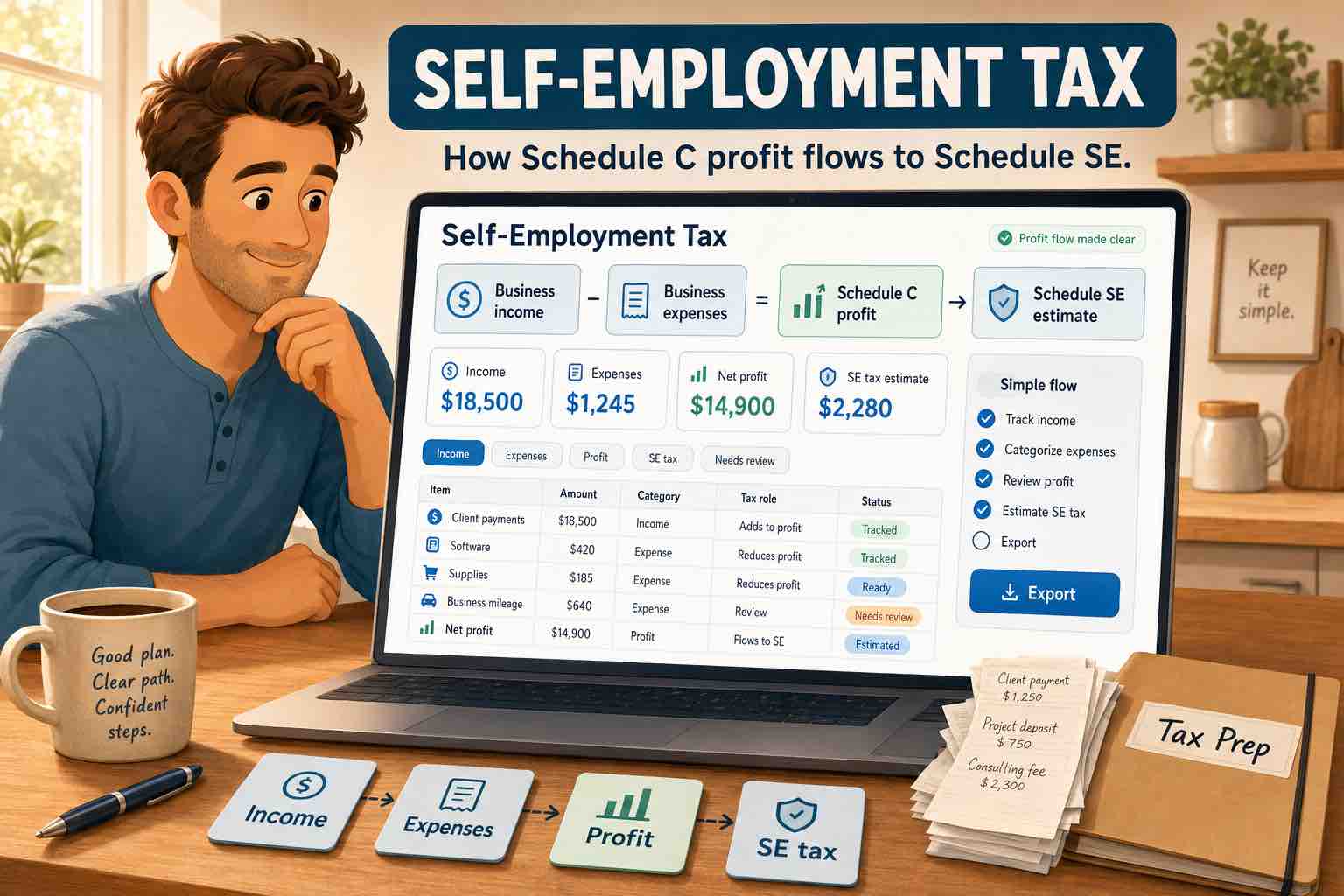
Schedule C profit can feed into Schedule SE, which is used to figure self-employment tax. That is why clean income and expense records help. If income is missing, expenses are mixed with personal spending, or transfers are treated like income, the estimate can be harder to review.
For a deeper explanation, read self-employment tax for sole proprietors.
What to track before each payment
What records should I review before an estimated tax payment?
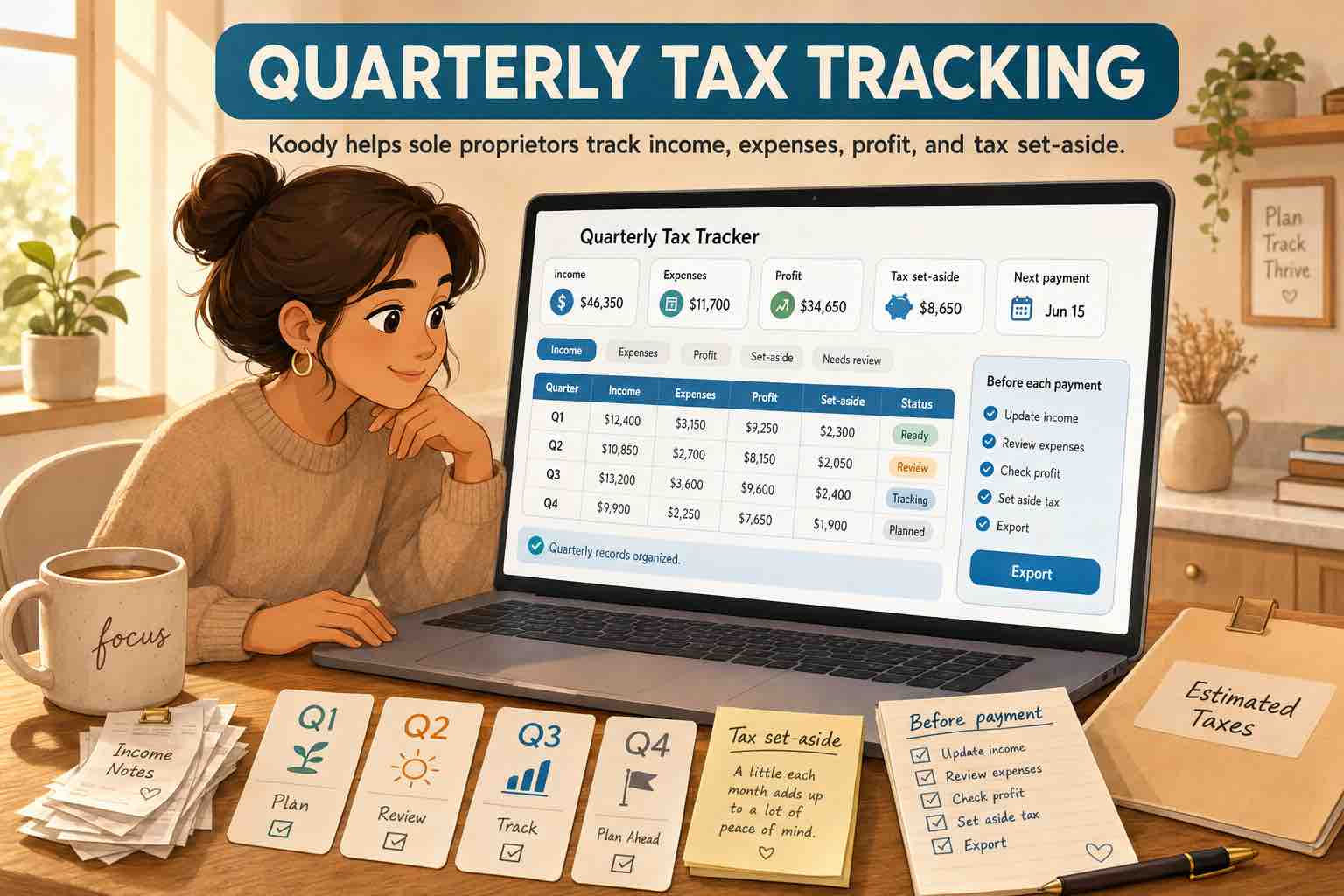
Before each payment, gather the records that show how the business has been doing since the last review.
- Business income: client payments, platform payouts, cash sales, invoices paid, 1099 activity, and deposits.
- Business expenses: supplies, fees, rent, software, mileage-related records, meals, travel, home office records, and other business costs.
- Transfers: money moved between accounts, credit card payments, and owner draws that should not be treated like revenue.
- Refunds and reimbursements: money coming back that may need notes.
- Tax set-asides: money moved to a tax savings category or account.
- Prior payments: federal and state estimated tax payments already made.
- Notes: anything unusual, such as a large one-time purchase, late client payment, refund, or platform adjustment.
You are not trying to file the whole return each quarter. You are trying to keep the current picture close enough that the payment is based on real records instead of guesswork.
Keep tax set-asides and payment records in Koody.
Koody helps you separate income, expenses, set-aside transfers, estimated tax payments, notes, and confirmations so each payment period is easier to review.
Track quarterly tax records in KoodyTax set-asides
How much should I set aside for taxes?
The right set-aside amount depends on your facts: profit, other income, withholding, credits, state taxes, self-employment tax, and past payments. Koody should not decide that number for you.
What Koody can do is help you treat tax set-asides as visible money movement. You can use a category, account, or note to show that money was moved aside for taxes instead of spent on normal business costs.
Example:
- A freelance designer receives a $2,000 client payment.
- The payment is recorded as business income.
- The designer moves part of the money into a tax savings account.
- Koody records that movement as a transfer or tax set-aside note, not as an extra business expense.
That separation helps later because tax savings movement is different from paying for software, supplies, contractor help, or rent.
Payment records to keep
What should I save after paying estimated taxes?
After a payment is made, save the record. Do not rely on memory.
- Payment date.
- Payment amount.
- Federal or state agency paid.
- Payment period or tax year.
- Confirmation number or receipt.
- Bank or card record showing payment.
- Note if the payment covered a catch-up amount or amended estimate.
Estimated tax payments should be kept apart from ordinary business expenses. They are tax payments, not rent, supplies, software, meals, or professional fees.
How Koody helps before each payment
Koody helps you keep the records that feed the estimate in one place.
- Import bank and card transactions.
- Let Koody auto-categorize rows, then review income, expenses, transfers, refunds, and owner draws.
- Track tax set-asides separately from business spending.
- Attach IRS, state, bank, or card payment confirmations.
- Add notes that explain the payment period, unusual income, large purchases, or late client payments.
- Export filtered records when your accountant or tax preparer asks for them.
Koody does not calculate or file estimated taxes. It helps the numbers behind the estimate stay easier to review.
Import, review, attach notes, and export before each payment.
Bring transactions into Koody, review the business rows, attach payment confirmations, keep tax set-asides visible, and export records when it is time to check the quarter.
Get tax records ready in KoodyFAQs
1. What are quarterly estimated taxes?
Quarterly estimated taxes are tax payments made during the year when tax is not withheld from your income. For sole proprietors, estimated tax can cover income tax and self-employment tax.
2. Do sole proprietors pay estimated taxes?
Many sole proprietors make estimated tax payments if they expect to owe tax for the year. The IRS says individuals, including sole proprietors, generally make estimated payments if they expect to owe $1,000 or more after credits and withholding.
3. How much should I set aside for taxes as a sole proprietor?
The right amount depends on income, expenses, other income, credits, withholding, and self-employment tax. Koody can help you track income, expenses, and tax set-asides, but a tax professional or Form 1040-ES should guide the estimate.
4. What records should I keep for estimated tax payments?
Keep income records, expense records, tax set-aside transfers, payment dates, payment amounts, IRS or state confirmations, bank records, and notes showing which period the payment covered.
5. Are estimated tax payments business expenses?
Estimated tax payments are tax payments, not ordinary business expenses. Keep them separate from rent, supplies, fees, travel, meals, and other Schedule C categories.
6. How does Koody help with quarterly tax records?
Koody helps you organize income, expenses, tax set-asides, estimated tax payments, receipts, notes, and exports so quarterly review and tax prep are easier.
Sources: IRS references used
Sources accessed July 1, 2026. Koody is not a tax filing service or tax advisor.