This guide is for sole proprietors, freelancers, gig workers, independent contractors, hairdressers, barbers, drivers, cleaners, sellers, creators, consultants, and side hustlers who want better records before tax season.
The IRS does not require most small businesses to use one exact app, notebook, or spreadsheet. It expects records that clearly show income and expenses, with documents that support what you put on the return.
In plain English: do not wait until tax time to guess what happened. Keep enough detail now so your accountant, tax preparer, bookkeeper, or future self can understand the transaction later.
Important: Koody is a budgeting and record-prep app, not a tax filing service, tax advisor, accountant, tax preparer, or law firm. Use Koody to organize transactions, categories, receipts, files, notes, splits, imports, and exports. A qualified tax professional should decide final tax treatment and filing details.
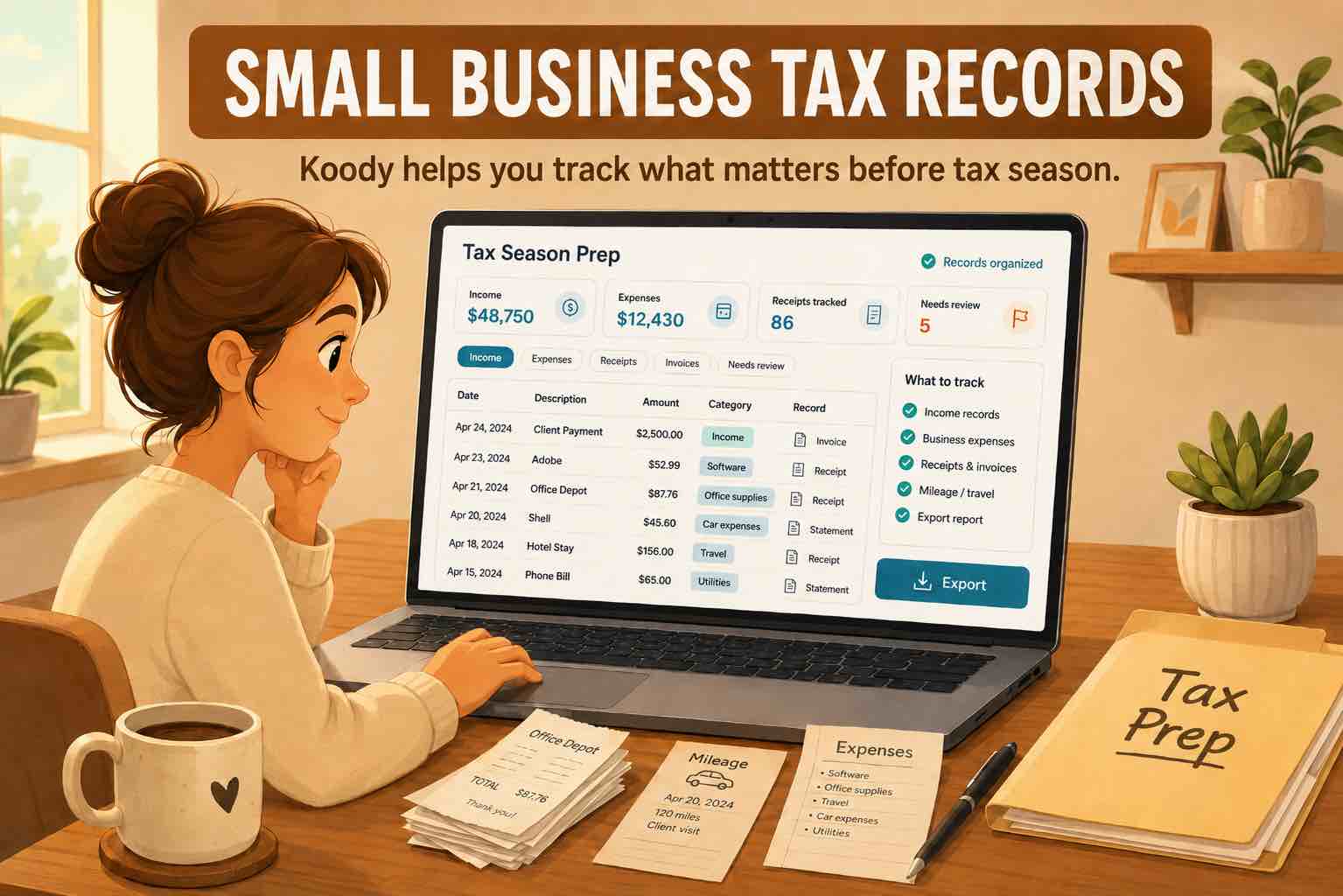
The simple recordkeeping checklist
If you are not sure what to track, start with these eight details for each business transaction.
- Date: when the money came in or went out.
- Payee or payer: who paid you, or who you paid.
- Amount: the full amount, including tax, tip, shipping, or fees when relevant.
- Account or payment proof: bank account, card, payment app, canceled check, or statement line.
- Category: what kind of income or expense it was.
- Business purpose: why it belonged to the business.
- Supporting document: receipt, invoice, paid bill, deposit record, screenshot, order confirmation, or similar proof.
- Note: anything a stranger would need to understand the transaction later.
This does not mean every transaction needs a long essay. A clear category is enough for some rows. Other rows need a receipt, a note, or a split because the bank description does not tell the whole story.
For example, "Amazon" is not a business purpose. "Printer paper for client packets" is much clearer. "Restaurant" is not enough for a business meal. "Lunch with salon supplier about color order" gives the record context.
Income records
What income records should a small business keep?
Income records show where your business money came from. The IRS calls this gross receipts. Your records should help separate business income from personal deposits, loans, transfers, refunds, and money that does not belong in income.
Keep records for:
- Client payments.
- Platform payouts from places like Etsy, Uber, DoorDash, Stripe, Shopify, PayPal, Square, or similar services.
- Cash sales.
- Invoices and paid invoice confirmations.
- Bank deposits.
- Receipt books or sales summaries.
- Forms 1099-NEC, 1099-K, or other income forms.
- Refunds, chargebacks, and returns that reduce income.
The key question is simple: if money came in, can you tell where it came from and whether it was business income?
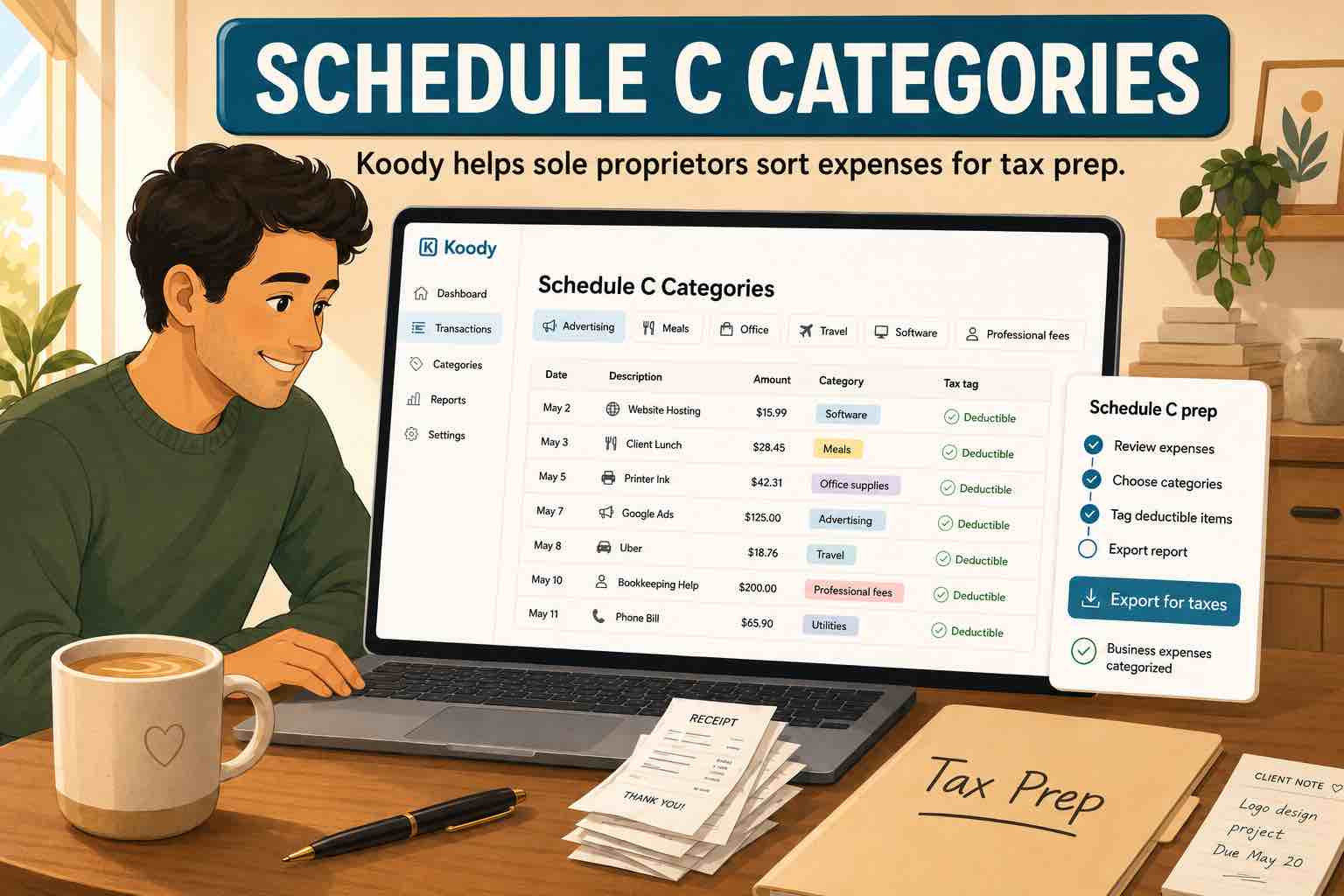
In Koody, income categories such as Revenue, Other Business Income, Returns & Allowances, Salary, and Transfers help keep business income, personal income, refunds, and account movement from blending together.
Expense records
What expense records should a small business keep?
Expense records show what the business paid for. A useful expense record should show the payee, amount, proof of payment, date, and what was bought or received.
Common supporting documents include:
- Receipts.
- Invoices.
- Paid bills.
- Account statements.
- Credit card statements.
- Canceled checks or electronic payment confirmations.
- Order confirmations.
- Screenshots from apps, marketplaces, or vendor portals.
A bank statement can be part of the proof, but it often does not show what was bought. If the line says "Target," "Amazon," "Costco," "Home Depot," "gas station," or "restaurant," add the receipt or a note that explains the business reason.
If you want a deeper answer on what bank statements can and cannot show, read bank statements vs. receipts.
Records that need extra detail
Some records need more than a date and amount. Add extra detail when the transaction could be misunderstood later.
Pay special attention to:
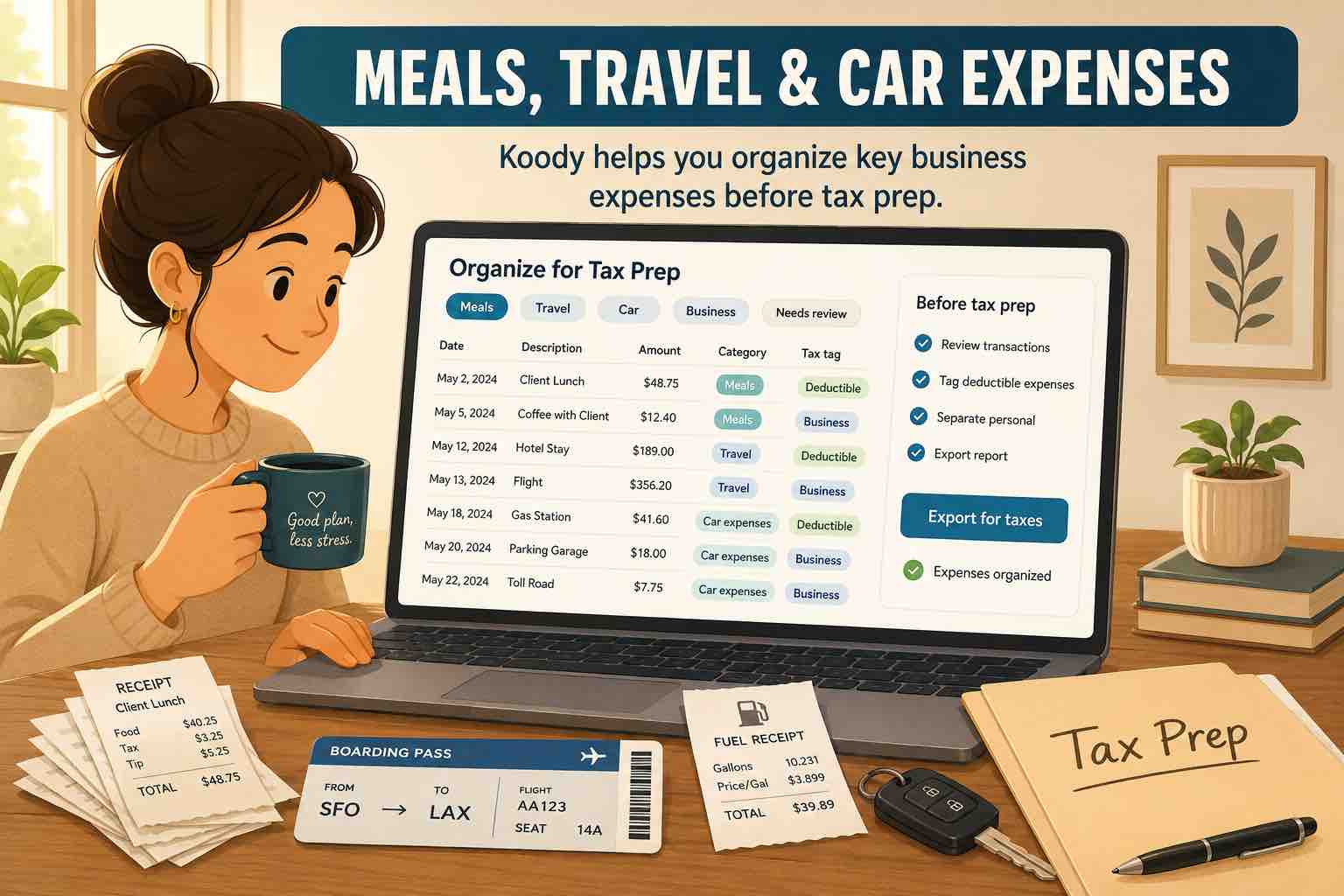
- Meals: who was there and why the meal was business-related.
- Travel: destination, dates, business reason, receipts, and any personal days.
- Car costs: mileage or business-use records, destination, business purpose, tolls, parking, and related receipts.
- Inventory: what you bought to resell, how much it cost, and any records needed to value inventory.
- Equipment and assets: purchase date, price, how it was used, improvements, depreciation records, sale date, and sale price when relevant.
- Payroll or employment taxes: employment tax records, pay records, and related filings when you have employees.
- Refunds and reimbursements: what original transaction the money relates to.
- Transfers, credit card payments, and owner draws: keep account movement separate from real income and expenses.
- Mixed purchases: split the transaction when one receipt includes personal and business items.
A rideshare driver, barber, Etsy seller, consultant, hairdresser, and cleaner may all need different records. The point is not to copy someone else's category list. The point is to keep records that make sense for your actual business.
For meals, travel, and car costs, read Koody's guide to business meals, travel, and car expenses before tax prep. For home office records, read Koody's guide to home office expense categories.
How long to keep small business tax records
The IRS rule is not just "keep everything forever" or "throw it away after three years." The plain-English version is this: keep records that support a tax return until the time for the IRS to review that return has passed.
Three years is a common starting point for many records, but it is not the only rule. Some situations need longer. Employment tax records should generally be kept for at least four years. Asset records may need to stay around until after the asset is sold or disposed of, plus the review period for that tax year.
If you are not sure whether a record can be deleted, keep it and ask a qualified tax professional. Storage is cheaper than rebuilding a missing record during tax season.
Keep proof with the transaction.
Koody lets you attach receipts, invoices, PDFs, screenshots, and notes to the matching row, so the explanation stays next to the charge instead of getting lost in email, downloads, or your camera roll.
Keep records in KoodyWhat to do if records are missing
Missing records happen. The fix is not to pretend the receipt exists. Rebuild the record with the best proof you can find.
Look for:
- Bank statements.
- Credit card statements.
- Payment app history.
- Email receipts.
- Vendor invoices.
- Screenshots from apps or websites.
- Calendar entries.
- Client messages.
- Booking confirmations.
- Partial receipts.
- Notes written as soon as possible.
Write notes in plain language. "Client parking for downtown appointment" is better than leaving a mystery parking charge. "Packaging for Etsy orders" is better than a broad office supplies label when the merchant name is not clear.
If your records are thin, flag those rows for review. Your accountant or tax preparer can tell you how to handle them.
How Koody helps before tax season
Koody helps turn scattered bank rows, receipts, and notes into records that are easier to review.
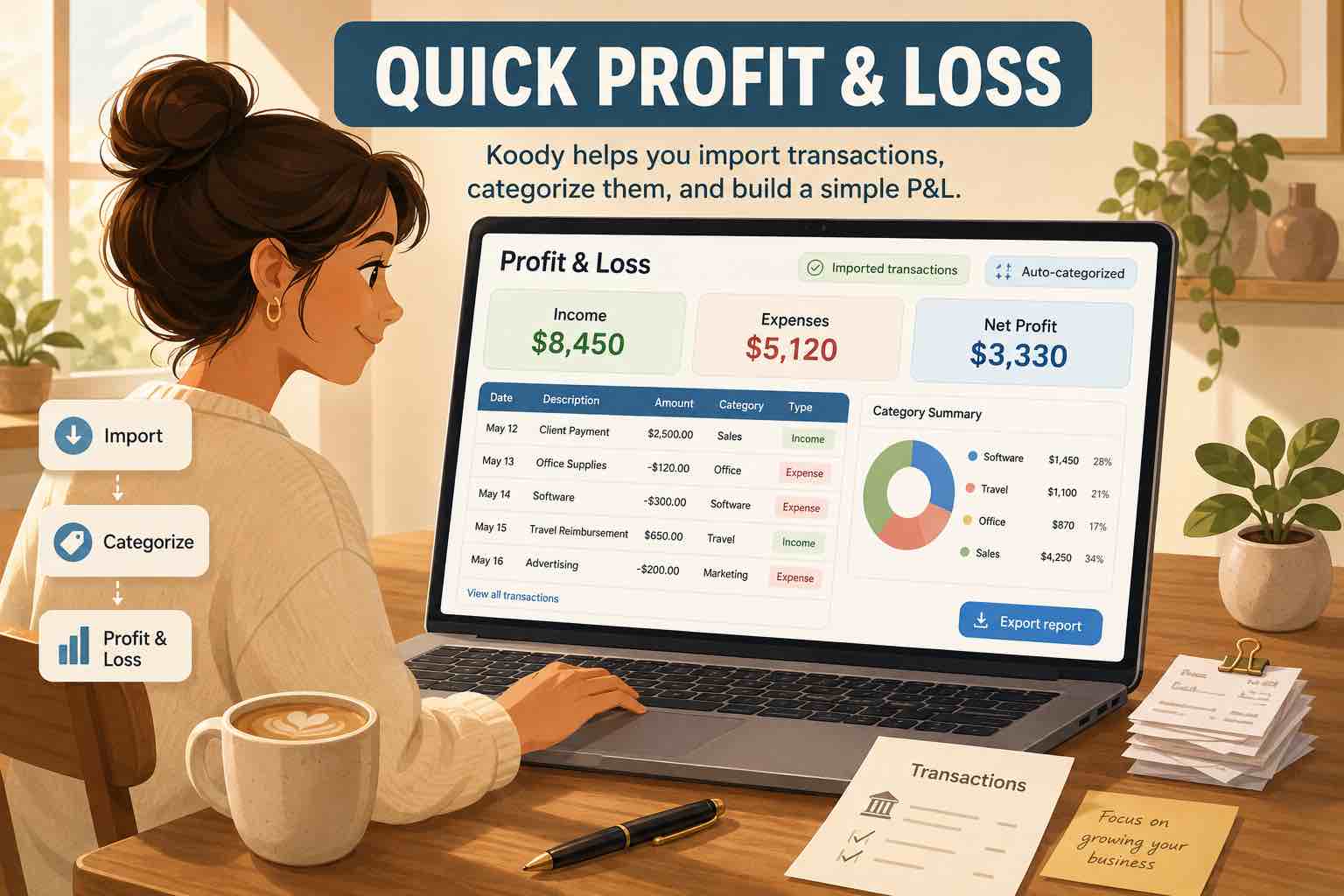
- Import bank and card CSVs when you need to catch up.
- Let Koody auto-categorize income, expenses, transfers, card payments, refunds, and owner draws.
- Attach receipts, invoices, PDFs, screenshots, and files to the matching transaction.
- Add notes when a merchant name does not explain the business reason.
- Split one transaction across personal and business categories when a receipt is mixed.
- Keep personal finance and sole proprietor records in one app without treating every row the same way.
- Export filtered records as CSV, Excel, or JSON when your accountant, tax preparer, or bookkeeper needs them.
This is especially useful when your real life does not fit into a clean business-only file. You may have household bills, client payments, owner draws, credit card payments, business supplies, and personal spending in one place. Koody helps keep the records clear enough to review.
Import, auto-categorize, attach proof, and export before tax season.
Bring bank and card CSVs into Koody, let Koody auto-categorize the rows, attach receipts and notes, split mixed costs, and export cleaner records when tax season or accountant review comes around.
Get business records ready in KoodyFAQs
1. What records should a small business keep for taxes?
A small business should keep records that show income, expenses, purchases, payments, receipts, invoices, bank activity, credit card activity, categories, and the business reason for each transaction. The records should make it clear what happened, when it happened, how much it was, and why it belonged to the business.
2. What details should I track for each business expense?
For each business expense, track the date, payee, amount, payment account, category, proof of payment, what was bought, and the business purpose. Add a note when the merchant name does not explain the expense.
3. Do bank statements count as business records?
Bank and credit card statements are useful records because they show money movement, dates, amounts, and sometimes merchant names. They usually work best with receipts, invoices, screenshots, or notes that explain what was bought and why it was for business.
4. Do I need receipts for every small business expense?
Receipts and invoices are helpful because they show what was bought. For small or missing items, keep the best proof you have and add a clear note. A qualified tax professional should decide whether your records are enough for a specific tax position.
5. How long should I keep small business tax records?
The IRS says to keep records that support a tax return until the period of limitations for that return runs out. Three years is a common starting point, but some records need longer. Employment tax records should generally be kept for at least four years, and asset records may need to be kept until after the asset is sold or disposed of.
6. What should I do if business records are missing?
Do not invent a record. Rebuild what you can from bank statements, credit card statements, invoices, emails, screenshots, calendars, client messages, partial receipts, and notes written as soon as possible.
7. How does Koody help with small business recordkeeping?
Koody helps you import bank and card transactions, auto-categorize them, attach receipts and files, add notes, split mixed personal and business costs, and export cleaner records for accountant or tax-prep review.
Sources: IRS references used
Sources accessed June 8, 2026. Koody is not a tax filing service or tax advisor.