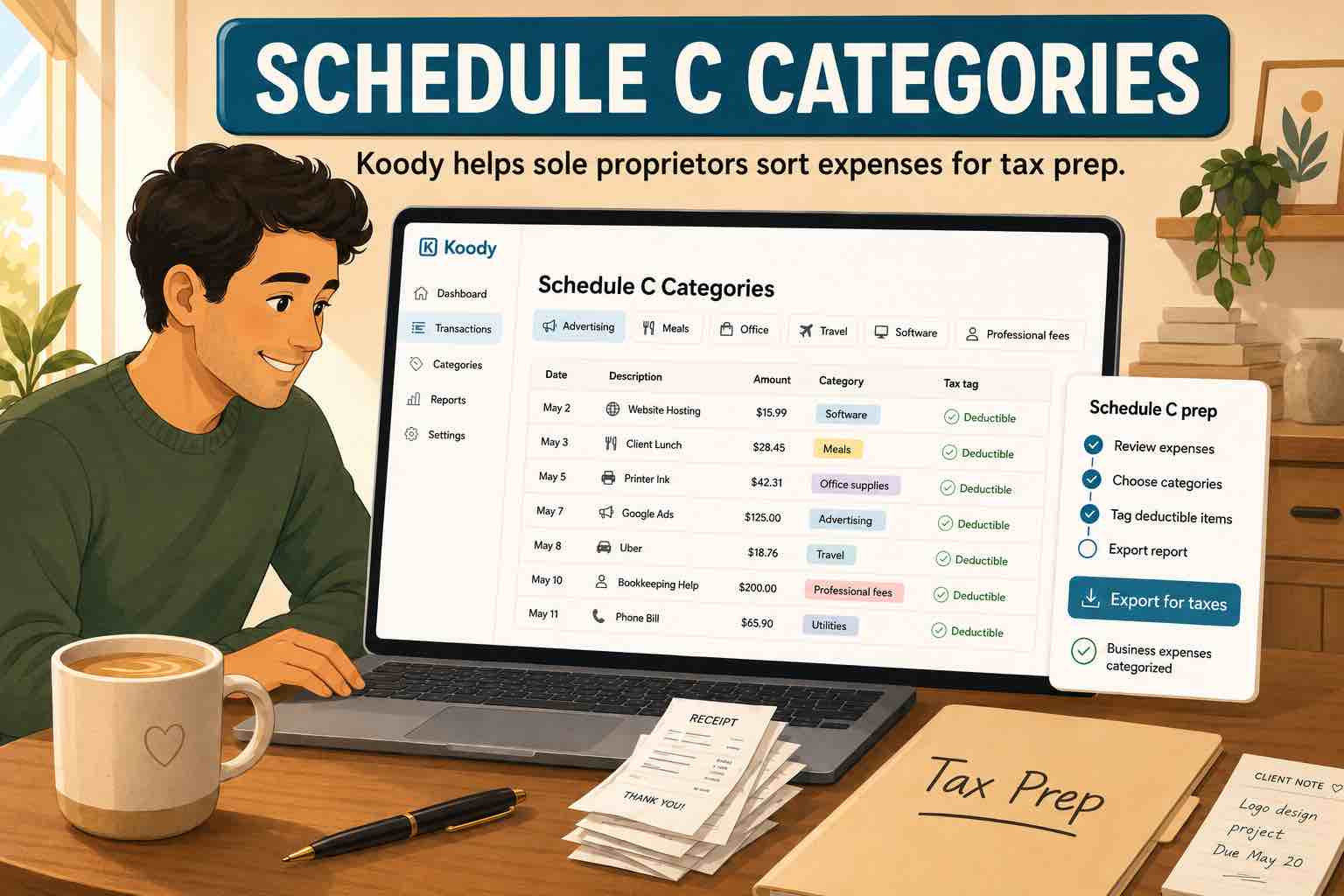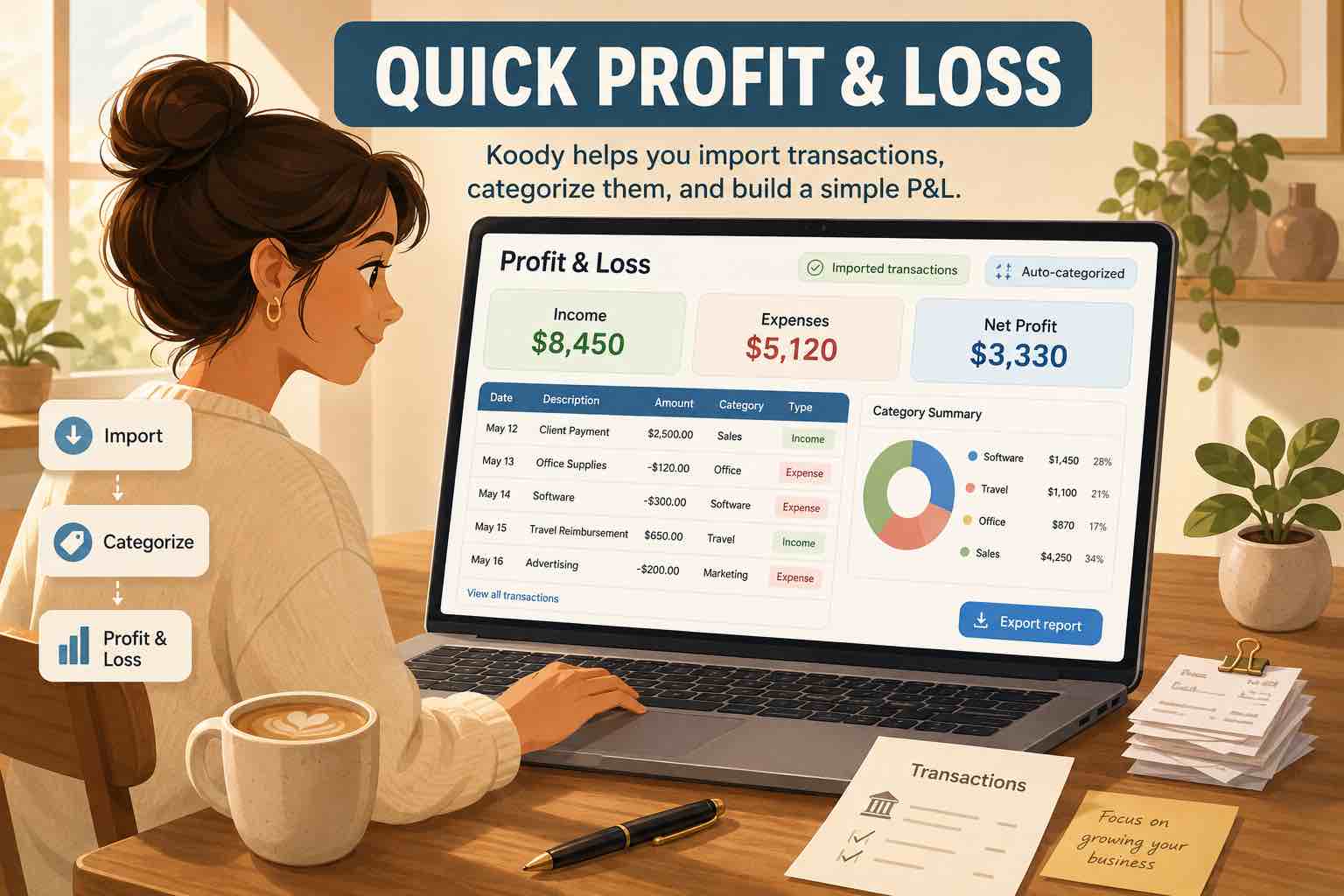
This guide is for sole proprietors, freelancers, gig workers, independent contractors, drivers, creators, consultants, barbers, sellers, and side hustlers who want business records ready before tax season.
The simple version is this: a bank charge tells you money left the account. It does not always tell you why. For meals, travel, and car costs, the "why" matters. A restaurant name, hotel name, or gas station charge may not be enough when someone reviews the record months later.
Important: Koody is a budgeting and record-prep app, not a tax filing service, tax advisor, accountant, tax preparer, or law firm. Use Koody to organize transactions, categories, receipts, notes, splits, exports, and draft summaries. A qualified tax professional should decide final tax treatment.
What the IRS wants you to keep
IRS Publication 463 explains travel, meal, and car expense records. In plain English, you want proof for five things:
- Amount: how much you paid.
- Date or time: when the expense happened, or when the trip or car use happened.
- Place or description: where it happened, who charged you, or what the expense was.
- Business purpose: why it was for the business.
- Business relationship: who was involved, when another person was part of the meal or trip.
The IRS also says records kept close to the time of the expense are stronger than records rebuilt later. That is common sense. If you write "client introduction lunch for Johnson referral" the same day, that note is much more useful than trying to remember the meal next April.
A receipt, bill, invoice, or card slip can prove the amount and merchant. A note explains the business reason. For car costs, a mileage log or similar record explains the business use.
Keep proof with the transaction.
Koody lets you attach receipts, screenshots, invoices, and notes to the matching transaction, so the record is not split between your bank statement, phone camera roll, email, and memory.
Track records in KoodyBusiness meals
What records do I need for business meals?
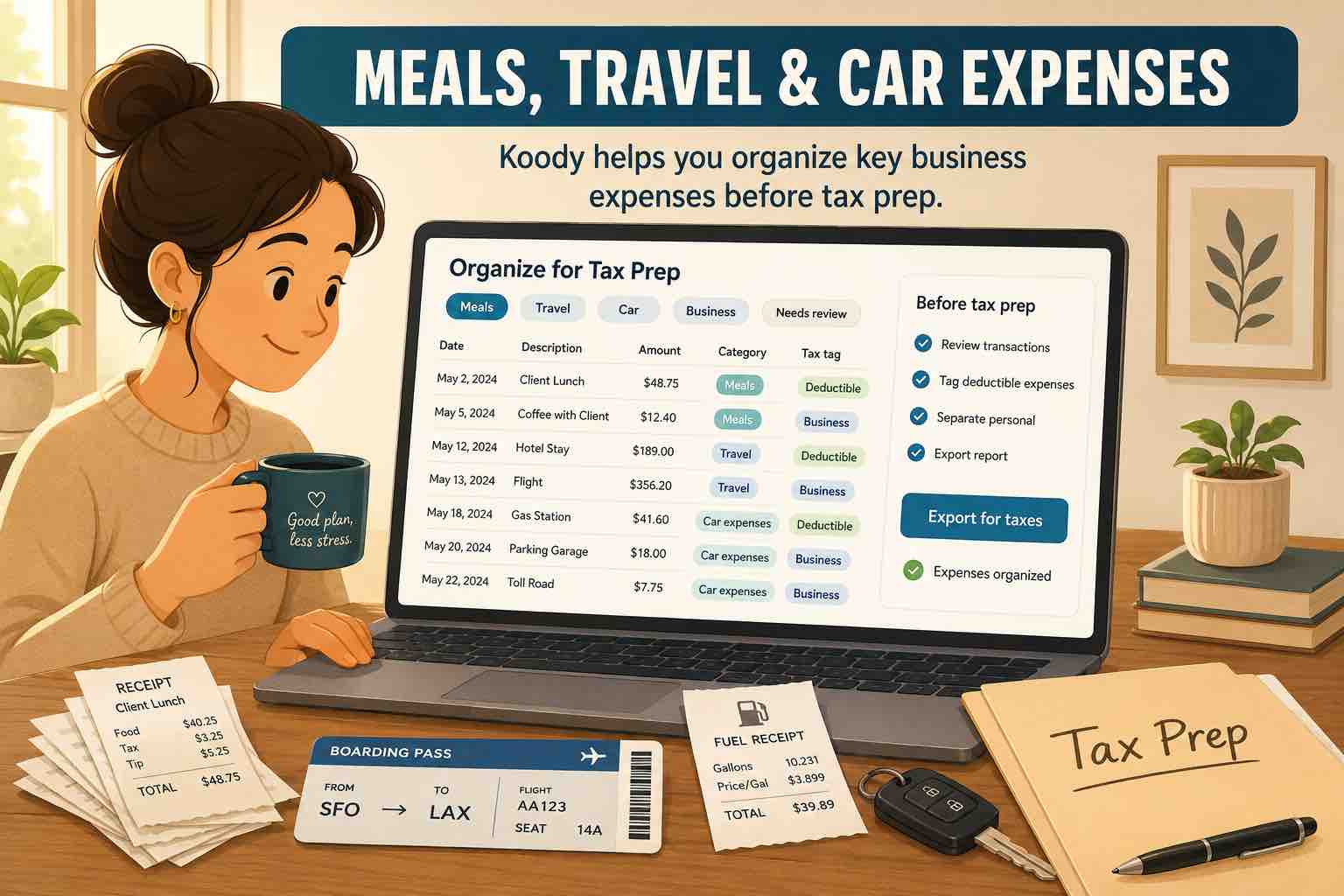
For a business meal, keep the receipt, date, amount, restaurant or vendor, who was there when another person was involved, and a short note explaining the business purpose.
A client lunch, coffee meeting, conference meal, or meal while traveling for work can all look the same on a card statement. The statement may say the restaurant and amount, but it usually will not say "meeting with supplier about spring inventory" or "meal while away from home for a two-day trade show."
In Koody, categorize the transaction as Business Meals, attach the receipt, and add a short note. It does not need to sound fancy. Write the reason in normal language:
- "Lunch with Marcus about salon chair rental."
- "Coffee with Etsy supplier about custom packaging."
- "Dinner during out-of-town client visit."
- "Meal while traveling for delivery route conference."
Your tax professional can decide how the final meal rule applies. Your job before tax prep is to make the record clear enough to review.
Business travel
What records do I need for business travel?
For business travel, keep the dates, destination, lodging, transportation, receipts, business reason, and notes that separate business time from personal time.
Business travel is easy to understand when the trip is simple: you drove or flew somewhere for a job, client meeting, conference, delivery, shoot, trade show, or training. It gets harder when a trip has both business and personal parts.
Before tax prep, organize travel records like this:
- The city or destination.
- The dates you left and returned.
- The business reason for the trip.
- Hotel, airfare, rideshare, parking, tolls, baggage, and other receipts.
- Which days were business days and which days were personal days.
- Reimbursements from clients, platforms, or customers.
Koody helps by keeping the trip charges in Business Travel and letting you attach receipts and notes to each row. If one charge includes business and personal spending, use a split transaction so the category totals are not misleading.
Car expenses
What records do I need for business car expenses?
For business car expenses, keep dates, destinations, business purpose, mileage or business-use records, tolls, parking, and receipts for related costs.
This matters for rideshare drivers, delivery drivers, realtors, mobile barbers, contractors, cleaners, tutors, consultants, and anyone else who drives for work. A fuel charge by itself does not prove how much of the car use was business.
Keep a mileage log or similar mileage record outside Koody if you need mileage support. Koody can organize car-related transactions, but it is not a mileage log.
In Koody, use Business Car & Truck Expenses for costs such as parking, tolls, repairs, car washes for a work vehicle, and other business car charges that need review. Add notes when the business reason is not obvious:
- "Parking for courthouse client meeting."
- "Toll for delivery route."
- "Oil change for car used in rideshare work."
- "Airport parking for business trip."
Import transactions. Let Koody auto-categorize them.
If your bank or card already has the history, import the CSV into Koody. Koody can auto-categorize meals, travel, car costs, transfers, card payments, and other rows, then you can review the ones that need receipts or notes.
Start organizing recordsMixed personal and business costs
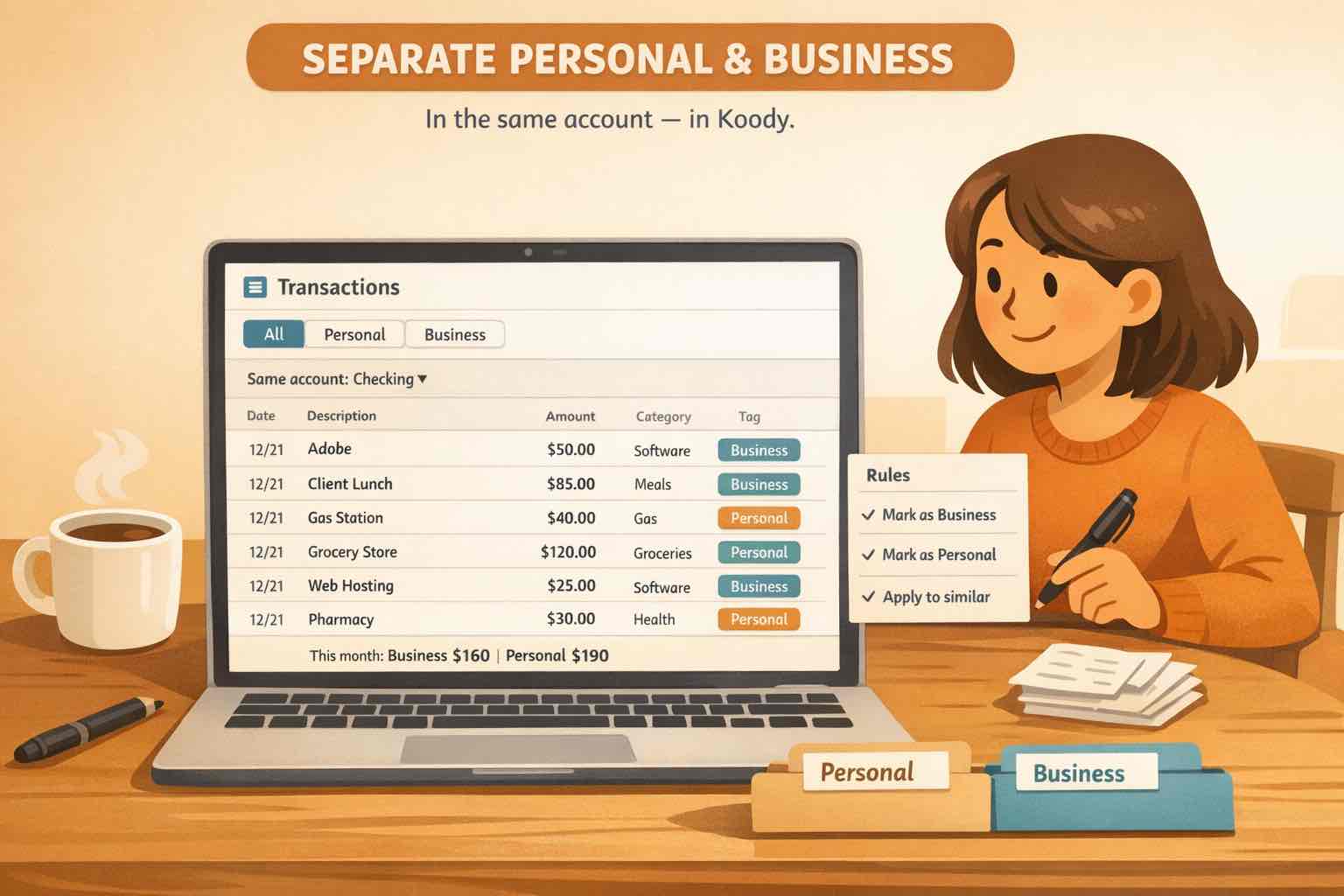
Mixed costs are common. You buy personal and business items on the same receipt. You add a vacation day to a business trip. You use the same car for school pickup and client visits.
Do not make the record look cleaner than it really is. Keep the receipt, add a note, and split the transaction when only part of the charge belongs in a business category.
In Koody, one transaction can be split across personal and business categories. That means the original charge stays visible, but the totals go where they need to go. The business part can count toward Business Meals, Business Travel, or Business Car & Truck Expenses, while the personal part can stay in Eating Out, Holidays, Transport, or another personal category.
A split can be simple:
- One hotel stay split between business and personal days.
- One supply store receipt split between household items and business supplies.
- One rideshare charge split between a business stop and a personal stop.
- One credit card transaction split between Business Meals and personal Eating Out.
The point is not to make a final tax call inside Koody. The point is to stop a mixed charge from pretending to be 100% business or 100% personal when the records are reviewed later.
How Koody helps before tax prep
Koody helps with the parts that usually turn into year-end stress:
- Import bank and card CSVs when you need to catch up.
- Auto-categorize rows into Business Meals, Business Travel, Business Car & Truck Expenses, Transfers, Owner Draw / Personal, and other review categories.
- Attach receipts, invoices, screenshots, and PDFs to the matching transaction.
- Add plain-English notes while you still remember the business reason.
- Split mixed charges across personal and business categories.
- Export cleaner records for accountant or tax-prep review.
This is especially useful if you manage personal money and side-business records in the same place. Koody gives sole proprietors one home for household finances, business categories, receipts, notes, and exports.
What to check before tax prep
Before you send records to an accountant or start preparing your return, check the rows that usually need the most context.
- Business meals: receipt, who was there, and why the meal was business-related.
- Business travel: destination, dates, business reason, receipts, and any personal days.
- Car expenses: mileage or business-use record, parking, tolls, receipts, and notes.
- Reimbursements: money paid back by a client, customer, platform, or employer.
- Credit card payments: separate card payments from the purchases on the card.
- Transfers and owner draws: keep account movement separate from business expenses.
- Missing proof: attach receipts, screenshots, PDFs, or notes before memory fades.
If a transaction would make you say, "I know what this was, but it is not obvious from the bank name," that is exactly the row that needs a note.
Get business records ready for review.
Import transactions, let Koody auto-categorize them, attach proof, add notes, split mixed costs, and export cleaner records when tax season or accountant review comes around.
Open KoodyFAQs
1. What records do I need for business meals?
For business meals, keep the date, amount, restaurant or vendor, receipt, who was there when another person was involved, and a short note explaining the business purpose. Koody helps keep the meal category, receipt, and note together for review.
2. What records do I need for business travel?
For business travel, keep the dates, destination, cost, receipts, business reason for the trip, and notes that separate business days from personal days. Koody helps organize travel charges, receipts, and notes in one transaction history.
3. What records do I need for business car expenses?
For business car expenses, keep mileage or business-use records, dates, destinations, business purpose, tolls, parking, and receipts for related costs. Koody helps organize the transactions, but you should still keep a mileage log or other mileage record.
4. Can a bank statement prove a business meal?
A bank or card statement can help prove payment, date, merchant, and amount, but it usually does not explain who attended or why the meal was business-related. Add the receipt and a note while you still remember the reason.
5. Do I need a mileage log if I use Koody?
Yes, if you are claiming business car use, keep a mileage log or another record that shows business mileage and business purpose. Koody can organize fuel, tolls, parking, repairs, and other car-related transactions, but it is not a mileage log.
6. How should I handle mixed personal and business travel?
Separate the business part from the personal part as clearly as possible. Keep receipts, dates, destinations, and notes that explain which costs were for business. Koody split transactions can help when one charge needs to be divided.
Sources: IRS references used
Sources accessed June 7, 2026. Koody is not a tax filing service or tax advisor.