Is a credit card payment an expense?
In a budget that includes your card purchases, the purchases are the expenses. Paying the card reduces what you owe. It also reduces your checking balance, but it does not mean you bought everything again.
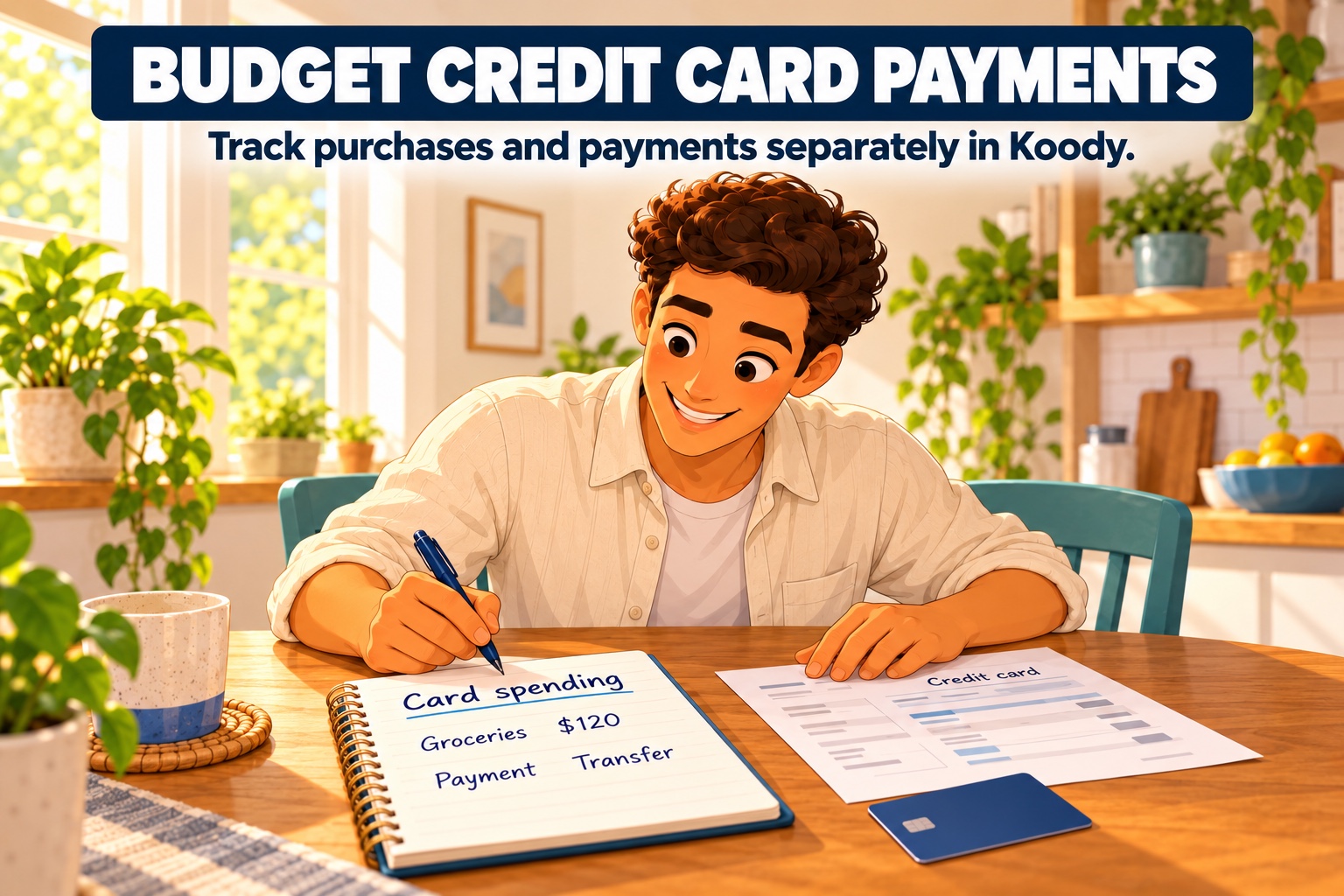
Suppose you buy $120 of groceries on your credit card, then pay that $120 from checking. With no other charges, interest, or fees, the records should show:
- Grocery purchase: $120 expense. Categorize it as Groceries in the credit card account.
- Payment leaving checking: $120 transfer out. This pays the card balance.
- Payment received by the card: $120 transfer in. This is the other side of the payment, not new income.
Your grocery spending is $120. If you also count the outgoing payment as an expense, your budget shows $240 of spending even though you bought only $120 of groceries. Treating the incoming card payment as income would introduce another error: you have not earned an extra $120.
How do you budget for the payment date?
Keep the money needed for your card purchases available in checking until you pay the bill. A $120 grocery purchase uses $120 of your grocery budget even while that money is still sitting in your bank account.
Before making other payments, check the card's due date and the amount you intend to pay against your available cash and upcoming bills. A bank balance alone will not tell you how much is free to spend if some of it is already needed for the card.
The purchase and repayment can fall in different months. If the groceries appear in October's transaction records and you pay the card in November, keep the grocery expense in October. November needs the cash for the payment, but not another grocery expense. Your statement cycle does not need to match your budget month.
Check the statement balance, minimum payment, and due date on your card statement. For US cards with a purchase grace period, paying the balance in full by the due date generally avoids purchase interest when you are not carrying a balance. If you carry debt, check your card's terms because new purchases may accrue interest too.
How do you budget for an existing credit card balance?
An older balance needs a repayment allowance in your cash plan, even though the original purchases happened before the current budget period. Allow for the required minimum payment alongside essential bills, then work out whether you can afford an additional payment toward the debt.
Suppose you owe $1,000 at the start of the month, make no new purchases, incur $20 of interest, and pay $200. Your ending debt is $820: $1,000 + $20 - $200. The payment used $200 of checking-account cash, reduced the balance by $180 overall, and covered the $20 added interest.
If you track both accounts, record the $20 interest as an expense and the $200 payment as a transfer. Separately, allow for the full $200 leaving checking when planning the month's cash. Do not enter a second $200 expense just to make the payment appear in spending totals.
In Koody, transfers stay out of budget calculations. Keep your repayment allowance in your cash plan and check the actual payments in your transaction history. A budget's remaining spending limit is not confirmation that you have enough cash to cover debt repayments.
Where do credit card interest and fees go?
Interest, annual card fees, and late fees are costs, so record them as expenses when they appear in your card transactions. Give them a suitable category so you can see what using the card costs alongside your purchases.
When you later pay the card, keep the payment as a transfer if those charges are already recorded. There is no need to add the interest or fee again. Also check the statement before assuming the whole payment reduced your older debt: new charges and interest affect the balance you still owe.
What if you only track your checking account?
If you leave out the credit card account and all its individual purchases, you can use the payment leaving checking as an expense in a payment-based budget. This shows how much cash went toward the card, but not what you bought or when you bought it.
Use this approach consistently. Do not also enter the purchases covered by that payment. If you later add the card's transaction history, change the corresponding checking payments to transfers so the same spending is not counted twice.
Tracking the card purchases gives you more useful categories. You can distinguish groceries from subscriptions or travel instead of seeing one monthly card-payment total. It also shows purchases you have made but have not yet repaid.
How does Koody help you track purchases and payments?
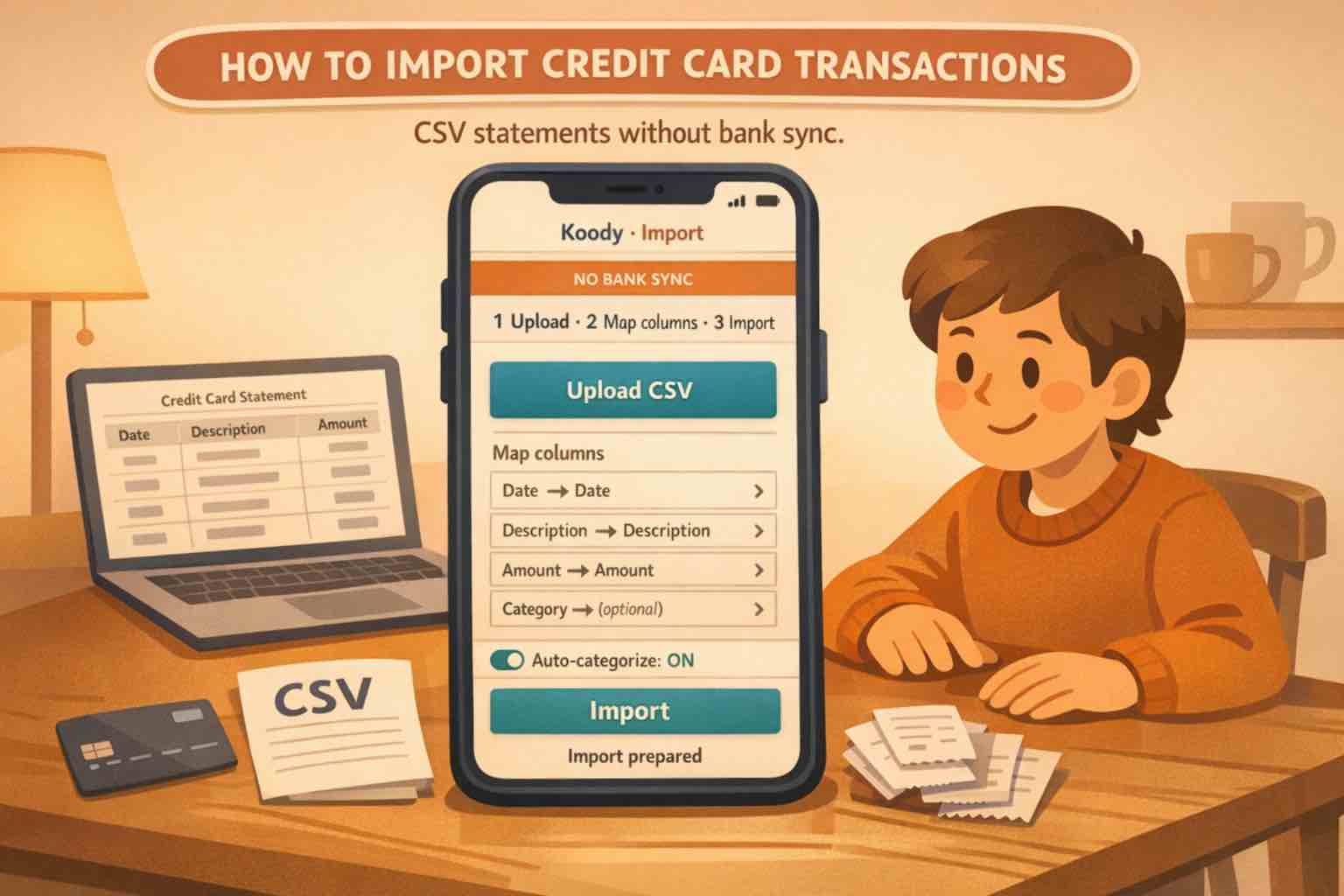
When you import bank and credit card statements into Koody, it auto-categorizes purchases and identifies common card payments as transfers. You can see where the spending went without sorting every transaction yourself. Statement imports are included in Koody's Plus Plan.
Review the imported payment rows as well as the purchases. If a payment needs correcting, edit the existing transaction and change its Type to Transfer. Categorizing it as Credit Card Payments alone does not replace that Type setting. If both statements contain the payment, check both existing rows rather than creating another payment.
If you enter a new payment manually and track both accounts, create one transfer from checking to the credit card account. Koody creates the outgoing and incoming records together. Our statement-import guide covers bringing in the transactions if you prefer to start with your statements.
Spend less time sorting card purchases.
Bring your card purchases into Koody for automatic categorization, then review groceries, subscriptions, and other spending together. Keep repayments marked as transfers so your budget counts each purchase once.
Try KoodySources
Sources accessed October 29, 2026. Credit terms discussed here concern US cards. This is general budgeting information; your statement and card agreement set your payment obligations.