
The first $160
Elena accepted her first cleaning job because she needed $160 before the end of the month.
A neighbor had asked whether she could clean her home on Saturday. Elena worked weekdays at a front desk, but groceries had gone up and a school expense had arrived at the same time. She said yes, packed sprays and cloths from her own cupboard, and spent Saturday cleaning.
The payment reached her before she got home. By Monday, most of it had gone to groceries and school. It had done exactly what she needed it to do.
What Elena could not say was how much she had earned. She had used her own products, driven across town, and worked longer than she expected. After those costs, she did not know how much of the client's $160 the Saturday had left.
Two days later, the neighbor asked Elena to return in two weeks. Elena opened a separate list before she answered. She wrote down the price, the products she expected to replace, the miles she would drive, and the hours she expected to spend. If a second Saturday was going to help the household too, she needed to know what the first one had actually left behind.
January to March
The second visit gave Elena a cleaner comparison. She bought only the products that had run low, recorded the journey, and wrote down when she arrived and left. The job still paid $160, but this time she knew which costs belonged to it.
The neighbor booked every other Saturday. She then referred a sister who wanted a deep clean before family visited. A colleague from Elena's front-desk job heard about the extra work and asked for a monthly appointment.
Each new home made the list more useful. Elena recorded the address, service date, amount charged, and payment received. She kept receipts for products, gloves, cloths, and a vacuum repair. Her mileage notes included the job and destination, so she could connect each trip to a client later.
The sister's deep clean exposed a problem that the first two jobs had hidden. Elena had quoted a larger home as though it were a regular visit. The work took most of the day, used more products, and left less profit per hour than the smaller home.
Elena kept the original price for the neighbor who had given her the start. For the next deep clean, she used the hours and product costs from the sister's home to prepare a higher quote. The list had already changed a decision she would otherwise have made from memory.
By the end of March, Elena had received $1,860 from the cleaning work. Supplies, local advertising, travel costs, and the vacuum repair came to $510, leaving $1,350 in first-quarter profit.
One deep clean accounted for a large part of that profit, and three clients could not fill every future month. The quarter had helped with household spending, but a cancellation or car repair could still wipe out much of the next month's contribution.
April to June
The higher quote did not stop the next client from booking. Two existing clients also passed Elena's name to friends, and three of the new households chose recurring visits. For the first time, part of the next month's income appeared on the calendar before the month began.
Saturday alone no longer held every appointment. Elena kept one weekday evening open and used a vacation day from the front desk for a move-out clean. When two clients lived near one another, she booked them on the same day to reduce driving and pack the right supplies once.
The fuller calendar also created work outside each home. Elena answered messages during lunch, prepared quotes after her front-desk shift, checked addresses, washed cloths, replaced products, and sent appointment reminders. Four paid hours at a client's home could occupy another hour before or after the visit.
Those unpaid hours changed her prices again. A recurring home required less preparation because Elena knew the rooms, the client knew the price, and both had agreed on a regular day. A move-out clean needed a new quote, more products, and a longer journey. Elena stopped charging as though the two jobs cost her the same amount of time.
As unfamiliar clients entered the schedule, Elena bought liability insurance, obtained the local business license she needed, and began accepting more card payments. The second quarter brought $5,420 in revenue and $1,340 in expenses, including insurance, the license, additional supplies, card fees, and replacement tools. Profit reached $4,080.
A late payment near the end of June showed Elena another gap between completed work and available cash. She had already driven to the home and used the products, yet the payment arrived the following week. She added unpaid invoices to the same review she used for appointments and expenses.
By then, Elena had begun asking whether the cleaning work could eventually replace one day at the front desk. The bank balance could not answer her. She needed several months of payments, costs, unpaid invoices, and recurring appointments before she could judge what the work might support.
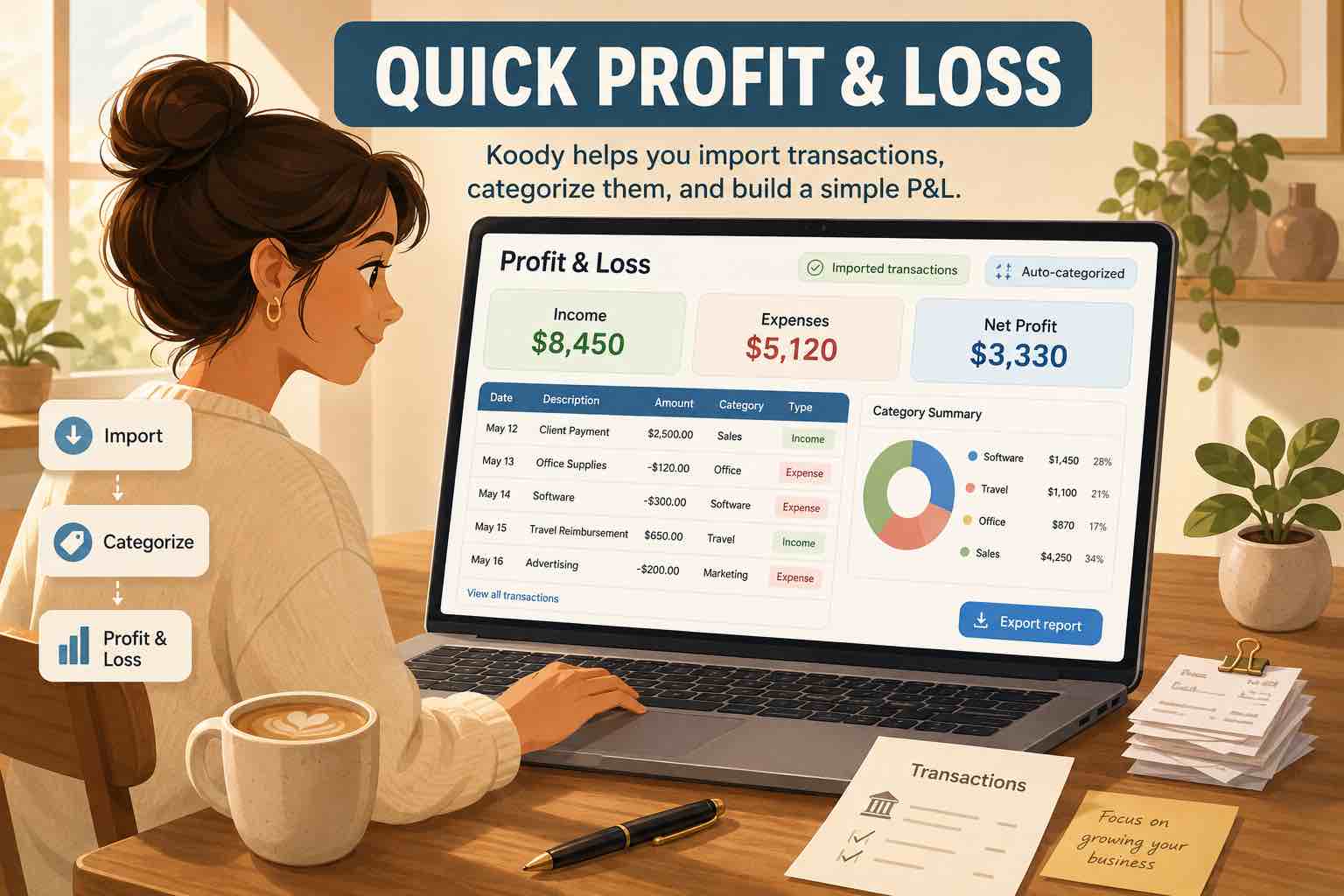
See income, expenses, and profit together.
Koody can keep side-business transactions, receipts, notes, personal spending, and a Schedule C-style P&L in one place as the work grows.
Review the businessJuly to September
Summer referrals filled most Saturdays and two weekday evenings. A realtor began sending occasional move-out jobs. Those jobs paid more than recurring visits, but they also required more products and sometimes ran beyond Elena's estimate.
Elena bought a stronger vacuum, carried a larger supply kit, paid for a simple booking page, and continued her insurance coverage. The purchases reduced the cash in the account before the next group of clients paid.
Elena paid for a box of products and the vacuum on Tuesday, completed a move-out clean on Thursday, and waited until the following Wednesday for the client's payment. The job was profitable, but the account still had to carry the cost between purchase and payment.
Revenue rose to $9,680 for the quarter. Expenses reached $2,720, leaving $6,960 in profit before Elena's personal income and self-employment taxes.
Elena began moving part of the available cash into savings for estimated taxes. She also kept a reserve for products, insurance, repairs, and slower weeks. The tax savings and reserve reduced the amount she could send to the household even though neither reduced the profit shown by the business.
By September, the calendar had reached its limit. Elena could accept another evening appointment after a full day at the front desk, but the extra booking displaced quotes, laundry, supply runs, and sleep. The cleaning business had demand for more work and no suitable hours left to perform it.
The decision happened at the kitchen table
At the end of September, Elena and her partner sat at the kitchen table with her front-desk pay stubs, the household budget, the cleaning calendar, and nine months of business records.
The cleaning work had produced $16,960 in revenue, $4,570 in expenses, and $12,390 in profit during those nine months. The total included one-time deep cleans and move-out jobs, so they separated those from the recurring appointments already booked for October.
They began with the income Elena would keep. Three front-desk days would preserve a predictable paycheck. They had household savings for a slower month, and Elena had kept the tax savings and business reserve outside the money available for bills.
They wrote down what could go wrong. A recurring client could move, the car could need a repair, or illness could erase several appointments. The first free Tuesdays and Thursdays might also bring in less than the wages Elena was giving up. Keeping three front-desk days limited that risk while giving the business room to use the demand it already had.
The following Monday, Elena asked her employer for a three-day schedule beginning in October. The employer agreed. Elena placed one recurring route on Tuesdays, kept Thursdays for larger jobs and quotes, and recovered two evenings that had previously disappeared into appointments.
October to December
The first free Tuesday went to two recurring homes that had been competing for evening space. On Thursday, Elena completed a move-out clean for the realtor and delivered two quotes while the details were fresh. The work no longer had to fit entirely around five employed days.
Weekday availability made the realtor's jobs easier to accept, but Elena resisted filling every open hour. She reserved time for supply runs, messages, invoices, and the records she reviewed at the end of each month. That time helped her see which larger jobs justified their product and travel costs.
The recurring clients gave each month a starting point. Deep cleans and move-out work added income above that base, while cancellations still pulled it down. Elena used the range between the slow and full weeks when she and her partner planned household spending.
The fourth quarter produced $14,300 in revenue and $4,050 in expenses. Profit reached $10,250 before Elena's personal taxes.
At the end of each month, Elena first left enough cash for upcoming business costs and moved money to tax savings. She then transferred a planned amount to the household as an owner's draw. The draw explained where the cash went after the business earned its profit; it did not reduce that profit.
The three front-desk days continued to provide steady wages. The cleaning work contributed through owner's draws when the month's cash allowed them. Elena had traded two predictable workdays for a larger role in a business that still changed from week to week, and the household had chosen that trade with savings behind it.
When did the side hustle become a business?
The Schedule C instructions say an activity generally qualifies as a business when its primary purpose is income or profit and the owner carries it on with continuity and regularity. A single sales figure cannot settle the question.
The IRS also considers businesslike records, time and effort, changes made to improve profitability, profits and losses, dependence on the income, and the rest of the facts surrounding the activity. It weighs the whole picture.
Elena had charged for a service from the first Saturday. During the year, she returned regularly, changed prices after reviewing costs, obtained insurance and a license, kept client and expense records, earned a profit, and used the income at home. Taken together, those repeated actions described the business she had built.
What the year looked like in numbers
January to March
Revenue: $1,860
Expenses: $510
Profit: $1,350
April to June
Revenue: $5,420
Expenses: $1,340
Profit: $4,080
July to September
Revenue: $9,680
Expenses: $2,720
Profit: $6,960
October to December
Revenue: $14,300
Expenses: $4,050
Profit: $10,250
Year
Revenue: $31,260
Expenses: $8,620
Profit: $22,640
Revenue grew more than sevenfold from the first quarter to the fourth. Expenses rose with the number and size of the jobs. The year produced $22,640 in profit before Elena's personal income and self-employment taxes.
Elena left some of the cash in the business for upcoming costs and moved some to estimated-tax savings. Owner's draws carried money home after those needs had been considered.
At the end of December, Elena opened the list she had started before her second cleaning job. The first line still showed $160. Below it sat a year of client payments, supplies, mileage, fees, insurance, and repairs.
The first payment had covered groceries and a school bill for one month. The record behind it had helped Elena reclaim two weekdays from her front-desk job and decide what the cleaning business could send home while preserving its operating cash.
Her first client remained booked for every other Saturday. Elena knew the price, the cost, and the time the home would take. When the next payment arrived, she knew what it had cost to earn and how much the business could spare.
Keep the business and household in one app.
Koody helps you follow business profit, tax set-asides, owner's draws, and the household budget as a side hustle grows.
Open KoodySources
Sources accessed July 29, 2026. This story is educational and does not provide tax advice.