This guide is for Etsy sellers, Vinted sellers, eBay resellers, Shopify sellers, marketplace sellers, bakers, candle makers, creators, barbers selling products, hairdressers selling retail products, and other sole proprietors who make or buy goods to sell.
If you sell only your time, like consulting or design work, inventory may not be a big part of your records. If you sell candles, shirts, prints, baked goods, beauty products, resale items, supplies, parts, or any other physical goods, inventory and cost of goods sold can become important.
The simple idea is this: product costs are not always the same as regular expenses. Some costs belong with the goods you sold. Some goods may still be sitting on your shelf at year end. Some items may have been returned, refunded, kept, damaged, or used personally. Those details need to be separated before someone reviews your tax records.
Important: Koody is a budgeting and record-prep app, not a tax filing service, tax advisor, accountant, tax preparer, inventory valuation service, or law firm. Use Koody to organize transactions, categories, receipts, files, notes, splits, imports, and exports. A qualified tax professional should decide final tax treatment, inventory method, and filing details.
Who needs to think about inventory?
Do small sellers need inventory records?
If your business makes or buys goods to sell, you should think about inventory records. That does not mean every small seller has the same tax treatment. It does mean your records should make it clear what you bought, what you sold, what was returned, and what was still unsold.
Common examples include:
- An Etsy seller buying blank mugs, vinyl, boxes, and labels.
- A Vinted or eBay reseller buying clothing to resell.
- A baker buying ingredients and packaging for customer orders.
- A candle maker buying wax, jars, wicks, fragrance oil, and labels.
- A barber or hairdresser selling hair products to clients.
- A creator selling prints, stickers, shirts, or physical merch.
- A Shopify seller buying products from a supplier.
A service business can still have inventory if it sells products. A hairdresser may earn service income from appointments and product income from retail sales. A coach may sell sessions and physical journals. A cleaner may sell cleaning kits. The product side should not be buried inside regular spending.
What cost of goods sold means
What is cost of goods sold on Schedule C?
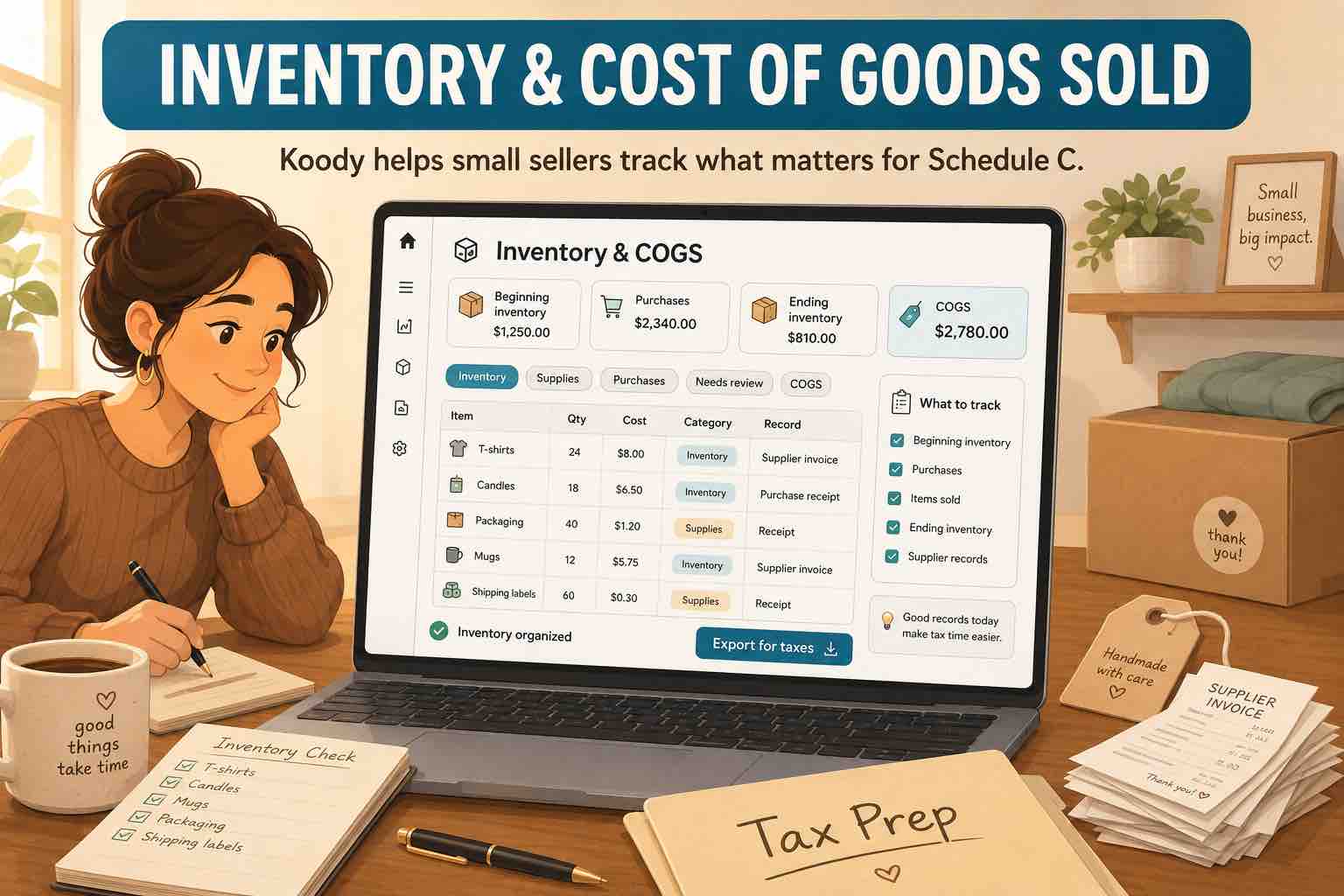
Cost of goods sold, often called COGS, is the cost connected to the goods you sold. It is not every cost of running the business.
If you buy candles to resell, the cost of the candles is a product cost. If you pay for Instagram ads, that is advertising. If Etsy charges a selling fee, that is a fee. If you buy shipping labels or boxes, those may need their own review. They do not all belong in the same bucket.
Schedule C has a cost of goods sold section, so product sellers often need different records than a business that only sells services.
The basic COGS formula
The plain-English starting point looks like this:
| Beginning inventory | What you had available to sell at the start of the year. |
|---|---|
| Plus purchases, materials, and production costs | Product costs added during the year. |
| Minus ending inventory | Goods still unsold at the end of the year. |
| Equals cost of goods sold | The cost connected to goods sold during the year. |
Schedule C Part III has more lines than this simple version, including purchases, items withdrawn for personal use, cost of labor, materials and supplies, other costs, and ending inventory. Use the formula as a sorting aid before tax prep, not as the final tax calculation.
Beginning inventory
What is beginning inventory?
Beginning inventory is what you had on hand at the start of the tax year. For many sellers, this should match the ending inventory from the prior year.
If you ended last year with 40 unsold candles, 12 shirts, 80 sticker packs, or $1,200 of resale clothing, those items do not disappear when the calendar changes. They usually become part of the starting point for the new year.
Before tax prep, gather the records that show what was on hand at the start of the year, how you counted it, and how the value was tracked.
Purchases, materials, and supplies
What product costs should small sellers track?
Product sellers should track the things bought or used to make goods for sale. These are different from ordinary business expenses like subscriptions, ads, tax prep, or office costs.
Product-related records may include:
- Finished goods bought for resale.
- Raw materials used to make products.
- Parts and components.
- Ingredients for food products.
- Packaging used with the product.
- Labels, tags, and inserts.
- Production help or labor connected to making goods.
- Freight-in or shipping paid to get inventory from a supplier to you.
Be careful with the word "supplies." Printer paper for your office is not the same as material used to make or package a product for sale. Koody can help you separate Inventory / Cost of Goods Sold, Supplies, and Other Business Expenses so everything is not shoved into one category.
Keep product costs and receipts with the transaction.
In Koody, categorize product purchases, attach supplier receipts, invoices, order confirmations, and screenshots, and add notes when a purchase includes both inventory and regular business supplies.
Track product costs in KoodyItems taken for personal use
If you take products out of the business for yourself, your family, personal gifts, or personal use, those items should not stay buried in business cost of goods sold.
For example:
- A candle maker keeps several candles for home use.
- A reseller keeps one jacket from a batch bought for resale.
- A baker uses business ingredients for a family party.
- A barber takes retail product home for personal use.
Add a note when this happens. If money did not move through the bank, the note may be the only reason the record makes sense later.
Ending inventory
What is ending inventory?
Ending inventory is what you still had on hand at the end of the tax year. These are the products, materials, parts, or goods that were not sold yet.
Ending inventory is one reason product costs can be confusing. If you bought 100 items and sold 60, the other 40 may still need to be counted. The whole purchase may not belong in the same place as regular rent, software, meals, or ads.
Before tax prep, count what is left. Keep records that show what is still on hand, what was damaged or lost, what was returned, and what your tax professional needs to review.
Returns and allowances
How should small sellers track returns and refunds?
Returns and allowances reduce sales. If a customer returns a product, gets a refund, or receives a price adjustment, that money should not be mixed into regular spending or ignored.
Keep the original sale, refund, return reason, returned item, platform adjustment, and any restocking or resale note together when you can. In Koody, Returns & Allowances can help keep refunds and returned sales separate from Revenue.
This is especially useful for marketplace sellers because one payout can include sales, fees, refunds, shipping adjustments, taxes, and platform charges in one deposit.
Marketplace fees and shipping
Are marketplace fees part of cost of goods sold?
Marketplace fees and payment processor fees are usually not inventory. Etsy fees, eBay fees, Shopify app fees, Stripe fees, PayPal fees, referral fees, and platform charges should be separated from product costs for review.
Shipping also needs context. Freight-in, which is shipping paid to get inventory from a supplier to you, can be different from outgoing shipping paid to send an order to a customer. Boxes, mailers, labels, and postage may also need separate review.
Do not force every shipping-related cost into Inventory / Cost of Goods Sold. Keep the receipt, category, and note clear enough for your accountant or tax preparer to decide how it should be handled.
How Koody helps before tax prep
Koody helps small sellers turn messy bank rows and marketplace activity into records that are easier to review.
- Import bank and card transactions when you need to catch up.
- Let Koody auto-categorize rows, then review product-related rows carefully.
- Separate Revenue, Returns & Allowances, Inventory / Cost of Goods Sold, Supplies, Commissions & Fees, Other Business Expenses, Transfers, and Owner Draw / Personal.
- Attach receipts, invoices, PDFs, screenshots, supplier records, and platform reports to matching transactions.
- Add notes for product batches, supplier orders, returned items, personal use, and mixed purchases.
- Split a transaction by category when one receipt includes inventory, personal items, and regular business supplies.
- Export filtered records when your accountant, tax preparer, or bookkeeper needs them.
Koody is especially useful when you want to manage household money and sole proprietor records in one app. A Target, Amazon, Costco, or supplier purchase may include personal items, inventory, office supplies, and shipping supplies in one charge. Splitting and notes keep that row from turning into a mystery.
Import, review, attach notes, and export before tax prep.
Bring bank and card transactions into Koody, review product-related categories, attach receipts and supplier records, split mixed purchases, and export cleaner records when tax season comes around.
Get seller records ready in KoodyWhat to check before tax prep
Before you send records to your accountant or tax preparer, review the rows that commonly cause confusion.
- Unsold inventory: products, parts, materials, or goods still on hand at year end.
- Personal use: inventory items kept for yourself, family, personal gifts, or household use.
- Marketplace payouts: deposits that combine revenue, refunds, fees, shipping, and taxes.
- Returns and refunds: customer returns, chargebacks, discounts, allowances, and returned items.
- Shipping: supplier freight, outgoing postage, packaging, labels, and mailers.
- Mixed purchases: one receipt with inventory, supplies, and personal items.
- Missing receipts: supplier orders, marketplace statements, screenshots, invoices, and notes that help rebuild the record.
- Owner draws and transfers: money moved to yourself or between accounts, not product income or product expense.
If a row is unclear, do not guess silently. Attach what you have, add a note, and flag it for review.
For broader Schedule C categories, read Koody's guide to Schedule C expense categories. For general small business records, read small business recordkeeping for taxes.
FAQs
1. What is Schedule C inventory?
Schedule C inventory is the goods a sole proprietor has for sale. For a seller, maker, or reseller, that can include finished products, items bought for resale, raw materials, parts, and other product costs that need to be tracked before tax prep.
2. What is cost of goods sold on Schedule C?
Cost of goods sold is the cost connected to the goods that were sold during the year. It is different from ordinary business expenses like advertising, software, office costs, or marketplace fees.
3. Do I deduct inventory when I buy it or when I sell it?
Many product sellers need to track inventory and cost of goods sold instead of treating every product purchase like a regular expense right away. Small business rules and accounting methods can affect the answer, so organize the records and ask a qualified tax professional.
4. What is beginning inventory?
Beginning inventory is the value of goods you had on hand at the start of the tax year. In many cases, it should match the prior year's ending inventory.
5. What is ending inventory?
Ending inventory is the value of goods still on hand at the end of the tax year. Unsold products usually need to be counted and reviewed instead of being treated like they were sold.
6. Do service businesses need cost of goods sold?
A pure service business usually does not need cost of goods sold. If the business also sells products, merchandise, parts, supplies, or goods, those product costs may need separate tracking.
7. Are marketplace fees part of cost of goods sold?
Marketplace fees, payment processing fees, and seller platform fees are usually separate from inventory. Keep them separate from product costs so your accountant or tax preparer can review them correctly.
8. How does Koody help with inventory records?
Koody helps you categorize imported rows, separate Revenue, Returns & Allowances, Inventory / Cost of Goods Sold, Supplies, Commissions & Fees, and other costs, attach receipts, add notes, split mixed purchases, and export records for review.
Sources: IRS references used
Sources accessed June 9, 2026. Koody is not a tax filing service or tax advisor.