You buy printer paper, cleaning products for client jobs, and a laptop in the same week. They are all for your business. Then you open Schedule C and find separate lines for Office expense, Supplies, and Depreciation. Which one do you use?
The answer starts with what you bought and how you use it. The store name alone cannot tell you. This guide explains the categories, gives examples, and shows how to keep enough detail with each purchase to make tax prep easier.
This is US federal tax education for sole proprietors, based on the final 2025 Schedule C instructions available on September 16, 2026. Check the instructions for the year you file. Koody is not a tax advisor; ask a qualified tax professional about your circumstances.
Office expenses vs supplies on Schedule C
Schedule C is the form a sole proprietor uses to report business income and expenses. The difference between income and allowable business costs helps determine the business's profit or loss.
In everyday conversation, "office expenses" might mean everything you spend to run an office. On Schedule C, the label is narrower. The IRS instructions for line 18 specifically name office supplies and postage. Line 22 covers other materials and supplies used in the business.
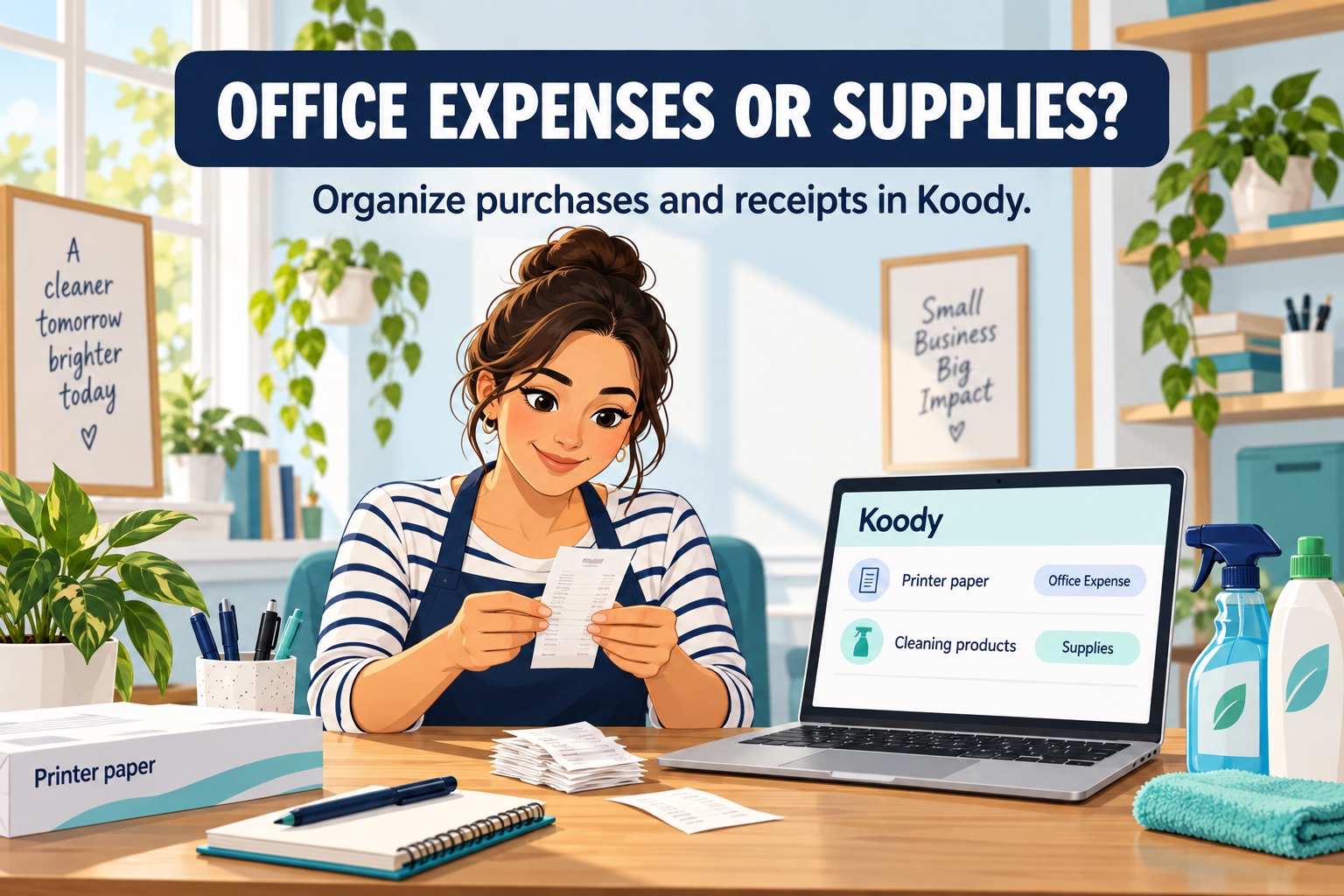
- Office expense, line 18: paper for client letters, printer ink, pens, file folders, and postage for business correspondence.
- Supplies, line 22: items you use up while providing a service, such as cleaning products used in customers' homes or disposable gloves used during salon appointments, when these costs are not included in cost of goods sold.
Both can be business expenses. You do not get a second deduction because an item could sound like a fit for both labels. Keep each cost in one place and retain the receipt that explains it.
To be deductible, an expense generally must be ordinary and necessary for your business. Ordinary means common and accepted in your kind of work. Necessary means helpful and appropriate. Buying something from an office supply store does not automatically make it a business expense.
What counts as an office expense?
Think about the items you use to handle the paperwork and administration of your business. A therapist may buy folders for practice records. A cleaner may print invoices. A hairdresser may keep a paper appointment book. You do not need a rented office to have these costs.
Common office expense examples include:
- Printer paper, ink, and toner used for business documents.
- Pens, envelopes, labels for business correspondence, and file folders.
- Postage for mailing invoices or other business letters.
- Paper appointment books and desk calendars used for work.
Keep the description specific enough to recognize later. "Paper and ink for client invoices" is more useful than "store purchase." If the same order included your child's school supplies, separate those personal items before totaling business expenses. Koody lets you split the transaction between business and personal categories, so you can keep both portions in the same purchase record.
The same item can serve a different purpose in another business. Paper used to print invoices is an office supply. Paper used to make art prints you sell belongs with your product-cost records. Follow the use of the item, not just its name.
Supplies used in client work
Line 22 is often useful for materials you consume while doing the work you are paid for. For a cleaning business, that might be cleaning solution used at client properties. For a hairdresser, it might be disposable neck strips or gloves used during appointments.
The IRS generally lets you deduct these materials and supplies as you use or consume them in the business. For example, suppose you buy $300 of supplies, use $220 during the year, and still have $80 left. Under that general rule, the $220 is the amount used that year. You cannot deduct it again in a later year.
There is an exception for incidental supplies you keep on hand without inventory records or records of their use. The IRS allows their cost to be deducted when purchased if that method clearly reflects income. Check your treatment with your accountant before assuming every bulk purchase is deductible in the year you buy it.
What if you sell the supplies or use them to make products?
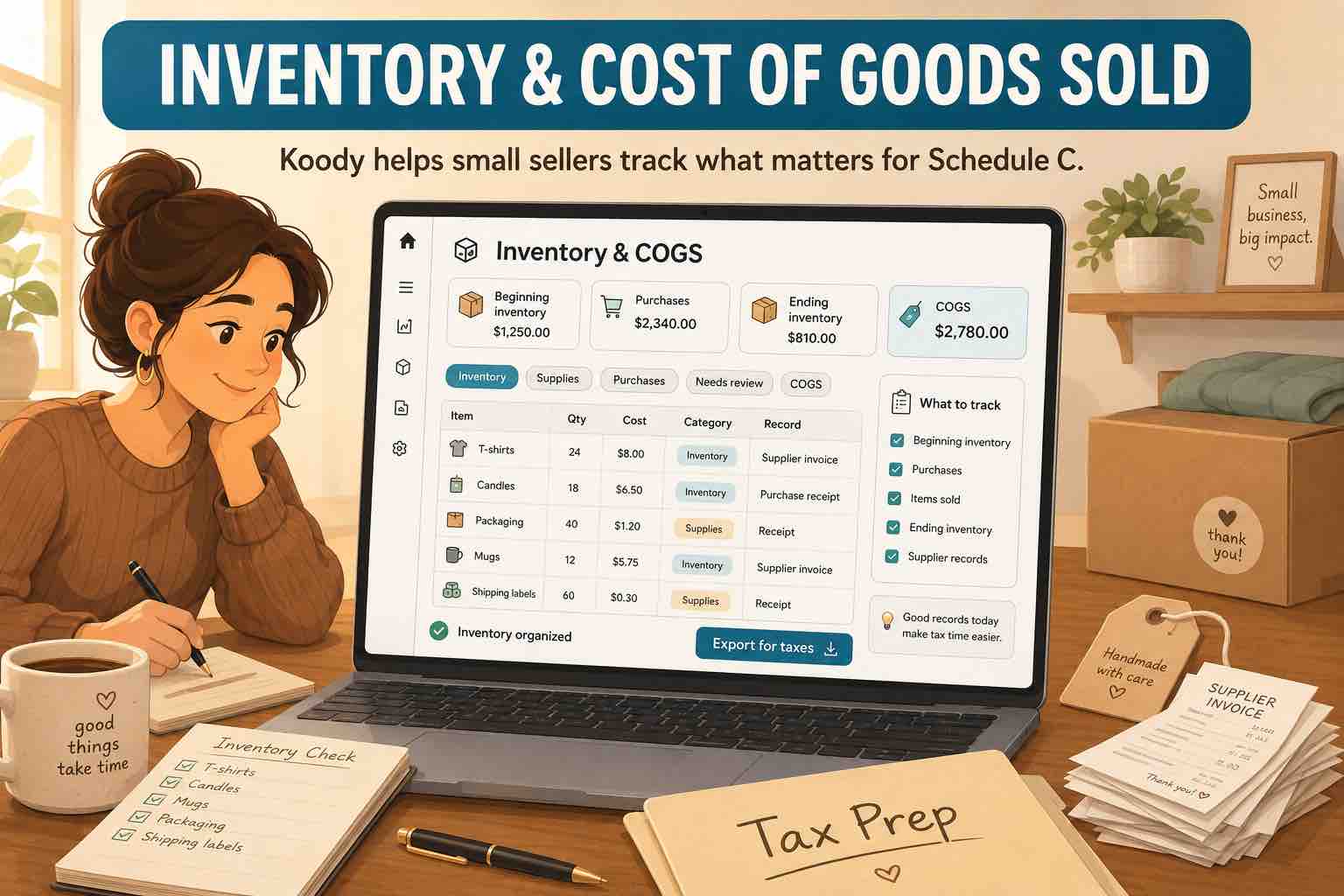
A salon owner might use shampoo during appointments and also sell unopened bottles to customers. Keep the bottles for sale separate from supplies used in the service. The products for sale belong with inventory and cost-of-goods-sold records.
Cost of goods sold is the cost associated with the products you sell. An Etsy seller's fabric, beads, or blank items used to make those products need that review too. Small-business accounting methods can affect the timing, but a cost already included in cost of goods sold cannot also be deducted as an office expense or supply.
Our guide to inventory and cost of goods sold on Schedule C explains what to separate when your business sells products.
Software, equipment, and home office costs
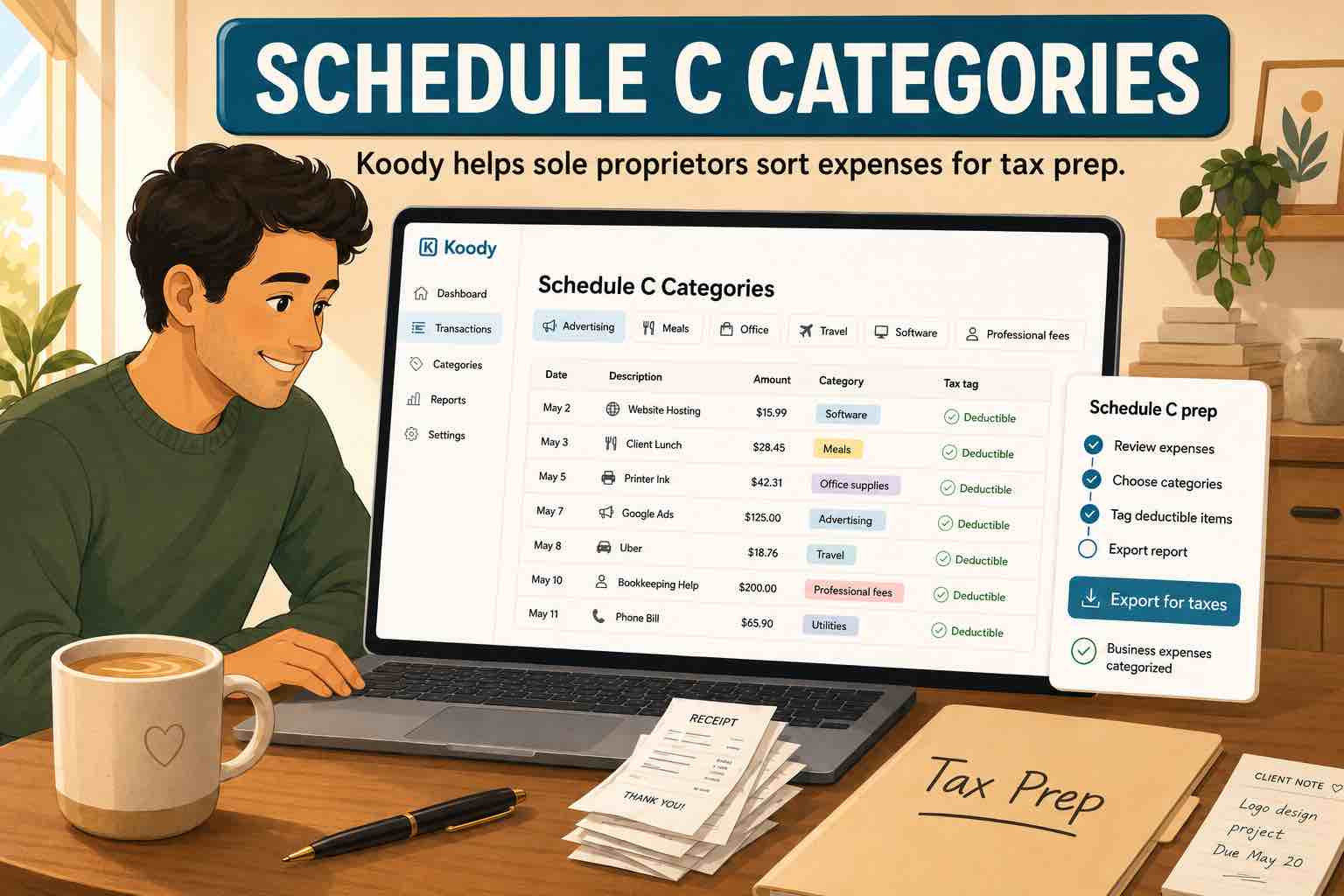
Some purchases support your office without belonging in either of these two categories. Separate them now so you can review them together when preparing the return.
Software subscriptions
A monthly appointment-booking service or a business software subscription has its own invoice and service period. Keep it in a clear category such as Software & Subscriptions, with a note explaining the business use if it is not obvious.
The 2025 Schedule C instructions discuss qualifying technology and software services under Part V, Other Expenses. They include ordinary and necessary subscription services used to manage a business. Software that must be depreciated or amortized is treated differently, so do not assume buying software outright is the same as paying for monthly access.
For the 2025 form, the Part V total goes to lines 48 and 27b. A bookkeeping category can help you gather the invoices, but it does not decide the tax line by itself.
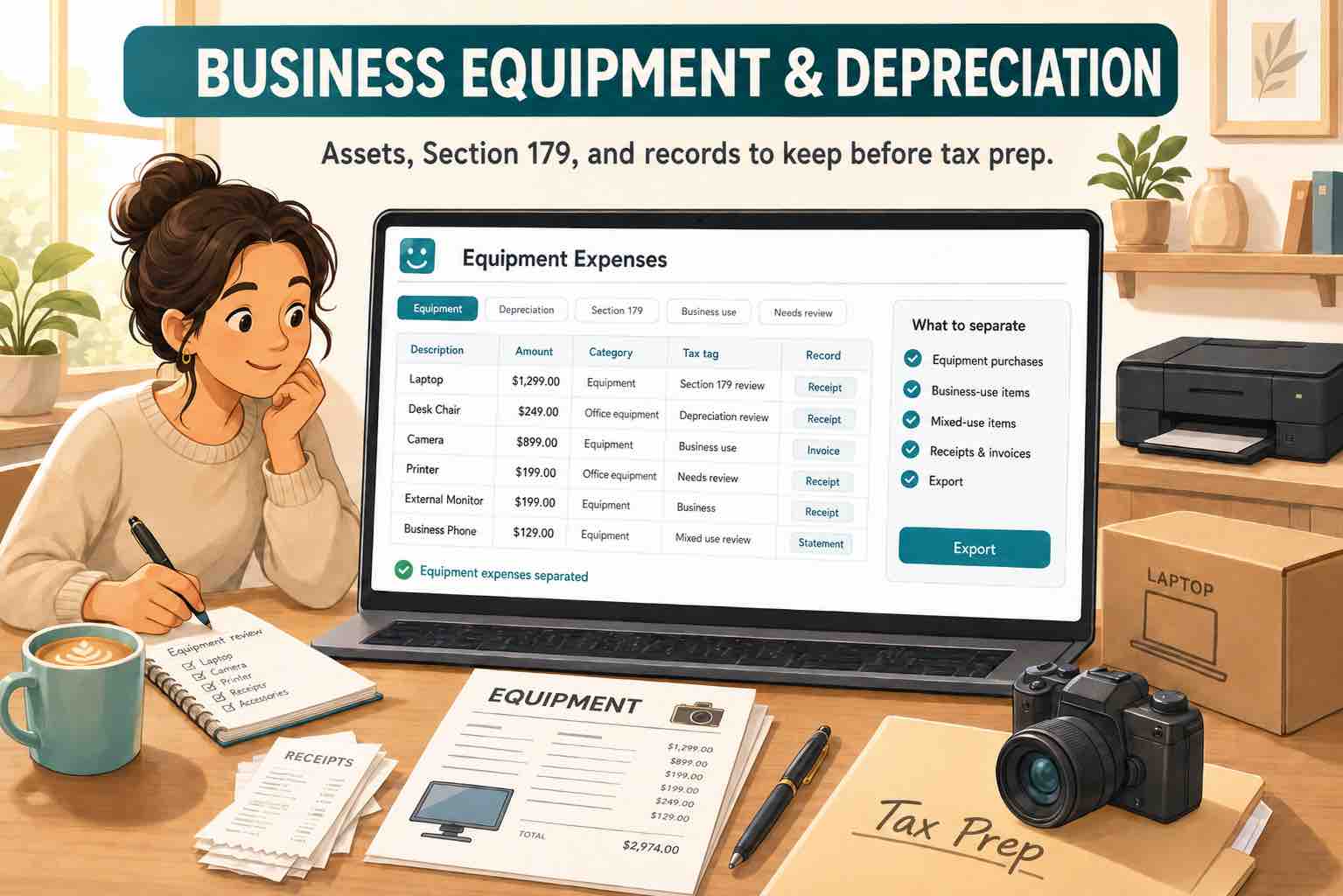
Laptops, printers, and furniture
A printer may help you work for several years; its ink gets used up. Keep the printer purchase separate from replacement ink. A laptop, desk, or office chair may need depreciation or another permitted deduction rather than routine supply treatment.
Do not use price alone to decide. Some rules allow qualifying equipment to be deducted sooner, but they have conditions and may require an election with your return. Keep the cost, receipt, business-use details, and date the item was ready for business use. Our equipment and depreciation guide explains those records in more detail.
Rent, utilities, and working from home
Rent for a separate business office and utility bills have their own Schedule C categories. Avoid putting them under Office expense just because they pay for an office.
The home office deduction concerns qualifying business use of part of your home. Paper, pens, and other business supplies are considered separately from that deduction. You can have deductible business supplies even if your workspace does not qualify for a home office deduction.
Keep shared household costs separate for home office review. Buying printer paper for work does not make your entire household rent or electricity bill deductible.
How to split a mixed receipt
Suppose a self-employed cleaner spends $120 in one shopping trip. The receipt shows three groups of items. These example amounts include any applicable sales tax:
- $54 for printer paper and ink: used for client invoices, categorized as Office Expense.
- $36 for cleaning supplies: used at clients' homes, categorized as Supplies.
- $30 for household items: personal spending, kept separate from the business portion.
The receipt contains $90 of business purchases and $30 of personal purchases. The bank shows one $120 charge, so keep that charge and split its amount across the relevant categories in Koody. Do not add another $90 expense on top of it.
Attach the receipt and add a note such as "Paper and ink for invoices; cleaning products for client jobs; household items personal." You can take a receipt photo on mobile or upload the file you already have.
When preparing the business totals, use the business portions of the split. The personal allocation remains part of your personal records; a category name alone does not remove it from every report. Review which categories and amounts are included before sharing the totals.
Keep the receipt with the purchase.
Split mixed purchases in Koody, attach receipts, and add notes while you still remember what you bought. Find the details beside the transaction when tax prep comes around.
Organize purchases in KoodyOrganize office expenses and supplies in Koody
If you already have months of purchases to sort, start with the accounts you used to pay for them. With Koody's Plus Plan, you can import PDF and CSV bank or credit card statements. Koody extracts and auto-categorizes the transactions. You review the purchases and change any category that needs more detail.
- Choose the account the file belongs to.
- Upload the statement.
- Click Import.
- Review the results.
Check purchases from stores that sell several kinds of goods. One order might be office supplies; the next might be equipment or groceries. Use the receipt to confirm the category and split the transaction when needed.
Koody can remember category edits for future imports when you choose to save them. Use that for purchases that consistently belong in the same category. Keep reviewing mixed-store purchases rather than assuming every charge from one merchant is for the same thing.
Before sending records to your accountant, review Office Expense and Supplies alongside the separate software, equipment, and product-cost records. Look for personal amounts, returns, and purchases entered twice. If you imported both a credit card's purchases and the payment from your bank account, the card payment should be a transfer rather than another expense.
Exports are available on Koody's Standard and Plus plans. You can download your transaction records as CSV, Excel, or JSON, or send an export to your accountant from Koody. Include the notes that explain mixed purchases and any questions about where a cost belongs.
A few specific details now can save you from trying to reconstruct a purchase months later. Keep what you bought, how you used it, and the receipt together, and you will have something useful to review when it is time to file.
FAQs
1. What is the difference between office expenses and supplies on Schedule C?
The IRS instructions put office supplies and postage on line 18, Office expense. Line 22, Supplies, covers other business materials and supplies, subject to rules about when they are used. Costs included in inventory or cost of goods sold must not also be deducted on either expense line.
2. What are examples of office expenses?
Printer paper, ink, pens, envelopes, file folders, and postage for business correspondence are common examples of office expenses. Rent, utilities, equipment, and software can need different treatment even when you use them in an office.
3. Are office expenses the same as the home office deduction?
No. Office supplies are business purchases. The home office deduction concerns qualifying business use of part of your home. A sole proprietor may have deductible business supplies even without qualifying for a home office deduction.
4. Where do software subscriptions go on Schedule C?
The 2025 Schedule C instructions discuss qualifying business technology and subscription services under Part V, Other Expenses. Keep the invoice and business purpose. Software that must be depreciated or amortized needs different treatment, so separate a software purchase from a recurring service subscription.
5. Is a laptop an office expense or a supply?
A laptop is equipment that can remain useful for several years. Keep its receipt, cost, business-use details, and the date it was ready for business use. Depreciation, Section 179, or another permitted deduction may apply; the price alone does not determine the Schedule C line.
6. Can I deduct supplies bought with my personal card?
For a sole proprietor, using a personal card does not by itself prevent a business deduction. The purchase must meet the business-expense rules. Keep the receipt, identify the business portion, and make sure the same purchase is only counted once.
7. How can Koody help organize office expenses and supplies?
Koody lets you categorize purchases, split mixed receipts, attach files, and add notes. With Koody's Plus Plan, you can import PDF and CSV bank statements and review auto-categorized transactions. Exports are available on Standard and Plus for sharing records with your accountant.
Get your business purchases ready for tax prep.
Use Koody to organize office expenses, supplies, and the receipts behind them. Keep personal and business money in one app, with records you can review and share with your accountant.
Open KoodySources
Sources accessed September 16, 2026. Line references use the 2025 Schedule C (Form 1040).
- IRS Schedule C instructions: lines 18 and 22, business use of home, and Part V
- IRS Publication 334: business expenses and cost of goods sold
- IRS Publication 583: receipts, supporting documents, and business records
- IRS Publication 587: business use of your home
- IRS Publication 946: depreciation and equipment deductions