What is the difference between profit and bank balance?
A profit and loss report, or P&L, covers activity over time: a month, quarter, or year. A bank balance includes whatever was already in the account before that period began. Even if customers paid immediately and you settled every bill on arrival, this month's profit would not normally equal the closing bank balance.
Cash flow describes money coming in and going out during the period. To check the bank balance, start with the opening balance, add all money received, and subtract all money paid out. To calculate profit, include only the income and expenses that belong in the report under your accounting method.
How can a business make a profit but have less cash?
Consider a sole proprietor with one business checking account and $2,000 in it at the start of the month. All customer receipts and operating costs in this example are paid during the month. There are no credit card purchases, inventory changes, asset purchases, or other accounting adjustments.
- Customers pay $6,000. This increases both business income and cash.
- Business expenses total $3,000. These include $100 of loan interest. Paying them reduces cash and profit.
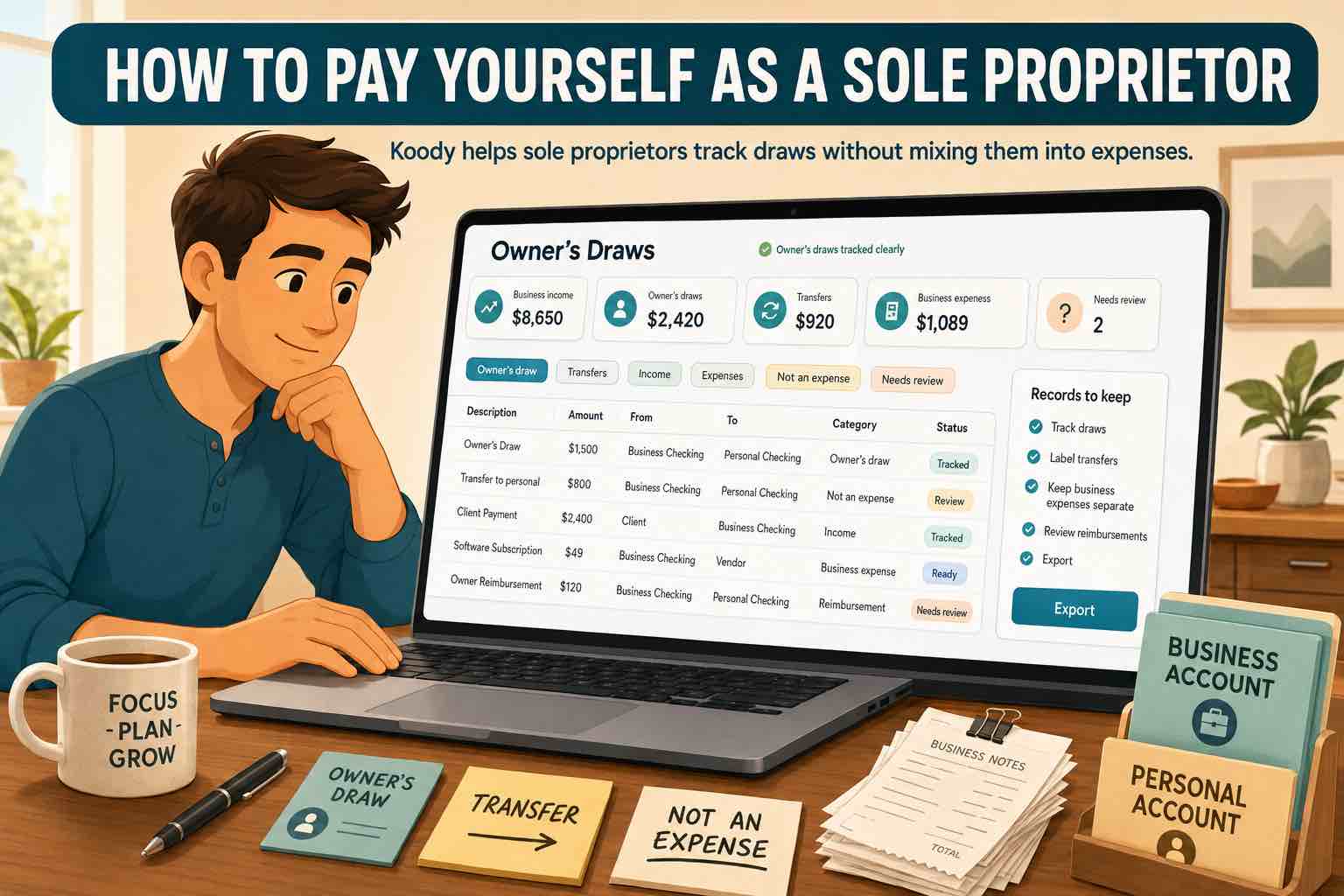
- The owner takes a $2,000 draw. Cash leaves the business for personal use. The draw is not a business expense.
- The business repays $1,500 of loan principal. This reduces cash and the debt owed, not profit. The $100 interest is already included above.
Profit is $3,000: $6,000 income - $3,000 expenses.
The closing bank balance is $1,500: $2,000 opening balance + $6,000 received - $3,000 expenses - $2,000 draw - $1,500 principal repayment.
The business earned a profit while its cash fell by $500. The difference is explained by the draw and principal repayment, which together used more cash than the business earned that month. There is no missing $1,500 simply because profit exceeds the closing balance.
What else can make profit differ from cash?
Borrowing and money you put into the business
A loan deposit increases cash but is not sales income: you have an obligation to repay it. Money a sole proprietor contributes from personal savings also increases business cash without creating revenue. A higher balance after either deposit does not mean trading became more profitable.
Equipment and inventory
When equipment is recorded as an asset, paying for it reduces cash immediately. Its cost may reach the P&L over time through depreciation. The depreciation expense itself does not require another payment. Bookkeeping treatment and tax deductions can differ, so keep the purchase record and confirm the appropriate treatment rather than assuming every equipment payment is an immediate expense.
If your books carry inventory as an asset, buying stock uses cash before the cost becomes an expense when the goods are sold. Cash tied up in unsold stock can therefore explain part of the gap. The treatment depends on how your business accounts for inventory.
Unpaid invoices and bills
Under accrual accounting, income can enter the P&L before a customer pays, and an expense can enter before you pay the supplier. Under cash accounting, income is generally recognized when received and expenses when paid, subject to exceptions. An unpaid invoice does not explain profit in a cash-basis report merely because you have sent it to the customer.
Transfers and credit card payments
Moving money from business checking to business savings lowers one balance and raises the other. Total business cash stays the same. Compare all relevant cash accounts before concluding that money has gone.
Credit card purchases and their later repayments can also fall in different periods. Once a purchase is included as an expense, paying the card must not create that expense again. The payment still reduces checking-account cash.
What should you check before spending the money?
- Match the dates. Compare a month's P&L with that month's opening and closing balances, not today's balance against last month's profit.
- Check the accounts. Include relevant checking, savings, cash, and card records. Keep card debt separate from cash available to spend.
- Review money outside profit. Identify draws, owner contributions, borrowing, principal repayments, transfers, and asset purchases. Check accounting adjustments where applicable.
- Look for recording errors. Missing transactions, duplicated card payments, personal purchases treated as business costs, or a loan classified as sales can distort the comparison.
- Allow for upcoming obligations. Before taking money out, account for bills, debt payments, and tax money you have chosen to reserve. A positive balance can already be committed.
For a sole proprietor, withdrawing profit does not reduce Schedule C profit. Keep your tax planning separate from the decision about how much cash to take home. Our guide to paying yourself as a sole proprietor explains the owner-draw records.
How does Koody help you understand the difference?
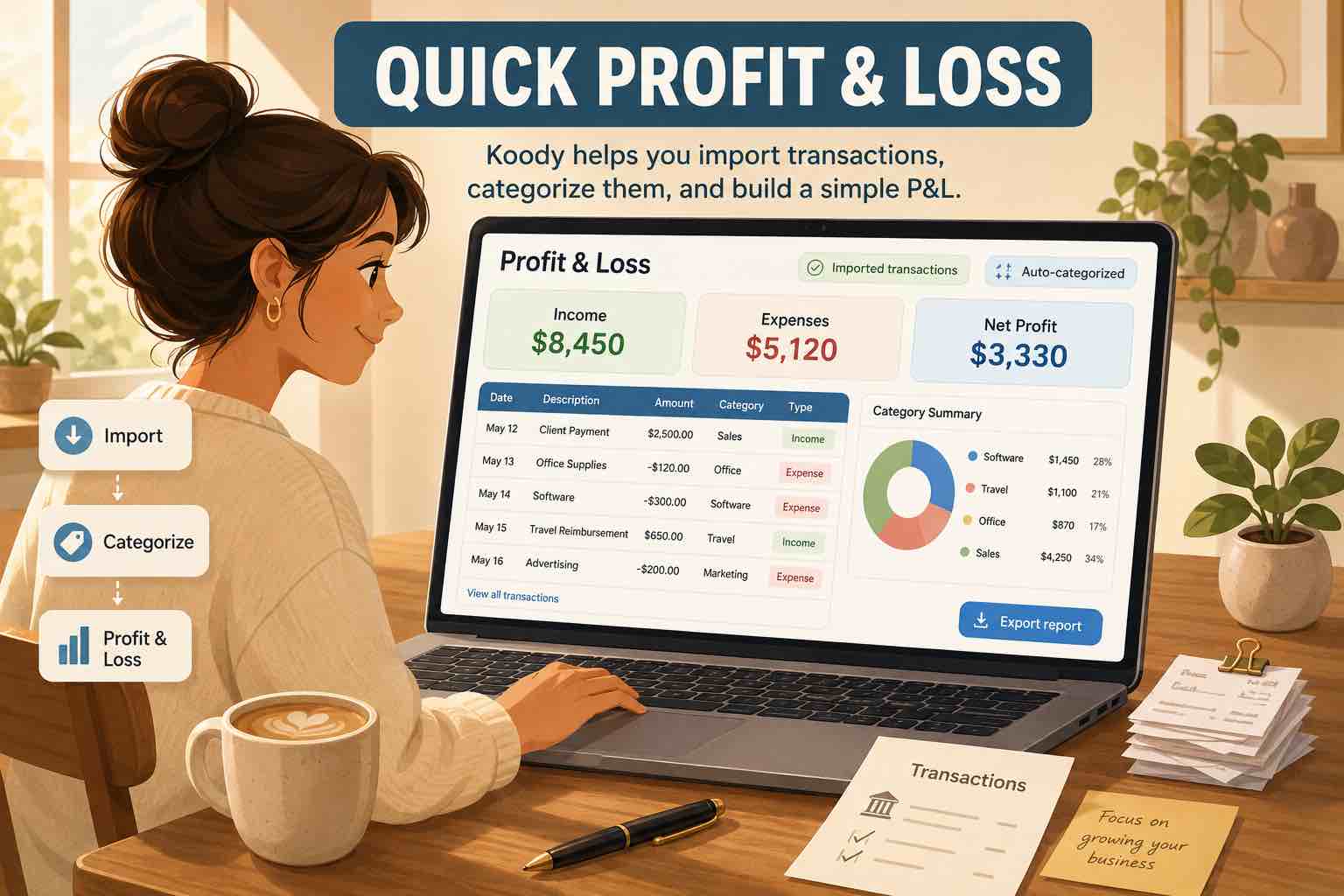
Koody for Business brings categorized transactions, account balances, and profit and loss reporting into one app. When you import bank statements, Koody auto-categorizes the transactions and identifies transfers and refunds. You review the results and correct anything that needs a different treatment.
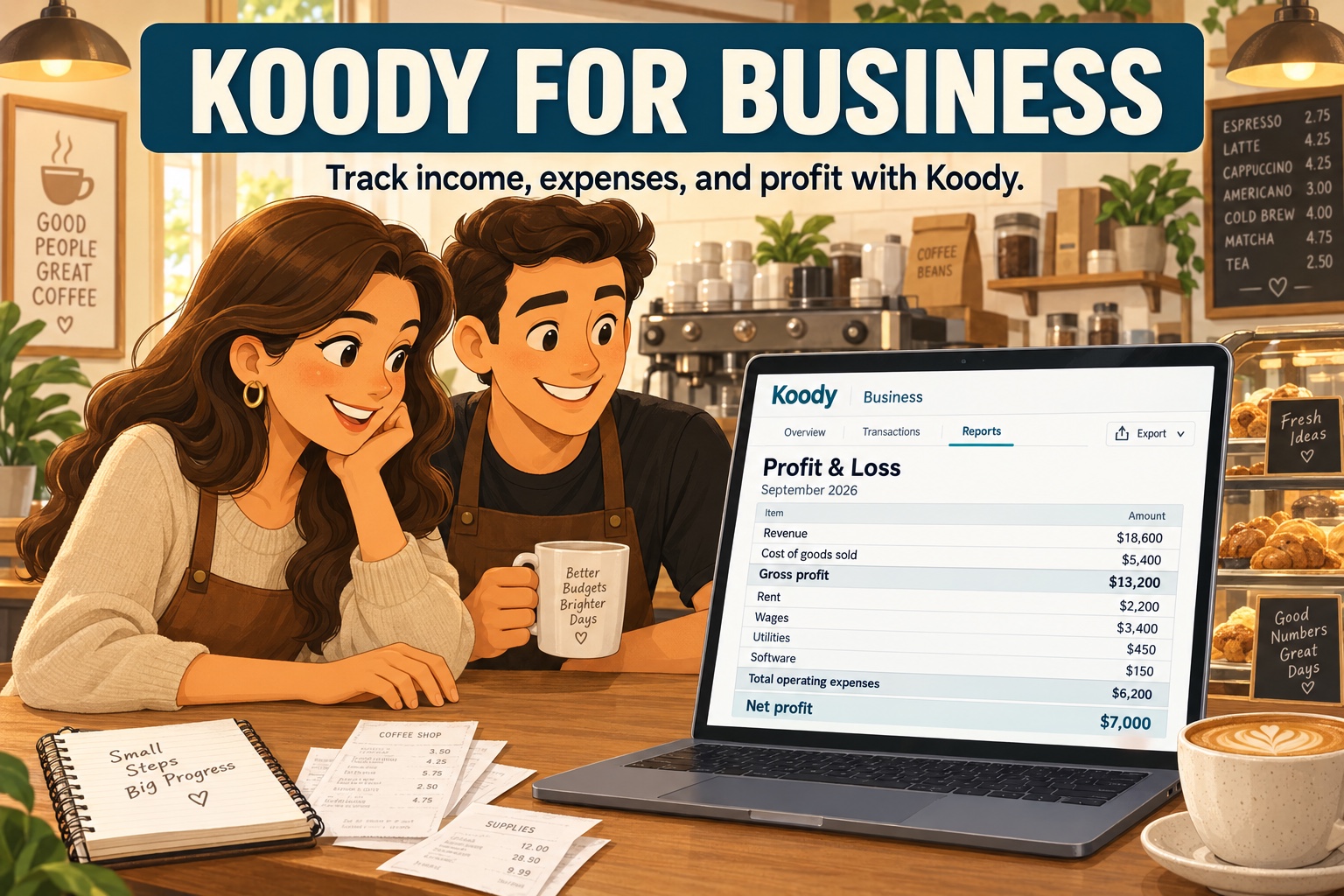
You can open your P&L for a chosen period, compare it with the previous period, and inspect the transactions behind the totals. Checking those records alongside account activity helps you trace whether cash went toward operating costs, a transfer, or money taken out of the business. Attach receipts and notes so the explanation stays with the transaction. Imports and business reports are included in Koody's Plus Plan.
See what your business earns and where the money goes.
Let Koody categorize your business transactions, then review income, expenses, and profit with the supporting records close at hand. Spend less time sorting payments and more time understanding the numbers behind your next decision.
Try KoodySources
Sources accessed October 29, 2026. General bookkeeping information for sole proprietors; tax references concern US federal rules. Confirm accounting treatments and tax deductions for your circumstances with your accountant.