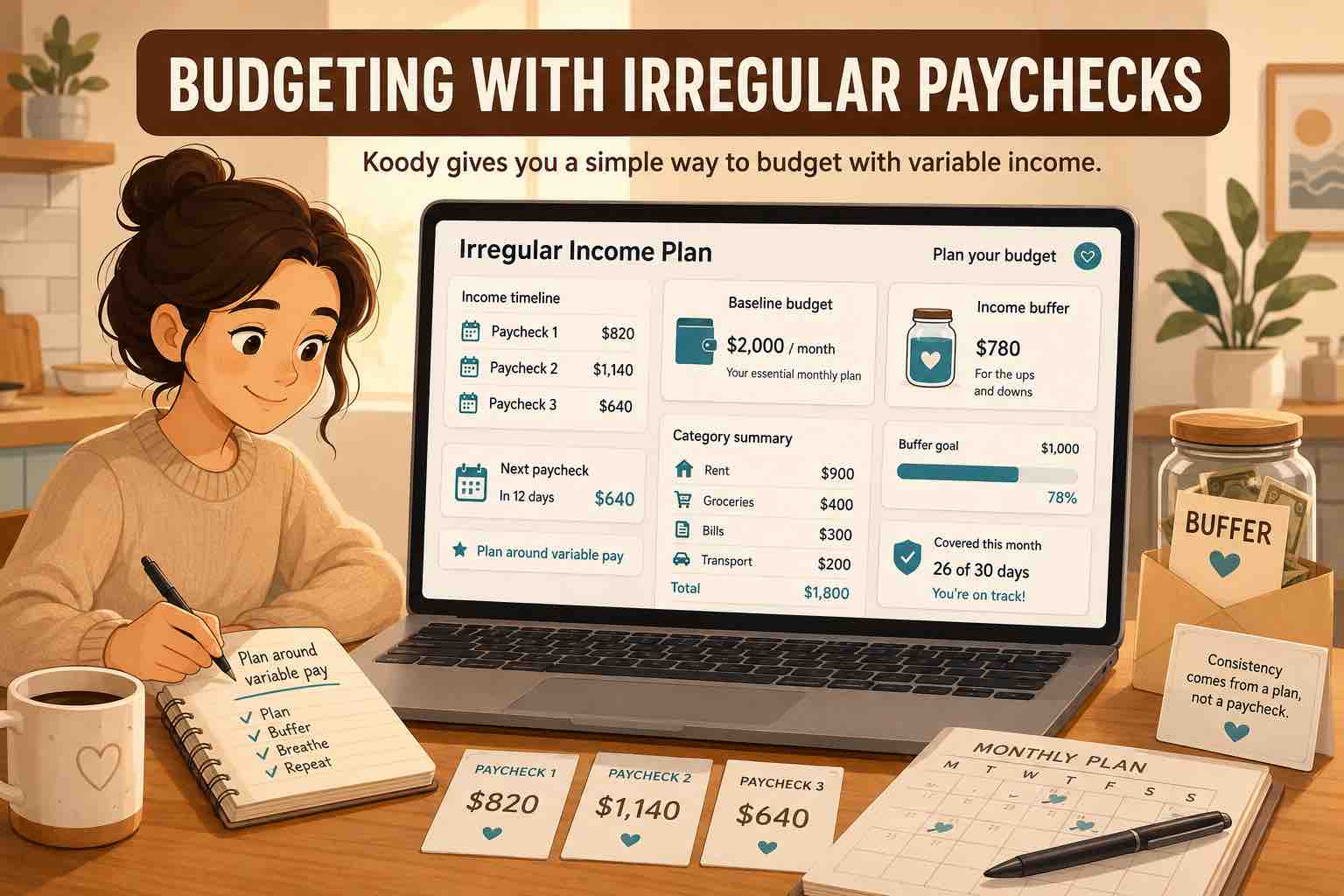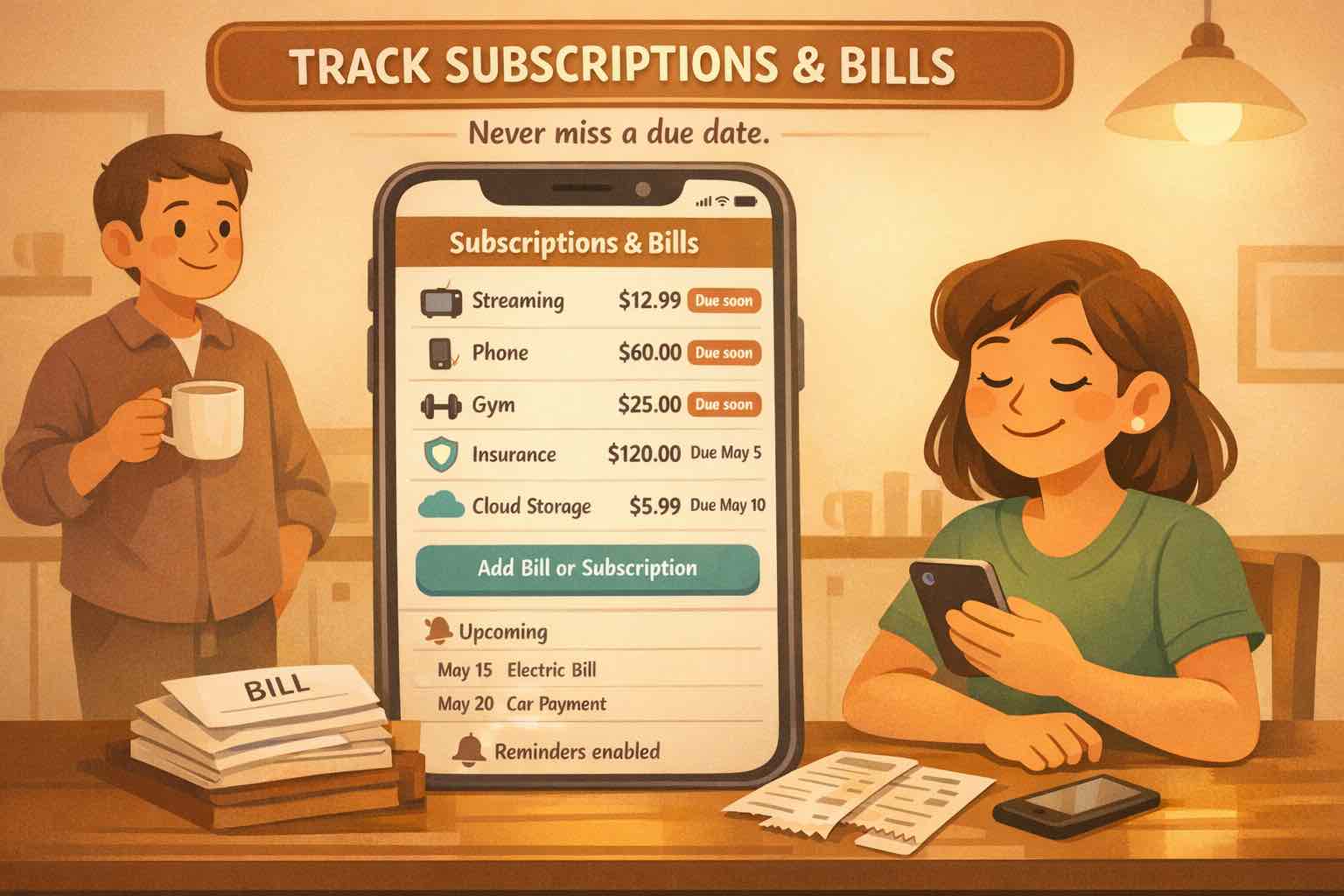

Put paydays and bills in date order
Start with take-home pay, the dates it becomes available, and money already reserved for bills. List the next month's rent, utilities, insurance, debt payments, groceries, and transport. Include payment dates and which account pays each bill.
Work forward from today: opening cash plus income received, minus payments and spending, equals cash carried forward. Check the balance before each large payment, even when the monthly total looks comfortable. Allow time for transfers to reach the paying account.
Decide what counts as shared spending before assigning paychecks. You might split household costs equally, in proportion to take-home income, or by an agreed amount that reflects your other responsibilities. Keep personal spending and savings allowances visible too.
A weekly and monthly pay example
Here is an example for October 30 through November 29, 2026. One partner receives $3,000 on October 30; the other receives $600 on November 6, 13, 20, and 27. They pool their $5,400 of take-home earnings for this example, starting with no additional cash. The next monthly paycheck, on November 30, belongs to the next plan.
Their listed household costs are $1,800 rent on November 2, $200 utilities on November 10, $200 insurance on November 24, and $1,000 for groceries and transport. They divide that last amount into five $200 allowances, including one for the short final interval.
- October 30-November 5: Receive $3,000. Reserve and pay $1,800 rent and allow $200 for groceries and transport. Carry forward $1,000.
- November 6-12: Add $600, pay $200 utilities, and allow $200 for everyday spending. Carry forward $1,200.
- November 13-19: Add $600 and allow $200 for everyday spending. Carry forward $1,600.
- November 20-26: Add $600, pay $200 insurance, and allow $200 for everyday spending. Carry forward $1,800.
- November 27-29: Add $600 and allow the final $200. Finish with $2,200.
The totals reconcile: $5,400 income minus $3,200 listed costs leaves $2,200. Assign that remainder before spending it: for example, $800 toward a bill buffer, $600 toward annual costs, and $400 each for personal spending. Any omitted obligations must come out of those allocations first. These are illustrative amounts, not recommended spending targets.
Rent is covered by money received before November 2. The weekly paychecks replenish cash later. If they waited for the November 6 paycheck to fund rent, their overall income would still look sufficient, but the payment would be late.
Can you do this with separate accounts?
Yes. Use the same dated plan, adding who pays and when any contribution must arrive. A joint bills account is one option; paying agreed bills from your own accounts is another. Check each paying account separately, because a positive combined balance can hide a shortfall in one account.
For example, if you agree to contribute $1,200 each toward a month's shared costs, the monthly-paid partner could reserve $1,200 on payday. The weekly-paid partner could reserve $300 from each of four specified paychecks. If rent is due before those four payments arrive, fund it from earlier savings or agree an affordable temporary advance and a repayment date. Do not leave one partner's advance undefined.
Handle gaps and extra paydays
Where the timeline goes negative, identify the amount and date of the shortfall. Reduce optional spending, use an available buffer, or ask the bill provider whether a different due date is possible. Continue following the existing payment schedule until a change is confirmed.
Count actual paydays in each planning period. Weekly pay does not always mean four checks per month, and every two weeks differs from twice a month. Allocate additional checks after checking the longer spending interval and upcoming bills. Build a buffer gradually; having a month's expenses saved is useful, but not a prerequisite for starting.
Put the plan into Koody
Koody lets you choose budget start and end dates, so your household plan can run from October 30 to November 29 instead of resetting on the first. Recurring budgets support weekly, every-two-weeks, and monthly periods. Choose the period that makes your spending easiest to review.
Add recurring paychecks and bills to keep upcoming transactions visible. Track purchases by category, with optional spending limits for groceries, transport, or other costs you want to keep within an agreed amount. Our paycheck budget planner shows how those tools fit together.
One person can maintain the household records in their Koody account, then you can review the figures together at your check-in. Each payday, confirm the deposit, review spending, and check that the account paying the next bill has enough money.
Give your next paycheck a plan.
Set budget dates around your paydays in Koody, keep recurring bills visible, and track household spending by category. Bring that up-to-date picture to your next money check-in.
Try KoodySources
Sources accessed October 29, 2026. These US Consumer Financial Protection Bureau resources explain cash-flow planning. This article provides general budgeting information, not personalized financial advice.