
Which annual and irregular expenses belong in your budget?
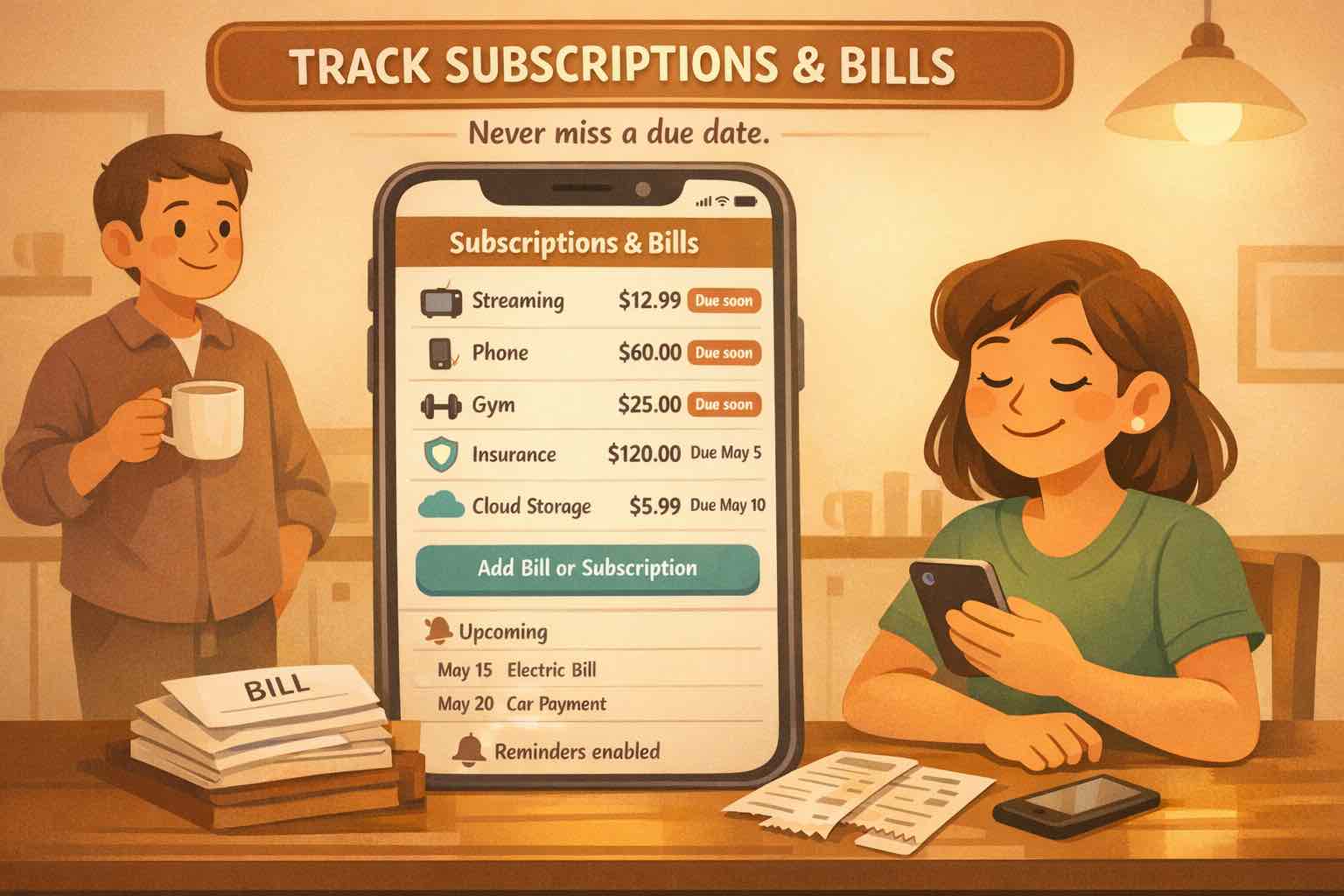
Include costs you reasonably expect even though they do not arrive every month: annual insurance, vehicle registration, school costs, gifts, professional memberships, subscriptions, and routine maintenance. Look through at least a year's transactions and renewal notices so a quiet month does not become your estimate for the whole year.
Give each item an expected amount and payment date. For a cost without an exact date, such as routine car maintenance, choose a reasonable planning date and estimate from previous spending or a current quote. Keep these expected costs separate from money reserved for genuinely unforeseen emergencies.
Money reserved gradually for an expected cost is often called a sinking fund. Check whether each bill renews annually, quarterly, or on another schedule. If several bills share the same savings account, keep a simple list of how much of that balance belongs to each bill. Otherwise, the same $300 can accidentally be promised to both insurance and gifts.
How much should you set aside each payday?
Use this calculation for each bill:
Amount per payday = (expected bill - money already reserved) ÷ remaining paydays before the due date.
Suppose an annual insurance bill will be $1,200. You already have $300 reserved, and six paydays remain before you need to pay. The amount still needed is $900, so set aside $150 each payday: ($1,200 - $300) ÷ 6. Six contributions bring the reserve to $1,200.
Count paydays that arrive before the money must leave your account, allowing for payment processing. Do not count a paycheck arriving after the deadline. If the bill is already fully funded, the remaining contribution is zero; you can start planning for the next renewal separately.
Dividing an annual bill by 12 works when you have twelve months to fund it. For the same $1,200 bill, that is $100 a month. But it is not the right catch-up amount when only six paydays remain and you have saved just $300. Use the actual time available, not the word "annual" on the invoice.
What if the bill is due before you can save enough?
Calculate the shortfall before deciding what to change. In the insurance example, setting aside only $100 on each of the six paydays would add $600 to the existing $300. You would have $900 and be $300 short. A budget entry cannot make that missing cash available.
Review whether you can redirect other available money, reduce discretionary spending, or lower the cost before renewal. Ask the provider about payment options before the due date and compare their total cost, including fees. Do not fund the bill with money already needed for rent, food, or another essential payment without accounting for the resulting gap.
Recalculate whenever the quote, due date, or reserved balance changes. Once you pay the bill, start the next cycle using the expected renewal amount and the full saving period. This is the opportunity to replace a catch-up contribution with a smaller regular amount.
How do you track saving and payment without counting twice?
Your cash plan needs room for regular contributions, but your spending records should count the eventual purchase once. When you move $150 from checking to your own savings account, record a transfer. When you pay the $1,200 insurer bill, record an insurance expense in the account that pays it.
If you move the money back to checking first, that movement is another transfer. It does not create income. The insurer payment remains the expense. With both accounts tracked in Koody, a transfer keeps the movement between them out of income and expense totals.
You can also leave the reserve in checking and track the allocation separately. In that case, setting money aside does not create a bank transaction at all. Subtract the reserved amount when deciding what is available for everyday spending; the account balance by itself will not show which money is already committed.
If you use a monthly spending limit, plan for the full bill in the month it will be paid. Saving $100 a month does not turn a $1,200 payment into twelve $100 expenses. Your reserve explains how you can pay for that larger spending month.
How can Koody help with annual and irregular expenses?
Koody's categorized transaction history helps you find previous renewals and see what irregular costs actually came to. When you import bank statements, Koody auto-categorizes the transactions and identifies recurring payments. Review those records when building your list rather than relying on memory. Statement imports are a paid feature.
Create a budget for the dates, accounts, and categories you want to review. Spending limits are optional: you can use the budget to follow actual income and expenses, or add a limit to compare spending with your plan. Keep your per-bill reserve calculation separately; a budget limit does not move money into savings or ring-fence part of an account balance.
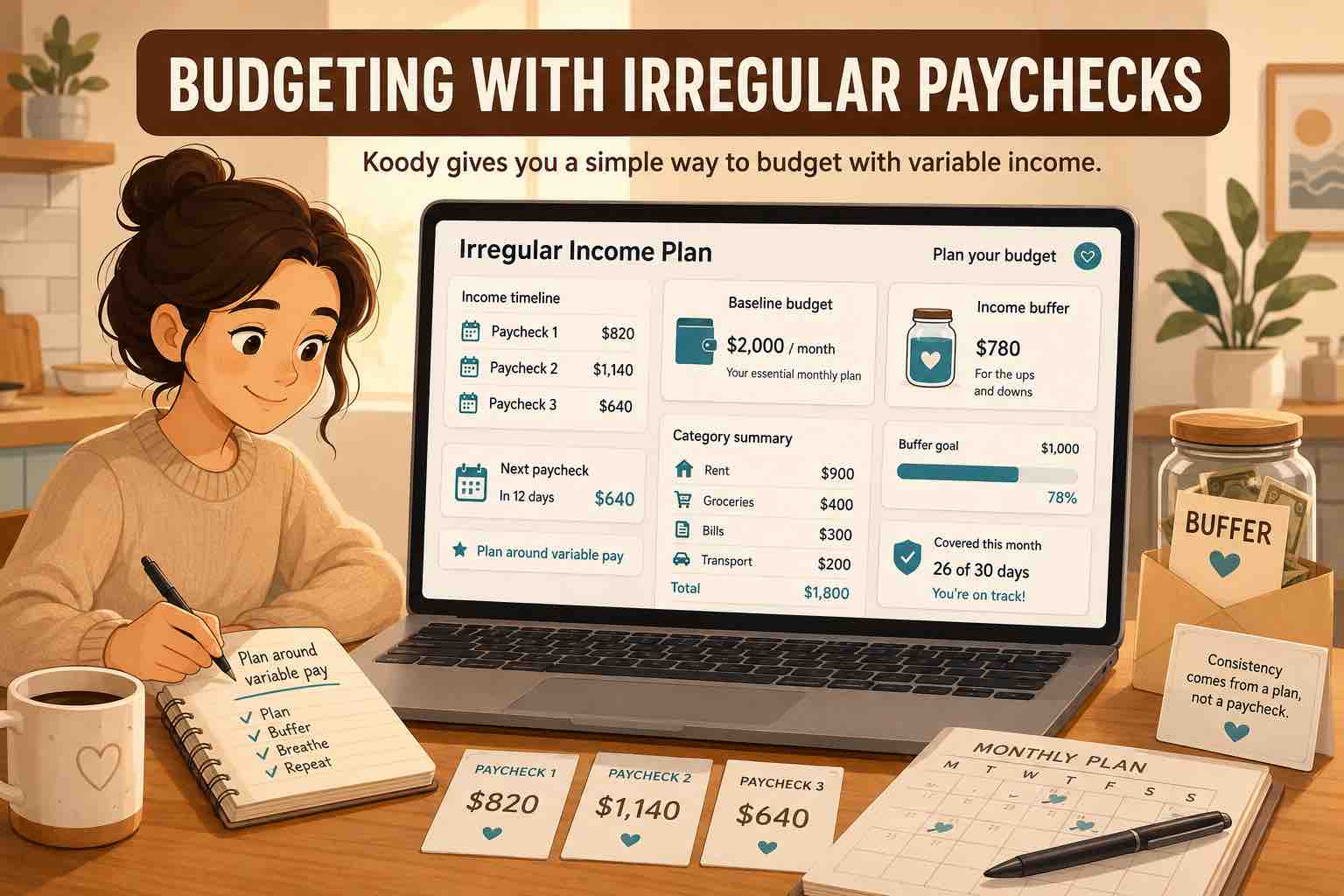
As bills arrive, keep the payment, category, receipt, and any useful note together. Review the amount against your estimate and use the result for the next cycle. If your income also varies, our guide to budgeting with irregular paychecks covers planning around changing pay.
Use your spending history to plan the next bill.
Bring your statements into Koody, review automatically categorized expenses, and track the payments that arrive throughout the year. Keep annual bills visible alongside everyday spending so your next budget starts with the costs you actually need to cover.
Try KoodySources
Sources accessed October 31, 2026.