Four shop bills and their expense categories
Suppose you rent a barbershop and want to know what it cost to keep the doors open this month. The four bills below total $1,550. That's a useful figure for running the shop. For tax preparation, keep the amounts separate so each one reaches the right line.
| What you paid | Koody Business category | Schedule C line | Why it belongs there |
|---|---|---|---|
| $1,200 shop rent | Property Rent & Leasing | 20b | Payment for the use of the shop premises. |
| $145 electricity bill | Business Utilities | 25 | Power supplied to the shop and billed separately from rent. |
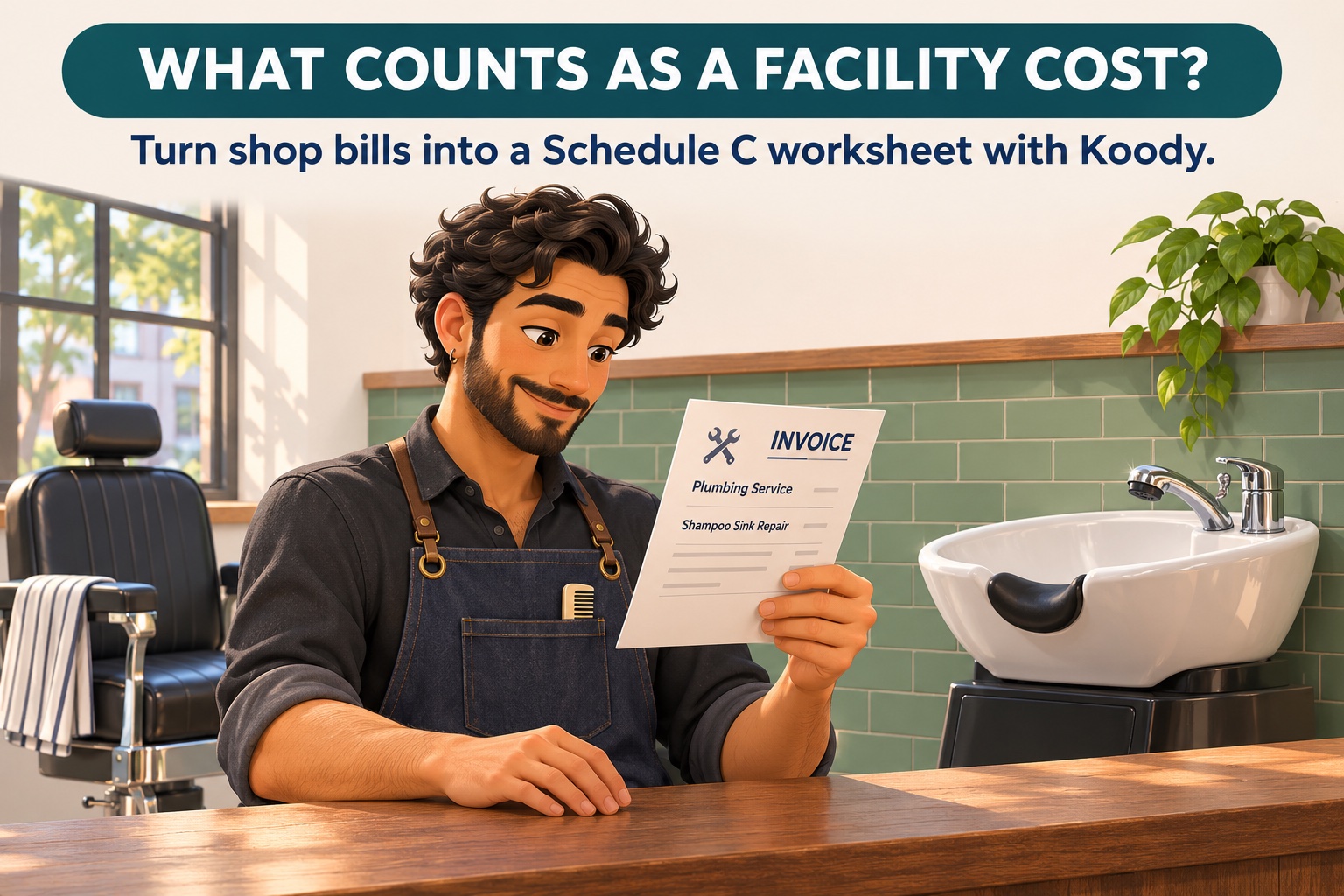
| $170 to fix a leaking tap | Repairs & Maintenance | 21 | The plumber restored the existing sink to working order. |
| $35 for disinfectant and paper towels | Supplies | 22 | Cleaning products used in the shop, not goods bought for resale. |
$1,200 shop rent
- Koody Business category
- Property Rent & Leasing
- Schedule C line
- 20b
- Why it belongs there
- Payment for the use of the shop premises.
$145 electricity bill
- Koody Business category
- Business Utilities
- Schedule C line
- 25
- Why it belongs there
- Power supplied to the shop and billed separately from rent.
$170 to fix a leaking tap
- Koody Business category
- Repairs & Maintenance
- Schedule C line
- 21
- Why it belongs there
- The plumber restored the existing sink to working order.
$35 for disinfectant and paper towels
- Koody Business category
- Supplies
- Schedule C line
- 22
- Why it belongs there
- Cleaning products used in the shop, not goods bought for resale.
These examples use the 2026 US Schedule C and assume the shop is used entirely for business. If you work out of a room in your home instead, don't put your full household rent or electricity bill on these lines. See the home office expense guide for that situation.
What if one payment covers rent and electricity?
Suppose the landlord collects both bills in one $1,345 payment. If the invoice shows $1,200 for rent and $145 for electricity, split the transaction in Koody using those amounts. The two entries still add up to the one payment on your bank statement. Attach the invoice to the transaction so you can see where the figures came from.
If your lease instead sets a single rent that includes electricity, record the rent you actually paid. Don't invent a utility charge or count the electricity a second time. The same principle applies to supplies: a shop receipt that includes cleaning products and something you bought for home should contribute only the business share to your reports.
Is work on the premises a repair or an improvement?
The plumber's name on the statement doesn't tell you. Fixing the leak in an existing sink generally belongs under repairs. Adding plumbing for two new wash stations is a different purchase: it expands what the shop can do and may need to be capitalized rather than deducted as a routine repair.
Keep the itemized invoice and a note about what the contractor did. If one job combined a repair with a renovation, ask for the amounts separately. Those details give your tax preparer something more useful than a bank entry marked “plumber.”
How do these costs show up in Koody's business reports?
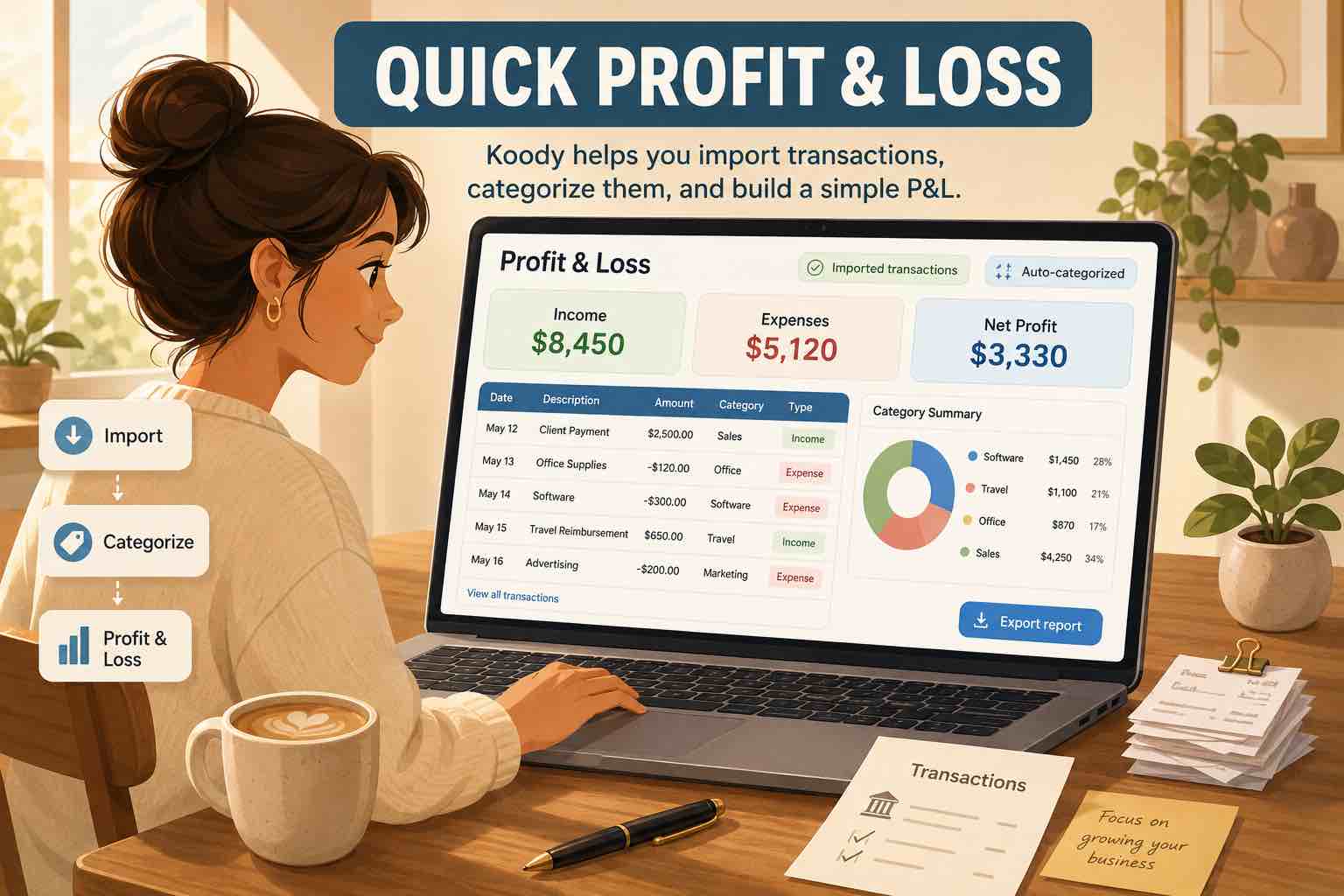
Open Profit & Loss for the month to see the rent, electricity, repair, and supplies alongside your other expenses and business income. If profit dropped, compare it with the previous month. You can open the transactions behind a category total to see whether the difference came from higher rent or a one-time callout.
At tax time, open your Schedule C preparation worksheet for the year. The reviewed rent payments contribute to line 20b, while electricity goes to line 25. You can download the worksheet for your accountant and share the supporting transactions when they need the detail. You don't need a separate spreadsheet to turn those monthly bills into annual totals.

Get a Schedule C worksheet from the books you already keep
Bring your bank and card statements into Koody for Business. Use the categorized records to see what the shop earned after costs this month, then prepare a worksheet for the year with the receipts and transactions behind it.
Try Koody for BusinessSources
This guide covers US federal records for sole proprietors. It provides general information, not individual tax advice. Koody prepares records and reports; the worksheet is not a filed return.
The line numbers follow the 2026 IRS Schedule C, Part II. For the distinction between repairs and improvements, see the IRS Schedule C instructions, line 21. Sources accessed November 17, 2026.