
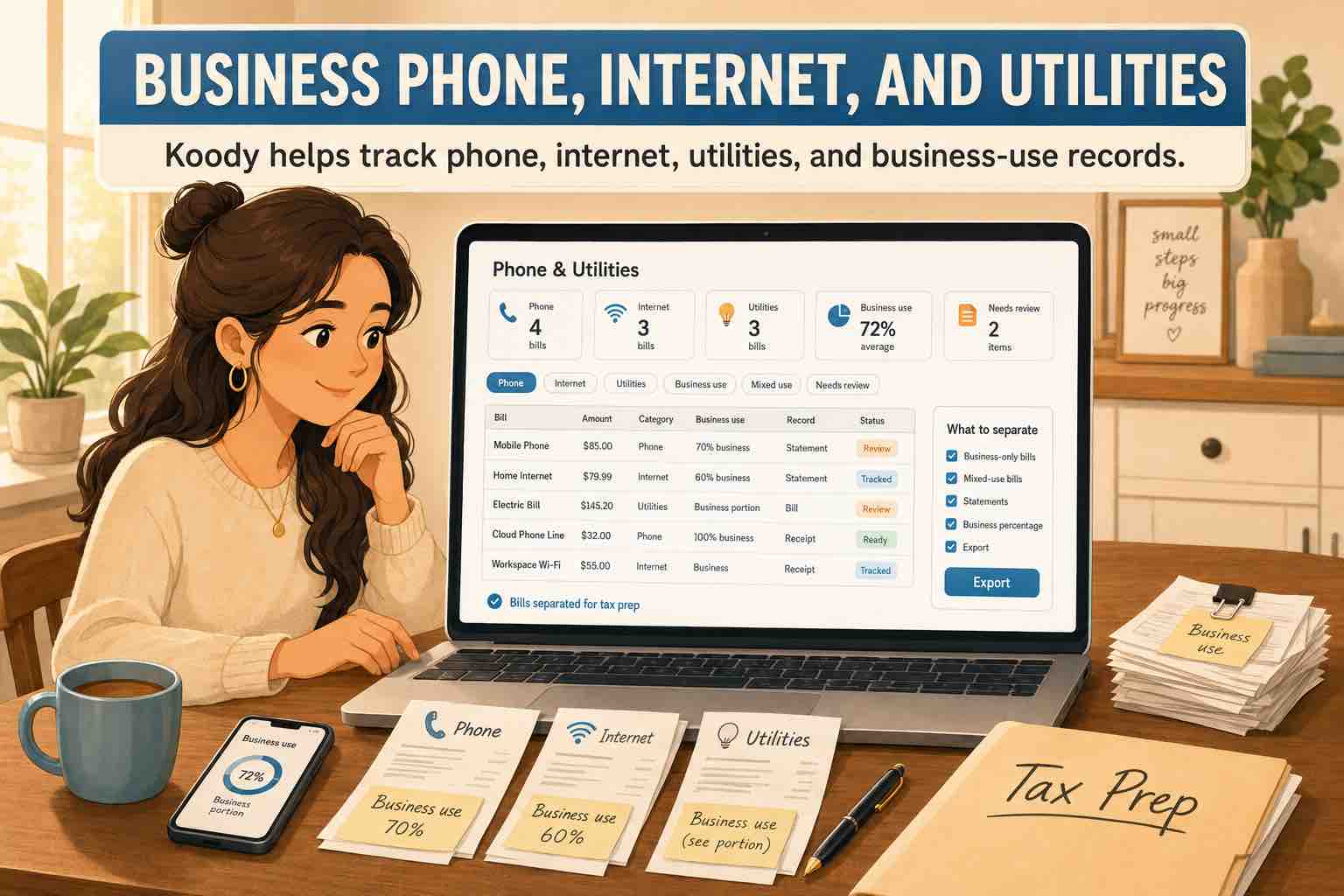
Phone, internet, and utilities are some of the easiest expenses to record badly because they happen every month and often serve both life and work.
A therapist may use the same internet for telehealth and streaming. A rideshare driver may use the same phone for rides and family calls. A barber may pay utilities for a shop. A creator may use home internet for client work and personal browsing.
This guide explains how sole proprietors can separate those records before tax prep without turning every bill into a tax argument.
Important: Koody is a budgeting and record-prep app, not a tax filing service, tax advisor, accountant, tax preparer, utility auditor, or law firm. Use Koody to organize bills, transactions, receipts, files, notes, splits, imports, and exports. A qualified tax professional should decide deductibility, percentages, line placement, and final tax treatment.
Phone, internet, and utilities for business
What costs are we talking about?
These are recurring bills that may support the business:
- Cell phone service used for client calls, rideshare apps, delivery apps, booking, messaging, or business email.
- Internet service used for remote work, online sales, telehealth, design work, video calls, client portals, uploads, or bookkeeping.
- Shop, studio, booth, office, or workspace utilities.
- Business phone line, second line, virtual phone number, or call-routing service.
- Electricity, gas, water, security, or trash service tied to a business location.
The record should explain what the bill was for and how it served the business. A bank row that says Verizon, AT&T, T-Mobile, Comcast, Spectrum, Xfinity, or Con Edison may not say enough by itself.
Schedule C utilities line 25
What is Schedule C utilities line 25?
Schedule C includes a line for utilities. IRS instructions say utility expenses are deductible only if they are for the trade or business.
The instructions also give special guidance for telephone service. The basic local telephone service charge for the first telephone line into a residence is generally treated differently from additional business charges. That is one reason phone records should be clear before tax prep.
If a bill is tied to a separate business space, that may be easier to explain. If it is a household bill used partly for business, keep a note and let your accountant review the business-use percentage.
Mixed-use bills
How do I split phone or internet between personal and business use?
Many sole proprietors use the same service for personal life and business. That does not mean the whole bill automatically belongs in business records.
Examples:
- A doctor uses home internet for telehealth charting two days a week, and family members use it the rest of the time.
- A hairdresser uses a phone for client booking, business texts, social media, and personal calls.
- A driver uses a phone for rideshare apps, navigation, music, personal calls, and family messages.
- A consultant uses internet for client work, video calls, cloud software, and personal streaming.
In Koody, split a transaction by category when only part of the bill belongs with business records. For example, one $120 phone bill can have a business portion and a personal portion instead of pretending the whole thing is one or the other.
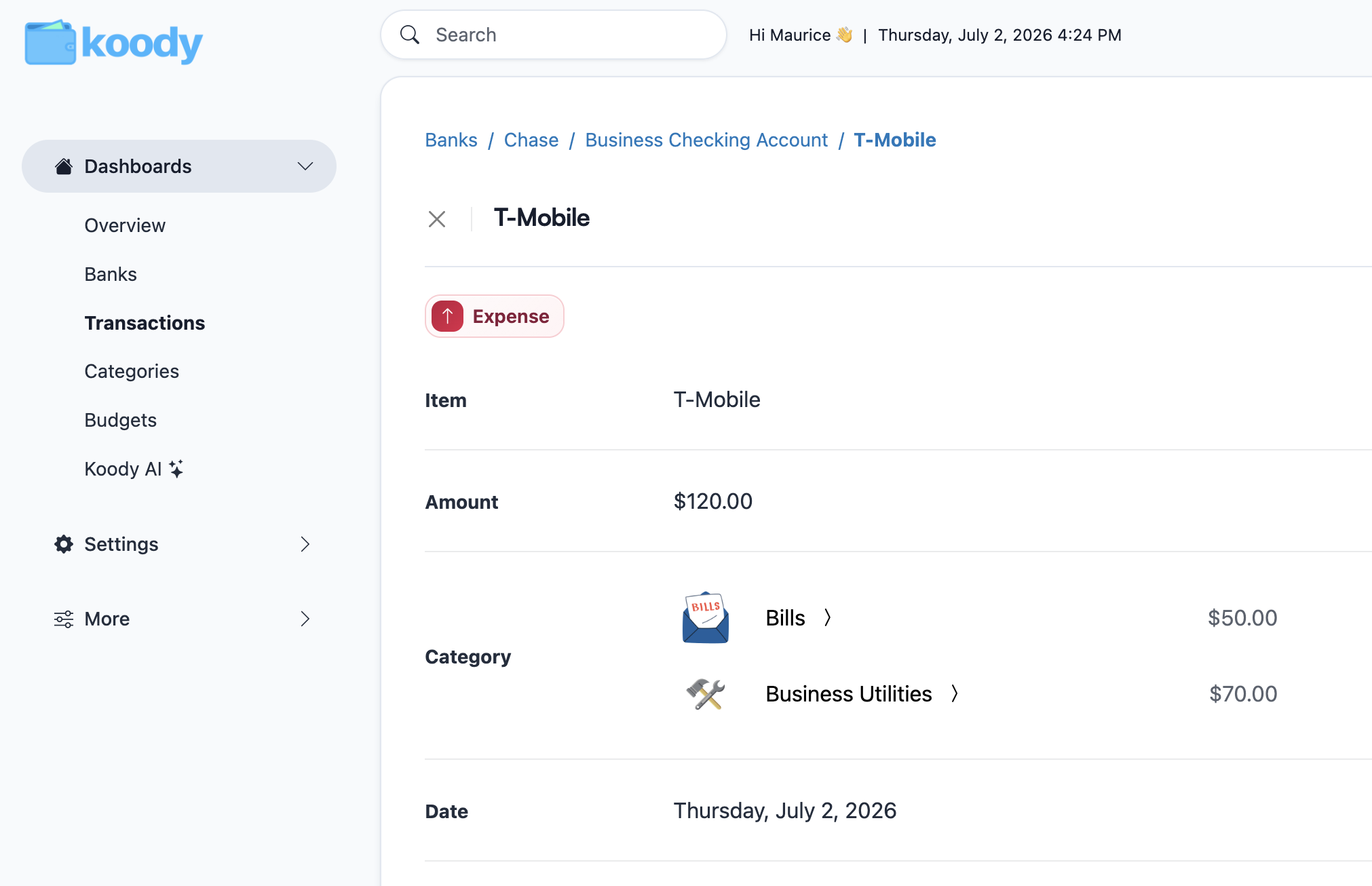
Keep bills and business-use notes with the transaction.
Koody lets you attach bills, receipts, screenshots, and notes to the matching row, then split the charge by category when only part of the bill belongs with business records.
Track business bills in KoodyBusiness-use notes
A business-use note is a short explanation you add to the transaction. It helps someone understand the business side months later.
Good notes are specific:
- "Phone used for rideshare app, client calls, and navigation."
- "Internet used for telehealth sessions and client records."
- "Business phone line for salon bookings."
- "Electricity bill for rented studio space."
- "Home internet split between design client work and personal use."
The note does not decide the deduction. It gives your accountant or tax preparer better context when reviewing the bill.
What records to keep
Keep enough records to explain the bill and the business use.
- Bill or invoice from the provider.
- Payment record from the bank or card.
- Service dates.
- Account name and service address when helpful.
- Business-use note.
- Split between personal and business categories.
- Notes for unusual charges, installation, equipment, deposits, or late fees.
- Exported records for accountant or tax-prep review.
How Koody helps before tax prep
Koody helps you keep recurring bills from blending into ordinary personal spending.
- Import bank and card transactions.
- Let Koody auto-categorize bills, then review phone, internet, and utility rows.
- Use categories like Business Utilities, Phone & Internet, Home Office, Office Expense, or Personal Bills.
- Attach bills, PDFs, screenshots, receipts, and account statements.
- Add business-use notes while you still remember what the bill covered.
- Split mixed-use bills by category.
- Export filtered records when your accountant or tax preparer asks for them.
What to check before tax prep
Before tax prep, scan recurring bills for these issues:
- Phone bills treated as 100% business with no note.
- Internet bills mixed with home office records but no business-use explanation.
- Utility bills for a shop, studio, booth, or office that are missing invoices.
- Household utilities mixed into business records without a clear split.
- Equipment charges, installation fees, or deposits hidden inside the same provider bill.
- Personal phone upgrades or accessories accidentally placed in a business category.
For square-footage and home office method records, read home office expense categories.
Import, split, attach notes, and export before tax prep.
Bring recurring bills into Koody, review business use, split mixed charges, attach bills, and export records when your accountant needs them.
Get utility records ready in KoodyFAQs
1. Can I deduct internet for my business?
A business-use portion of internet service may be reviewed as a business expense if it is ordinary and necessary for the business. Keep the bill, payment record, business-use note, and any split between personal and business use.
2. Can I deduct my cell phone as a business expense?
A cell phone used for business may need business-use review. Keep the bill, payment record, note explaining business use, and split if the phone is also used personally.
3. What is Schedule C utilities line 25?
Schedule C line 25 is used for utilities. IRS instructions discuss utilities used in the trade or business and give special guidance for the first telephone line into a residence.
4. How do I split phone or internet between personal and business use?
Keep a business-use note and split the transaction by category in Koody when only part of the bill belongs with business records. Your accountant or tax preparer can review the percentage.
5. What records should I keep for business utilities?
Keep bills, receipts, payment records, account statements, dates, service address, business-use notes, split details, and any records showing how the service was used for the business.
6. How does Koody help with phone, internet, and utility records?
Koody helps you track recurring bills, split mixed-use charges, attach bills and receipts, add business-use notes, and export records for review.
Sources: IRS references used
Sources accessed July 1, 2026. Koody is not a tax filing service or tax advisor.